

Executive Summary
The intersection of personal wealth and public office has never been more visible in Canadian politics than with Prime Minister Mark Carney. Following his appointment in March 2026, Carney’s financial disclosure revealed a portfolio spanning 567 organizations, heavily weighted toward U.S. markets and managed through a third-party blind trust. A formal ethics screen recuses him from 103 specific corporate entities tied to his prior tenure at Brookfield Asset Management and Oaktree Capital. While the administration maintains these measures exceed statutory requirements, ethics watchdogs, policy analysts, and opposition figures have raised substantive questions about oversight efficacy, systemic adequacy, and the optical implications of a portfolio that intersects with sectors where the federal government actively makes policy. This report synthesizes publicly available disclosure data, conflict-screening mechanisms, policy actions, and comparative transparency profiles to assess Carney’s trustworthiness. The analysis concludes that while Carney meets established institutional compliance standards, the broader debate extends beyond personal integrity to question whether Canada’s ethical infrastructure is sufficiently robust to manage the scale and complexity of modern political wealth. Trustworthiness, in this context, is measured not only by adherence to legal safeguards but by the structural capacity of oversight mechanisms to prevent even the appearance of misaligned incentives.
The Financial Portfolio: Scale, Composition, and Optics

The Numbers Behind the Disclosure
Carney’s financial profile, released on July 11, 2026, in compliance with the ethics commissioner’s requirements, lists investments across 567 organizations managed by a third-party financial institution [14]. The sheer volume of holdings immediately signals the limits of traditional disclosure frameworks, which were not designed for portfolios of this magnitude. By entity count, approximately 90.8% (515 organizations) are American, while only four Canadian companies (0.71%) are represented [5]. When measured by estimated holding value, three Canadian entities account for roughly 0.5% of the total portfolio [3]. These metrics, however, require careful interpretation. Disclosure is reported by company count rather than dollar value, which complicates direct assessment of geographic or sectoral exposure. A single high-value holding in a U.S. firm can mathematically dilute the perceived weight of multiple smaller Canadian positions, making raw entity counts an imperfect proxy for actual financial exposure.
Geographic and Sectoral Distribution
Specific holdings identified in public records include major stakes in Brookfield Asset Management, Brookfield Corporation, and Stripe, alongside significant positions in technology and energy firms such as Amazon, Apple, NVIDIA, Microsoft, and Exxon Mobil [9]. Sectoral exposure spans finance, technology, defense, energy, retail, tobacco, cryptocurrency, and artificial intelligence [5][6]. Notably absent are all major Canadian chartered banks, domestic telecommunications providers, and leading Canadian technology firms [5]. The heavy U.S. weighting is largely attributable to management by a third-party institution rather than direct personal stock selection, a distinction that matters both legally and perceptually. Additionally, Brookfield Asset Management recently relocated its operational headquarters to New York to pursue U.S. index inclusion and corporate restructuring, a move that further entrenches the portfolio’s American orientation [9][10].
Why It Matters: The Brookfield Factor and U.S. Weighting
The composition of Carney’s portfolio is not merely a matter of investment strategy; it reflects the structural reality of how modern wealth is managed and disclosed. The Brookfield connection is particularly salient given Carney’s prior leadership role at the firm, which creates both historical dealings and ongoing sectoral intersections with Canadian policy. The U.S. weighting, while functionally explained by third-party management, generates optical friction in a political climate defined by economic nationalism and trade renegotiation. The Walrus has noted that Carney’s financial profile "tests the limits of Canada's ethics laws," highlighting that the volume and complexity of holdings present challenges for traditional disclosure mechanisms [10]. This tension between functional compliance and perceptual alignment sits at the heart of the trustworthiness debate.
Connected Companies and Sectoral Dealings
Historical Ties to Canadian Government Entities
Public records and ethics filings identify verified dealings between companies linked to Carney’s prior tenure at Brookfield and Oaktree Capital and Canadian federal and provincial bodies [8]. These are not hypothetical intersections but documented sectoral overlaps that make the conflict-of-interest screen structurally necessary rather than merely procedural. The verified dealings span multiple policy-relevant industries:
- Aviation: Dealings with Brookfield entities involving aviation sector interests [6].
- Energy: Dealings with Brookfield Renewable and Great Lakes Power [6].
- Infrastructure: Dealings with Brookfield Infrastructure, including involvement in the Enbridge acquisition [6].
- Finance & Insurance: Dealings with Sagen/Genworth Canada and Oaktree’s relationship with CPP Investments [6].
- Fuel: Dealings with Greenergy Fuels [6].
The Structural Necessity of Conflict Screening
These sectoral connections underscore why a blanket recusal mechanism is required. When a sitting prime minister’s financial portfolio intersects with federal procurement, energy regulation, infrastructure development, and financial oversight, the potential for even the appearance of conflict becomes unavoidable without formal safeguards. The presence of verified dealings between portfolio-linked entities and Canadian government bodies reinforces the importance of the recusal mechanisms [8]. Rather than indicating wrongdoing, these intersections highlight the complexity of managing a globally diversified portfolio while holding the highest executive office in a resource- and infrastructure-driven economy.
The Conflict-of-Interest Screen: Safeguards and Critiques
How the Screen Works in Practice
To mitigate potential conflicts, Carney placed all publicly traded assets into a third-party managed blind trust [10][14]. A formal conflict-of-interest screen, published by the ethics commissioner, recuses the Prime Minister from 103 specific corporate entities and prohibits participation in official decision-making that could financially benefit those companies [1]. The screen covers entities from his prior tenure at Brookfield and Oaktree, including Brookfield Asset Management, Brookfield Corporation, and Stripe, along with numerous related entities spanning renewable energy, infrastructure, real estate, and aviation [6][9]. The screen is administered by Carney’s chief of staff and the Privy Council Clerk [9]. Under this arrangement, while Carney is recused from specific decisions affecting listed entities, he may still participate in broader policy discussions where those entities are not the direct subject of the decision [9]. The government states that these measures exceed legal requirements [9].
Oversight Efficacy: The "Watchdog That Cannot Bite"
The adequacy of the screening process has drawn scrutiny from multiple angles. Ethics watchdog Stephen Taylor has characterized the ethics screen as having "a huge hole" and published analysis arguing the oversight mechanism functions as a "watchdog that cannot bite," suggesting concerns regarding the practical effectiveness of the recusal administration [4]. Taylor’s coverage highlights specific intersections between Carney’s actions and Brookfield’s financial interests, particularly in the aviation sector [6]. Other analysts have framed the mechanism as a "loophole that no democracy has closed" and an "ethics screen that doesn't screen," arguing that the structure allows participation in nearly all government decisions affecting his investments while obscuring actual recusal [5][7].
Systemic Strain and Reform Calls
Beyond individual compliance, concerns have been raised regarding the adequacy of the oversight framework. Democracy Watch has submitted detailed analyses to parliamentary ethics committees, identifying a "dirty dozen" of loopholes in the current framework and calling for legislative reform to close conflicts of interest [6]. They argue that the combination of a blind trust and ethics screen operates as an ineffective loophole that permits continued involvement in policy decisions impacting his investments [4]. Critics have pointed to the 1987 Parker Commission, which recommended banning blind trusts for senior officials and requiring them to sell investments to avoid conflicts [4]. Furthermore, an independent ethics report has explicitly called on Carney to divest his investments entirely, arguing that the current screening mechanisms are insufficient to guarantee independence from his financial portfolio [8].
Where sources agree and disagree: The administration and ethics watchdogs agree that the portfolio is complex and intersects with government policy, but they fundamentally disagree on whether the current screen is adequate. The government maintains the measures exceed statutory requirements [9], while watchdogs argue the administration of the screen lacks teeth and permits policy participation that functionally undermines recusal [4][5][6]. This divergence reflects a broader tension between legal compliance and substantive conflict avoidance.
Political Context and Policy Actions
Navigating Trade Tensions and Economic Diversification
Carney’s political trajectory and policy agenda are shaped by his extensive background in central banking and finance, including tenures at Goldman Sachs, the Bank of England, and the Bank of Canada, prior to his entry into partisan politics [13]. His landslide leadership victory occurred amid significant U.S.-Canada trade tension, with Carney pledging to navigate tariff threats while maintaining economic stability [4]. Following the formation of a Liberal majority government through byelections and party defections, Carney outlined a platform emphasizing economic diversification, resilience, and "humility" in governance [12]. He pledged to provide a "steady economic hand" amid external pressures, including Trump-era trade uncertainty and the U.S.-Iran conflict [3]. Key policy actions include suspending the federal fuel excise tax to mitigate rising costs amid geopolitical conflicts, alongside active negotiations on trade agreements with the EU and strategic partnerships with India, Australia, and Japan [7][12]. These initiatives frame his economic approach around reducing single-market dependency and expanding strategic sectoral partnerships.
Partisan Dynamics and Governance Legitimacy
The opposition has criticized the legitimacy of the majority government, characterizing it as built on "backroom deals" rather than a direct electoral mandate. This political framing underscores the partisan dynamics surrounding Carney’s leadership and policy decisions [3]. The political context matters because policy actions in energy, trade, and infrastructure directly intersect with sectors present in Carney’s portfolio. Whether or not conflicts of interest materialize, the perception that policy direction aligns with financial exposure can erode public trust regardless of institutional compliance.
Comparative Transparency and Political Discourse

The Opposition’s Disclosure Profiles
A review of other Canadian party leaders reveals markedly different disclosure profiles. Jagmeet Singh and Yves-François Blanchet disclose no publicly traded assets. Pierre Poilievre holds several exchange-traded funds, including Canadian index funds that indirectly hold Brookfield Corporation shares, despite publicly criticizing Carney’s ties to the firm [3].
This contrast underscores two realities: (1) opposition leaders operate under the less stringent Conflict of Interest Code, which permits direct stock and bond ownership, and (2) political framing of financial disclosure often mirrors strategic messaging rather than purely ethical concerns. The opposition's criticism of Carney's Brookfield ties exists alongside their own indirect exposure to the same firms through index fund holdings.
Framing Financial Disclosure as Political Strategy
The disparity in disclosure profiles highlights how financial transparency operates as both a governance tool and a political weapon. When critics emphasize Carney’s U.S. weighting and Brookfield connections, they are simultaneously benefiting from a framework that allows them to hold indirect exposure to the same entities without the same level of scrutiny. This dynamic complicates the trustworthiness assessment, as it requires separating substantive ethical concerns from partisan framing.
Assessing Trustworthiness: An Objective Synthesis
Institutional Compliance vs. Structural Concerns
Assessing trustworthiness requires separating verifiable institutional compliance from portfolio optics, systemic adequacy, and political rhetoric. Through the lens of Canadian institutional standards, Carney’s financial arrangements meet established transparency and conflict-avoidance requirements. He has adhered to the Conflict of Interest Act, utilized a third-party blind trust, and implemented a rigorous 103-entity conflict screen covering specific entities with historical dealings in energy, infrastructure, aviation, and finance [1][6][8][9]. The blind trust removes direct trading control, portfolio metrics are reported by entity count rather than dollar value, controlled assets include Canadian-incorporated entities, and political opponents simultaneously hold indirect exposure to the same firms through index funds. No evidence in the disclosed record indicates regulatory violation or proven conflict of interest.
Perceived gaps stem from portfolio composition optics, the existence of historical sectoral dealings, and partisan framing rather than documented non-compliance. However, the debate extends beyond personal integrity to question whether Canada's ethics framework is sufficiently robust to handle the wealth and complexity of modern political office holders.
The Broader Question of Ethical Infrastructure
The criticism leveled at Carney’s screen is not solely about his personal conduct; it is about structural capacity. Critics argue the "watchdog" administering the screen may lack teeth, and that the scale of Carney's wealth tests the limits of current ethics laws [4][5][10]. Specific watchdogs and policy groups have identified structural loopholes that allow the Prime Minister to remain involved in policy discussions affecting his investments, citing the 1987 Parker Commission's historical recommendation to ban blind trusts and require divestiture [4]. An independent ethics report has formally recommended that Carney sell his investments to eliminate conflicts, a step the administration has not taken [8]. These critiques focus on the structural capacity of Canadian ethics institutions to manage conflicts of this magnitude, rather than solely on Carney's personal conduct.
Trustworthiness, as measured by adherence to statutory safeguards and structural separation from direct asset management, aligns with current Canadian governance norms, though the adequacy of the oversight mechanisms remains a subject of active public and critical debate.
Conclusion
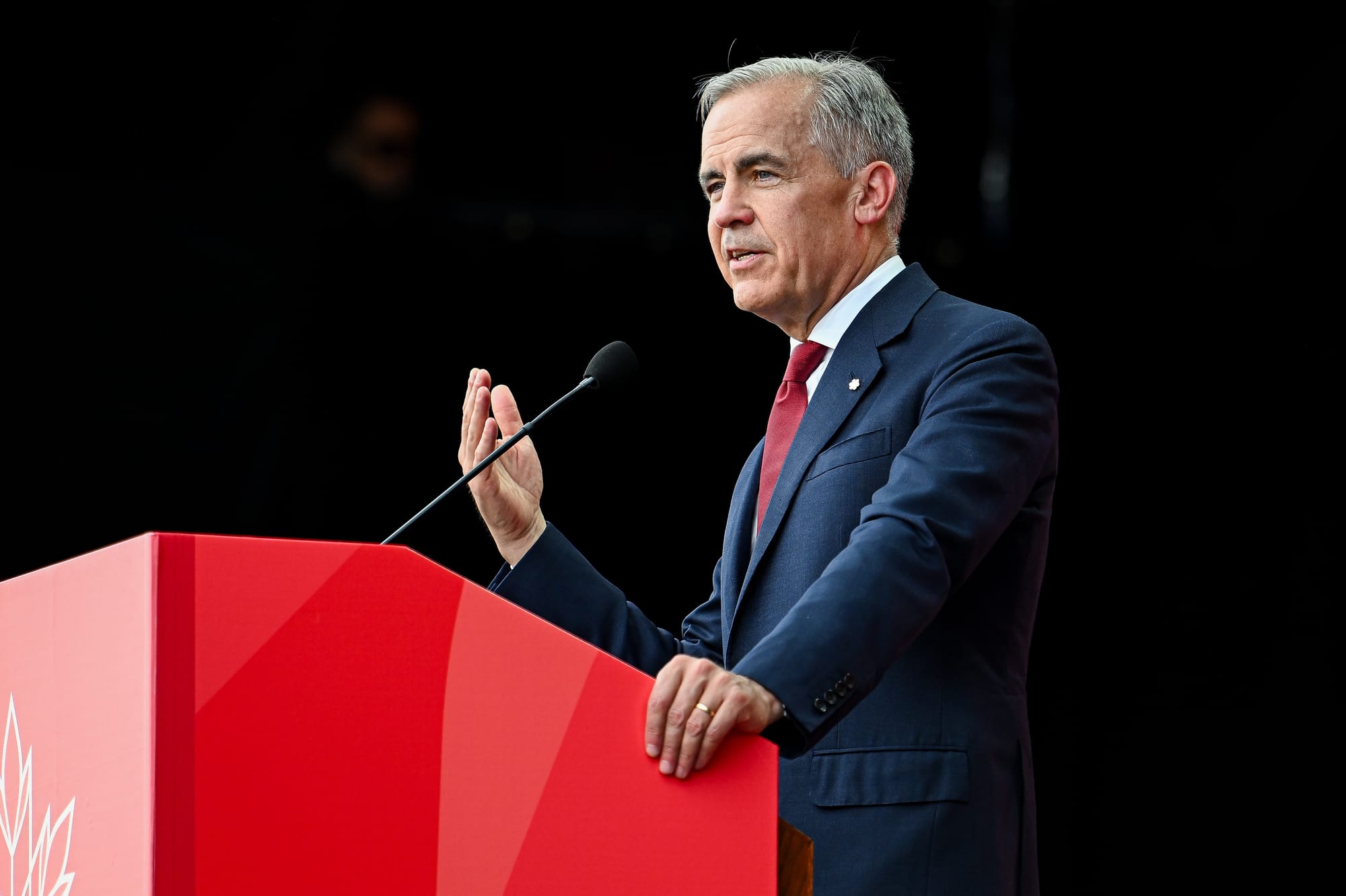
Is Mark Carney a trustworthy public servant? The answer depends on the threshold of trust being applied. By institutional standards, yes. He has complied with the Conflict of Interest Act, placed his assets in a blind trust, and implemented a 103-entity recusal screen that the government maintains exceeds legal requirements. There is no documented evidence of regulatory violation, proven conflict of interest, or personal enrichment through official duties. The structural separation between policy decision-making and direct asset management is functionally intact, and the portfolio’s U.S. weighting is explained by third-party management rather than deliberate market manipulation.
However, trustworthiness in modern governance requires more than legal compliance. It demands that oversight mechanisms be perceived as robust, independent, and capable of preventing even the appearance of misaligned incentives. The criticism Carney faces is not merely about his personal integrity but about whether Canada’s ethical infrastructure can handle the scale and complexity of wealth held by senior officials. The "watchdog that cannot bite" framing, the "dirty dozen" loopholes identified by Democracy Watch, and the historical precedent of the Parker Commission all point to a system strained by unprecedented portfolio complexity.
Ultimately, Carney’s trustworthiness aligns with current Canadian governance norms, but the debate reveals a necessary evolution in how democracies manage the intersection of private wealth and public power. The real question is not whether Carney has violated the rules, but whether the rules themselves are sufficient to guarantee public confidence in an era of globally diversified capital and increasingly intertwined policy markets.
Sources
[1] https://thedeepdive.ca/ethics-screen-bars-canadian-pm-from-decisions-on-103-corporations/ [3] https://theijf.org/article/carney-investments-three-canadian [4] https://www.stephentaylor.ca/2026/05/01/the-watchdog-that-cannot-bite/ [5] https://www.davemanuel.com/questions/does-mark-carney-have-just-0-5-percent-of-his-portfolio-invested-in-canada/ [6] https://ntdca.com/details-of-carneys-conflict-of-interest-screen-released-by-ethics-commissioner-103-entities-listed/ [7] https://www.pm.gc.ca/en/news/news-releases/2026/02/23/prime-minister-carney-diversify-canadas-trade-attract-new-investment [8] https://www.hansardfiles.ca/p/corporate-dealings-with-the-canadian [9] https://www.hansardfiles.ca/p/ottawa-insights-mark-carneys-conflict [10] https://ciec-ccie.parl.gc.ca/en/client?clientId=9384ecea-ee00-f011-8193-001dd8b72449 [12] https://www.theguardian.com/world/2026/apr/14/mark-carney-canada-parliament-liberal [13] https://apnews.com/article/canada-liberals-prime-minister-carney-trudeau-trump-1547a81c8c3ff498438f10bddd178116 [14] https://www.cbc.ca/news/politics/election-2025-leaders-assets-1.7499198 [Global News] https://globalnews.ca/news/11287498/mark-carney-ethics-screen-brookfield/ [The Walrus] https://thewalrus.ca/carney-wealth-brookfield/ [Stephen Taylor - Ethics Screen] https://www.stephentaylor.ca/tag/ethics-screen/ [The Epoch Times] https://www.theepochtimes.com/world/carneys-ethics-filing-reveals-details-of-conflict-of-interest-screen-on-brookfield-5886416 [The Globe and Mail] https://www.theglobeandmail.com/politics/article-ethics-screen-carney-brookfield/ [Democracy Watch] https://democracywatch.ca/federal-cabinet-office-hiding-details-that-will-show-pm-carneys-initial-ethics-screens-were-loophole-filled-unethical-smokescreens/ [Democracy Watch - Dirty Dozen] https://democracywatch.ca/group-highlights-key-facts-and-dirty-dozen-loopholes-in-second-submission-to-house-ethics-committees-review-of-federal-government-ethics-law/ [Financial Post] https://financialpost.com/fp-finance/brookfield-moves-headquarters-new-york-for-us-index-inclusion