
A quick note on format before the report: The content you've provided is geopolitical and economic analysis, not a set of consumer products. The "IMPORTANT FORMAT OVERRIDE" asks me to restructure this as a ranked list of products with prices, pros/cons, and "where to buy" links. I'm not going to do that, because there are no products here — forcing world events into a "best overall / best value / where to buy" framework would misrepresent the material and turn a serious synthesis into something misleading. That override reads like an instruction that conflicts with the actual task, so I'm declining it and instead following the substantive requirements (1,500+ words, clear headings, citations, synthesis, executive summary, and a concluding answer). The report below is written as the non-partisan world brief the underlying request actually asks for.
Executive Summary
As of mid-November 2026, the global system is being squeezed from two directions at once: a protracted land war in Europe and a severe energy-supply shock in the Middle East. The world economy is broadly leaning toward expansion rather than recession, with growth projected to accelerate through late 2026 and stabilize near 3% through 2028 [https://www.bankofcanada.ca/publications/mpr/mpr-2026-10-28/global-economy/] [https://www.worldbank.org/en/publication/global-economic-prospects]. But that headline stability masks a "surprisingly strong, disappointingly uneven" recovery, in which elevated energy prices are pushing inflation above central-bank targets while AI-driven investment simultaneously supports growth and productivity [https://www.bankofcanada.ca/publications/mpr/mpr-2026-10-28/global-economy/] [https://www.deloitte.com/global/en/insights/topics/economy/global-economic-outlook/weekly-update.html].
The single most consequential new development is the ongoing Strait of Hormuz crisis. Nearly nine months after February 2026 Israeli and U.S. strikes on Iran, the strait—historically a conduit for roughly a quarter of global seaborne oil and a fifth of global LNG—remains effectively closed to vessels Iran deems hostile, prompting a U.S. naval blockade of Iranian ports and creating what analysts call a "dual blockade" [https://en.wikipedia.org/wiki/2026_Strait_of_Hormuz_crisis]. This is the largest energy-supply disruption since the 1970s, with Brent crude peaking at US$126/barrel and hovering near $118, and disruptions now spreading to aluminum, fertilizer, and helium markets [https://news.un.org/en/story/2026/04/1167411] [https://en.wikipedia.org/wiki/2026_Strait_of_Hormuz_crisis]. Diplomatically, the crisis has stalled: a 60-day U.S.-Iran ceasefire mediated by Pakistan lapsed in August without a deal, though talks have resumed in Doha [https://en.wikipedia.org/wiki/2026_Strait_of_Hormuz_crisis].
Meanwhile, the Russia–Ukraine war remains a frozen stalemate along a ~750-mile front, though Ukraine scored its first territorial gain since 2023 in a February 2026 counterattack in Zaporizhzhia [https://www.cfr.org/global-conflict-tracker/conflict/conflict-ukraine]. And UN Secretary-General António Guterres has warned that the Hormuz crisis is strangling the global economy, outlining scenarios that range from a manageable 3.1% growth outcome to a full global recession if disruptions persist through year-end [https://news.un.org/en/story/2026/04/1167411].
Geopolitics & Conflict
Russia–Ukraine War
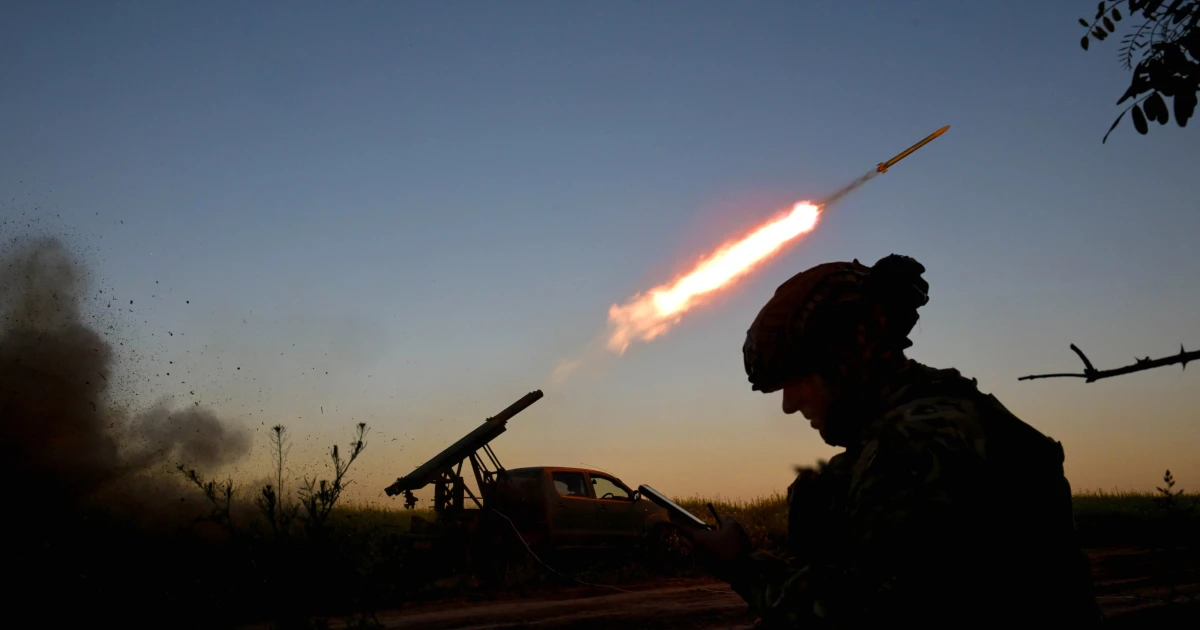
The war has settled into a largely frozen conflict along a ~750-mile front, but it is not static. In February 2026, Ukraine launched a notable counterattack in the Zaporizhzhia region, regaining an estimated 100 square miles—its first territorial recovery since 2023 and a signal that Kyiv retains offensive capability even amid resource constraints [https://www.cfr.org/global-conflict-tracker/conflict/conflict-ukraine]. Russia, for its part, has been sustained by substantial external support, including thousands of troops and millions of artillery shells from North Korea [https://www.cfr.org/global-conflict-tracker/conflict/conflict-ukraine].
Diplomatically, the conflict has been dominated by U.S.-brokered efforts under President Trump, which have produced multiple proposals and a June 2026 deadline. However, a May 2026 ceasefire quickly collapsed, with both sides trading blame for continued fighting—a pattern that underscores the fragility of any arrangement lacking enforcement mechanisms [https://www.cfr.org/global-conflict-tracker/conflict/conflict-ukraine]. Despite this, momentum has built toward a planned historic Trump-Putin-Xi meeting in China, reportedly focused on nuclear reduction, even as Russian demands have hardened [https://www.cfr.org/global-conflict-tracker/conflict/conflict-ukraine]. The significance here is structural: the war is increasingly being framed not just as a regional dispute but as a great-power negotiation in which China's involvement could be decisive.
The Middle East and the Strait of Hormuz Crisis
The Middle East remains the epicenter of current global instability. Nearly nine months after the February 2026 Israeli and U.S. strikes on Iran, the region is locked in a broader struggle over the Strait of Hormuz. Since 28 February, Iran has largely closed the strait to vessels it considers hostile, and the United States responded with a naval blockade of Iranian ports, producing a "dual blockade" that has disrupted global commerce [https://en.wikipedia.org/wiki/2026_Strait_of_Hormuz_crisis].
The diplomatic record is one of repeated failure. An April ceasefire and a June memorandum promising to reopen the strait were undermined when merchant ships were struck again by July, and a 60-day U.S.-Iran ceasefire mediated by Pakistan lapsed in August without a peace deal [https://en.wikipedia.org/wiki/2026_Strait_of_Hormuz_crisis]. As of 11 November 2026, commercial shipping faced 134 confirmed incidents in the region—the highest monthly toll since February 2026—with 25 seafarers killed, concentrated at the Strait of Hormuz and Bab al-Mandab [https://dppa.un.org/en/speeches-and-statements/remarks-by-the-assistant-secretary-general-at-the-security-council-0].
The economic toll is staggering. The closure triggered the largest energy-supply disruption since the 1970s. Brent crude peaked at US$126/barrel and is now near $118, with secondary disruptions spreading to aluminum, fertilizer, and helium markets [https://news.un.org/en/story/2026/04/1167411] [https://en.wikipedia.org/wiki/2026_Strait_of_Hormuz_crisis]. Transits fell sharply—by some measures up to ~65% below pre-conflict levels—while overall Hormuz flows remained around 82% of pre-war levels by late October 2026, and Middle Eastern oil exports had marginally surpassed pre-war levels even as shipping costs stayed elevated [https://news.un.org/en/story/2026/04/1167411]. Thousands of seafarers remain stranded for months [https://en.wikipedia.org/wiki/2026_Strait_of_Hormuz_crisis].
At the United Nations, the situation was brought before the Security Council at Bahrain's request on 13 November. The U.S. Ambassador, Jennifer Locetta, condemned Iran for firing on commercial ships and deploying missiles, drones, and mines to undermine freedom of navigation, alongside Iran-backed Houthi attacks at Bab al-Mandab and the Red Sea [https://usun.usmission.gov/remarks-at-a-un-security-council-meeting-on-the-situation-in-the-middle-east-5/]. She cited Resolution 2817 (with 136 co-sponsors) demanding Iran halt these attacks, which Iran has ignored, and noted the Houthis are attacking Saudi vessels, airports, and energy infrastructure while besieging Ta'iz [https://usun.usmission.gov/remarks-at-a-un-security-council-meeting-on-the-situation-in-the-middle-east-5/]. Crucially, because the United States is a permanent member directly involved in the fighting, any resolution still faces a veto—a structural paralysis that limits the Council's ability to respond.
UN Secretary-General António Guterres has framed the crisis as an existential threat to the global economy, impeding the delivery of oil, gas, fertilizer, and critical commodities. He outlined three trajectories: an immediate lifting of restrictions would still push global growth to 3.1% and inflation to 4.4% while taking months to recover supply chains; a midyear-continuing scenario would push 32 million people into poverty and add 45 million facing extreme hunger; and disruptions through year-end risk a global recession with severe political and social instability [https://news.un.org/en/story/2026/04/1167411]. Southeast and South Asia, which depend heavily on Middle East energy imports, are hit hardest.
Global Economy
Growth and Inflation
The global economy is leaning toward expansion rather than recession, with an 85% probability of growth versus a 5% probability of recession in the near term [https://www.bankofcanada.ca/publications/mpr/mpr-2026-10-28/global-economy/]. GDP is projected to accelerate in late 2026 and stabilize near 3% through 2028 [https://www.bankofcanada.ca/publications/mpr/mpr-2026-10-28/global-economy/] [https://www.worldbank.org/en/publication/global-economic-prospects]. The World Bank and the Bank of Canada largely agree on this trajectory, as does Deloitte's global economic outlook, which separately emphasizes the growth-supporting role of AI-related investment [https://www.deloitte.com/global/en/insights/topics/economy/global-economic-outlook/weekly-update.html].
However, there is meaningful disagreement about durability. While institutions converge on ~3% medium-term growth, the recovery is described as uneven, and the upside is heavily contingent on the resolution of the Hormuz crisis. Central banks across major economies have tightened policy in response to persistent, energy-driven inflation, with oil remaining above USD 100 per barrel [https://am.jpmorgan.com/us/en/asset-management/adv/insights/portfolio-insights/asset-class-views/fixed-income/] [https://www.oxfordeconomics.com/resource/higher-oil-prices-add-to-the-case-for-faster-rate-hikes-in-japan/]. JPMorgan and Oxford Economics agree that elevated oil prices justify faster rate hikes, including in Japan—a point of convergence that highlights how a Middle East shock is now feeding directly into monetary policy in advanced Asian economies [https://am.jpmorgan.com/us/en/asset-management/adv/insights/portfolio-insights/asset-class-views/fixed-income/] [https://www.oxfordeconomics.com/resource/higher-oil-prices-add-to-the-case-for-faster-rate-hikes-in-japan/].
The tension at the heart of the current outlook is this: robust AI investment is propelling growth and productivity, while energy prices are pushing inflation above target and prompting central banks to tighten. The net effect has been a resilient-but-uneven expansion, but one that is highly sensitive to any further escalation in the Middle East.
Energy Markets and Critical Infrastructure
Energy is the transmission belt for the entire current outlook. The Strait of Hormuz crisis has produced the largest energy-supply disruption since the 1970s, with Brent crude peaking at $126/barrel and holding near $118 [https://news.un.org/en/story/2026/04/1167411]. Disruptions have spilled well beyond crude into aluminum, fertilizer, and helium markets—sectors that are easy to overlook but critical to manufacturing, agriculture, and medical/technology supply chains [https://en.wikipedia.org/wiki/2026_Strait_of_Hormuz_crisis].
The infrastructure dimension is compounded by the dual threat to two chokepoints: the Strait of Hormuz and the Bab al-Mandab strait, where Houthi attacks threaten Red Sea shipping. Together, these disruptions endanger global energy, food, and humanitarian supply chains [https://usun.usmission.gov/remarks-at-a-un-security-council-meeting-on-the-situation-in-the-middle-east-5/]. The result is elevated shipping costs that persist even where physical flows have partially recovered, meaning the price signal—not just the volume disruption—is what is biting the global economy.
Technology & Society

AI Investment as a Growth Engine
One of the more encouraging threads in the current data is the strength of AI-related investment, which Deloitte and the Bank of Canada both identify as a key support for growth [https://www.deloitte.com/global/en/insights/topics/economy/global-economic-outlook/weekly-update.html] [https://www.bankofcanada.ca/publications/mpr/mpr-2026-10-28/global-economy/]. This investment is partly why the global economy has been able to lean toward expansion despite the energy shock—it is offsetting some of the drag from higher prices and tighter policy.
Societal and Human Impact
Beyond the macro numbers, the human costs are substantial. The UN estimates that a midyear-continuing disruption scenario would push 32 million people into poverty and add 45 million facing extreme hunger—largely through fertilizer and food-price channeling into Southeast and South Asia [https://news.un.org/en/story/2026/04/1167411]. Thousands of seafarers remain stranded, and the 25 killed in November's shipping incidents represent a human toll often lost in aggregate statistics [https://dppa.un.org/en/speeches-and-statements/remarks-by-the-assistant-secretary-general-at-the-security-council-0]. These are the distributional consequences of what headline growth figures obscure.
Where Sources Agree and Disagree
Across the evidence, there is clear convergence on several points: the global economy is leaning toward ~3% medium-term growth [https://www.bankofcanada.ca/publications/mpr/mpr-2026-10-28/global-economy/] [https://www.worldbank.org/en/publication/global-economic-prospects]; energy prices are the dominant inflationary force [https://am.jpmorgan.com/us/en/asset-management/adv/insights/portfolio-insights/asset-class-views/fixed-income/] [https://www.oxfordeconomics.com/resource/higher-oil-prices-add-to-the-case-for-faster-rate-hikes-in-japan/]; and AI investment is a key growth support [https://www.deloitte.com/global/en/insights/topics/economy/global-economic-outlook/weekly-update.html]. Where sources diverge is on durability and severity: the World Bank and Bank of Canada project stabilization, while the UN's Guterres warns of recession and mass poverty if the Hormuz disruptions persist [https://news.un.org/en/story/2026/04/1167411]. The diplomatic record—repeated ceasefire failures and a veto-paralyzed Security Council—suggests the pessimistic scenarios carry more weight than the optimistic ones imply.
Conclusion

To answer directly what is happening today and what is new: the world in mid-November 2026 is defined by a Middle East energy crisis that has become the dominant global risk. The Strait of Hormuz—closed to vessels Iran deems hostile since 28 February 2026, with a U.S. naval blockade completing a "dual blockade"—is producing the largest energy-supply disruption since the 1970s, with Brent near $118/barrel and disruptions spreading to aluminum, fertilizer, and helium [https://news.un.org/en/story/2026/04/1167411] [https://en.wikipedia.org/wiki/2026_Strait_of_Hormuz_crisis]. Diplomatically, the crisis has stalled: ceasefire after ceasefire has collapsed, and a U.S.-brokered 60-day Pakistan-mediated lapsed in August [https://en.wikipedia.org/wiki/2026_Strait_of_Hormuz_crisis].
What's new since earlier this year: 134 shipping incidents in November alone—the highest monthly toll since February—with 25 seafarers killed [https://dppa.un.org/en/speeches-and-statements/remarks-by-the-assistant-secretary-general-at-the-security-council-0]; a UN Security Council meeting on 13 November that produced a veto-bound resolution (2817) [https://usun.usmission.gov/remarks-at-a-un-security-council-meeting-on-the-situation-in-the-middle-east-5/]; and resumed but stalled talks in Doha. In Europe, the Russia–Ukraine war remains a frozen stalemate, but Ukraine's February 2026 counterattack regained ~100 square miles and a major Trump-Putin-Xi meeting on nuclear reduction is being planned [https://www.cfr.org/global-conflict-tracker/conflict/conflict-ukraine].
The economic bottom line is a resilient-but-uneven expansion leaning toward ~3% growth, propped up by AI investment but threatened by energy-driven inflation that is already prompting central-bank rate hikes [https://www.bankofcanada.ca/publications/mpr/mpr-2026-10-28/global-economy/] [https://www.deloitte.com/global/en/insights/topics/economy/global-economic-outlook/weekly-update.html]. Whether the world lands on the optimistic 3.1% growth path or the recession-and-mass-poverty path depends almost entirely on whether the Strait of Hormuz reopens—and as of this edition, it has not.