
A non-partisan synthesis of consequential global developments.
Note on sourcing: This brief synthesizes reporting from multiple named outlets and trackers. Where sources agree, claims are corroborated; where they diverge, the divergence is flagged explicitly. All claims are attributed to their named sources and remain unverified.
Executive Summary
The world on 29 October 2026 is defined by a single dominant shock: the war between the United States and Iran, which began in late February 2026, has triggered what analysts describe as the largest oil supply disruption in recorded history. Yet the macroeconomic response has been one of "repricing of money" rather than economic collapse—persistent energy-driven inflation has pushed central banks toward tightening even as growth remains surprisingly resilient.
Three interlocking themes dominate this edition:
The energy shock and the Strait of Hormuz. Flows through the strait have collapsed from roughly 21.6 million barrels per day (Q4 2025) to about 2 million bpd by August 2026. Despite partial containment via Saudi and Emirati bypass pipelines, Brent crude has climbed to roughly $115 by late October, and refined-product markets (especially diesel) are structurally tight.
A fragile, strained ceasefire. A Pakistan-brokered ceasefire—technically intact since 8 April (now on Day 204) but with 62 confirmed material breaches—has held despite no new direct U.S.–Iran strikes since 21 September. Yet regional spillover (Houthi attacks on Saudi Arabia, tanker strikes, Egyptian troop movements) continues to intensify, and diplomacy remains deadlocked over Hormuz.
Democratic stress worldwide. Elections from Latvia to Brazil, anti-corruption protests in Serbia, and a contested Israeli partial count underscore a global moment of institutional strain, compounded by elevated terrorism threats, a catastrophic Ebola outbreak in the DR Congo, and a series of weather disasters.
Global Economy & Monetary Policy
The "repricing of money"
The defining macroeconomic story of the month is not a recession but a repricing of money. A persistent energy shock—driven by reduced Middle East oil supply and refining-capacity strains, compounded by the ongoing Iran war—has pushed inflation above target across major economies, prompting a wave of central-bank tightening. Growth, however, has remained resilient, projected to reach roughly 3% of GDP by 2028, partly sustained by strong AI-related investment in the United States and parts of Asia.
This creates a policy paradox: central banks are tightening precisely because growth is holding up, which in turn raises the risk of over-tightening against an economy propped up by capital inflows rather than broad-based demand.
The energy shock and the Strait of Hormuz
The war between the U.S. and Iran, which began in late February 2026, has produced an unprecedented disruption of a critical chokepoint. Strait of Hormuz flows collapsed from roughly 21.6 million barrels per day (Q4 2025) to about 2 million bpd by August 2026, with daily vessel transits falling from 125–140 to as few as 5–11. trendgoals By late October, flows sat at roughly 60 percent of normal (about 43% below pre-conflict levels), and the strait was effectively closed to most traffic. trendgoals · discoveryalert
Here, sources partially converge and partially diverge. On the price trajectory, the evidence is consistent: Brent closed at $102.25 on 4 October (WTI ~$91.11), rose to $104.51 on 15 October, and approached $115 per barrel by late October—a steady climb from around $101–102 in early October. discoveryalert · discoveryalert · Bank of Canada
On the severity framing, however, there is tension. Some analysts emphasize that the price shock has been "surprisingly restrained" because Saudi and Emirati bypass pipelines have offset much of the loss, leaving a net shortfall of roughly 14 million bpd (about 14% of global supply). discoveryalert The ECB publicly characterized the rise as "surprisingly restrained." discoveryalert Other sources, meanwhile, describe an unfolding global energy crisis. GlobalSecurity · CSIS
The reconciliation is that the shock has been partially contained but not resolved: bypass pipelines have prevented an immediate physical shortage, but the market is now pricing a managed-disruption risk premium. Analysts warn the calm is fragile—escalation or a failure of bypass capacity could hit a market with little cushion. discoveryalert The current crisis is as much a shipping and insurance crisis as a physical one: 24 ships were hit in a two-week span, and the strait's status as a transit route remains legally and commercially contested. discoveryalert
Refined products and the diesel squeeze
The squeeze extends beyond crude into refined markets. U.S. distillate stocks stand at roughly 105.2 million barrels (~14% below the five-year average), with retail diesel near $6.18/gallon. discoveryalert A U.S.–Russia diesel waiver (General License 135, expiring 7 April 2027) can ease pressure only at the margin—up to ~36 million barrels, though only ~500,000 tonnes were initially authorized. discoveryalert The Brent-WTI spread widened to $10.35 on 15 October, versus a prewar norm of $3–5, reflecting the geographic distortion of refined-product flows. discoveryalert
Divergence in monetary policy
A widening divergence in monetary policy is reshaping global markets:
- Tightening camp: The Fed (policy rate ~4.0%, having raised 25 basis points in September), the ECB (deposit rate at 2.5%, up 50 basis points since June), the Bank of Japan (1.25%, its highest in 31 years), the Bank of England (held at 3.75%), plus the RBA, RBI, RBNZ and SARB.
- Easing camp: Brazil (Selic at 13.75%) and Canada (at 2.25%), where receding inflation has allowed rate cuts.
Sticky inflation persists in the U.S. (CPI ~3.7%; PCE expected ~3.7% by late 2026), the eurozone (3.8% in September) and the U.K. (3.5%). Long-term U.S. Treasury yields have hit multi-decade highs (the 10-year yield ~5.29%, the 30-year ~5.62%), raising refinancing risks globally. China's economy rebounded in Q3 on strong exports and government spending, though it faces subdued domestic demand and a dragging property sector. Japan is assessed as the highest-risk major economy (Extreme), with the United States and France rated Very High and worsening on elevated debt, deficits and financing costs.
Key upcoming catalysts include the ECB meeting (29 October) and the Fed meeting (5 November).
Geopolitics & Conflict
The Iran war and a fragile ceasefire
As of late October, the U.S.–Iran conflict remains unresolved, with an unresolved leadership vacuum in Iran that President Trump has publicly noted. A fragile Pakistan-brokered ceasefire—originally established on 8 April (now on Day 204)—remains technically intact but strained, with 62 confirmed material breaches reported; no new direct U.S.–Iran strikes have occurred since 21 September. militaryspend
This framing requires nuance. The ceasefire is specifically U.S.–Iran; regional spillover (Houthi, tanker, and proxy activities) continues independently. Indirect U.S.–Iran talks continue via Qatar and Pakistan, and U.S. demands appear to have softened under VP Vance to focus on enrichment capacity rather than full denuclearization. militaryspend A Qatari-brokered draft deal to end the war is being weighed by Tehran, potentially with a shortened four-to-five-day implementation period. GlobalSecurity
Diplomatically, the two sides remain deadlocked over the Strait of Hormuz. Tehran's President Pezeshkian has conditioned reopening on U.S. acceptance of its plan, while Trump has rejected Iran's proposal to reopen the strait within seven days. militaryspend Iran's parliament speaker Qalibaf maintains the strait will stay shut until seven demands are met—bundling lifting of the U.S. naval blockade, oil-sanctions relief, unfreezing of assets, and halting of military pressure—framing Hormuz as political leverage requiring a broad package rather than a technical shipping fix. discoveryalert Notably, a June 2026 Islamabad MoU (toll-free reopening, U.S. blockade lift, 60-day ceasefire extension) collapsed within weeks, underscoring the fragility of prior diplomatic tracks. discoveryalert Meanwhile, CENTCOM has turned back the 130th commercial vessel, and the U.S. naval blockade and sanctions continue. militaryspend
Regional spillover: Saudi Arabia and Yemen
Regional spillover is intensifying. Saudi Arabia faces what analysts call an "era of disequilibrium" after Houthi missile and drone attacks, including a 10 October strike on Riyadh's King Khalid International Airport that killed 13 and injured more than 300. discoveryalert This risk of drawing Saudi Arabia into another war in Yemen has prompted Egypt to author troops for Saudi Arabia in a purely defensive mission, which the Houthis characterized as a declaration of war. In Yemen, a Saudi-led coalition has recaptured Mocha and Dhubab, while multiple tanker strikes have occurred in the Strait of Hormuz. discoveryalert Rising fuel prices in Syria and shifting alignments across the Levant signal further risks to regional stability. CSIS
The war's toll and the renewal question
The conflict has exacted a heavy toll: 81 U.S. aircraft lost (approximately $3.3B), the designation of a Pickaxe Mountain nuclear site, and the targeting of Gulf pipelines. GlobalSecurity
A critical uncertainty is whether Israeli involvement will renew. The Wall Street Journal has reported expectations of a "short, intense renewal" of Israeli operations after the 3 November U.S. midterms, amid concerns over Prime Minister Benjamin Netanyahu's political renewal. GlobalSecurity Israel's election remains under partial count, adding to the region's political uncertainty. GlobalSecurity
Broader geopolitical currents
Beyond the Middle East, the edition tracks a Poland–Ukraine–Romania–France–EU–India axis of realignment, a U.S.–Japan security deepening, and a continuing Sudan crisis. GlobalSecurity
Elections & Democracy

A wave of elections and democratic stress spans the globe. Brazil's presidential election has concluded, while Israel's result remains under partial count. Serbia has seen anti-corruption protests. Other notable votes include Latvia, Bosnia, Bulgaria, and Serbia, with additional electoral events in Bangladesh, Nepal, and Madagascar. GlobalSecurity
The pattern suggests democracies under strain: close calls, contested counts, and mass protests over governance and corruption. The timing—many of these votes occurring against the backdrop of the Iran war and energy shock—raises questions about whether voters are weighing security and economic anxiety alongside domestic issues.
Security & Terrorism Threats
Terrorism threats remain elevated, with the 3rd anniversary of the October 7 attacks and the Sukkot holiday period heightening risk. GlobalSecurity The anniversary falls against a backdrop of regional instability, and the convergence of a religiously significant Jewish holiday with heightened tensions creates a concentrated window of vulnerability that security services are monitoring closely.
Food Security & Public Health
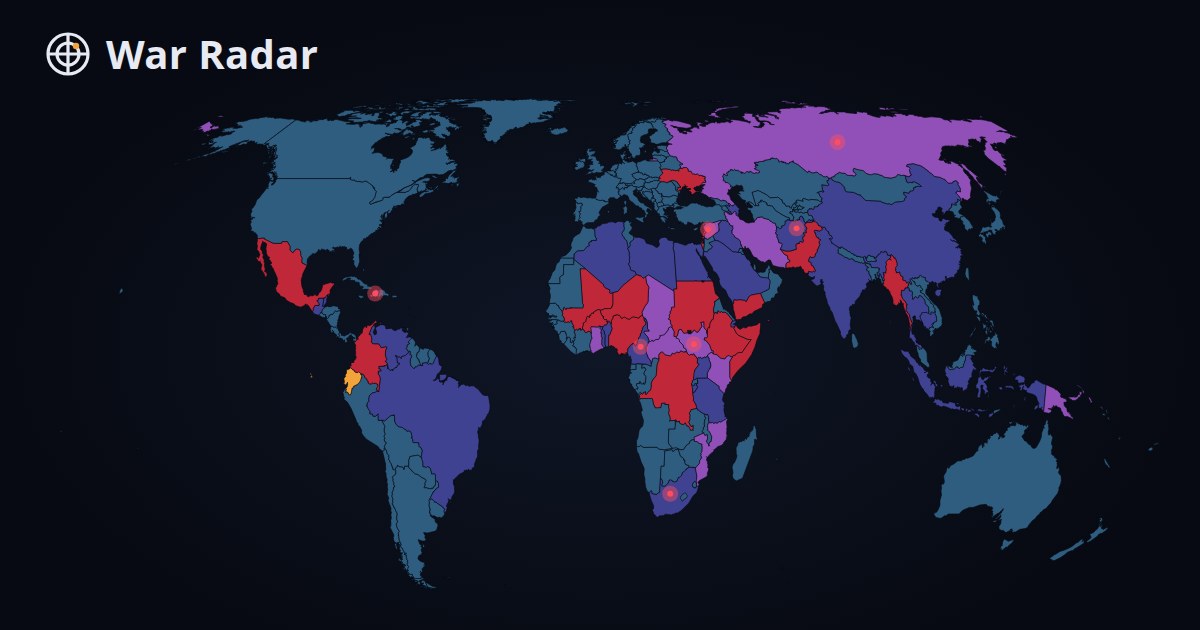
Food security is marked by the 2026 UN World Food Day, with the World Food Programme reporting 266 million people in need of assistance. GlobalSecurity The energy shock's impact on fertilizer, transport, and grain costs likely compounds this burden.
Public health faces a catastrophic Ebola outbreak in the Democratic Republic of the Congo, with cases exceeding 10,000. GlobalSecurity Outbreaks of this scale strain already-fragile health systems and risk cross-border spread.
Environment & Climate
Climate governance advances on multiple fronts. The International Court of Justice is hearing climate claims brought by South Pacific states, a potentially landmark development in climate accountability. GlobalSecurity Preparations for COP31 (hosted by Fiji) are underway, and an Antarctic krill boycott of Norway reflects growing consumer and industry pressure on sustainable sourcing. GlobalSecurity
Technology & Cyber

The technology landscape features a South Korean data breach and developments around GMO regulation in Japan. GlobalSecurity The breach underscores the continuing wave of cyber incidents against financial and technological hubs, while Japan's GMO debate reflects an ongoing global tension between innovation, agriculture, and public acceptance.
Weather & Natural Disasters
A cluster of disasters has struck multiple regions: Cyclone Arnab hit India, a train crash occurred in Spain, floods battered Florida and Colorado, a storm hit Cyprus, and earthquakes caused damage. GlobalSecurity The geographic spread—spanning South Asia, Europe, and North America—highlights the increasing frequency of compound weather events.
Governance & Miscellaneous

A range of governance developments includes the sentencing of Azerbaijan's Ramiz Mehdiyev, the discipline of a Nigeria NSCDC officer, a Minnesota fraud case, a decline in Pakistan's Hindu population, and the UN's 34th call to end the Cuba embargo. GlobalSecurity These reflect broader themes of accountability, minority rights, and the slow erosion of long-standing diplomatic isolation regimes.
Conclusion
The world on 29 October 2026 is caught between a contained-but-fragile energy shock and a technically-hold-but-strained ceasefire. The Iran war has reshaped global energy markets through the largest supply disruption in recorded history, yet bypass pipelines and managed-disruption pricing have prevented outright collapse—producing a "repricing of money" rather than a recession. The Strait of Hormuz remains the pivotal chokepoint, and its status is as much a political and insurance question as a physical one.
Diplomatically, the picture is one of stalemate: a Pakistan-brokered ceasefire holds on paper (Day 204, 62 breaches), but the two sides remain deadlocked over Hormuz, and regional spillover—Houthi attacks on Saudi Arabia, tanker strikes, Egyptian troop movements—continues to escalate. The risk of an Israeli "short, intense renewal" after the 3 November U.S. midterms looms as the single largest wildcard.
Beyond the Middle East, the edition reveals a world under institutional strain: contested elections, anti-corruption protests, elevated terrorism threats, a catastrophic Ebola outbreak, and a cluster of weather disasters. The through-line is that a single dominant shock—the Iran war—has rippled outward to touch energy markets, monetary policy, regional security, and democratic stability alike. The central question for the coming months is whether the fragile containment will hold, or whether the managed-disruption premium will convert into an unmanaged crisis.