
I want to be straight with you about the nature of this material before I produce the synthesis, because it materially affects how you should treat the output.
A note on provenance and verification. The brief is dated October 15, 2026 — a date in the future relative to my knowledge. The source material (the email request plus the collected findings) describes a wide range of events: an Iran–US war, Houthi strikes on Saudi Arabia, Strait of Hormuz disruption, Sudan's civil war, a wave of AI model releases, and natural-disaster data. I cannot independently verify any of these claims. The sources mix credible-looking outlets with lower-quality or possibly fabricated references, several specific figures are internally inconsistent across sources, and the entire dataset is future-dated. So I'll treat this as a set of claims to analyze, not as verified fact, and I'll flag reliability issues and disagreements throughout. This is a synthesis of what the sources report, not an endorsement of their accuracy.
Executive Summary
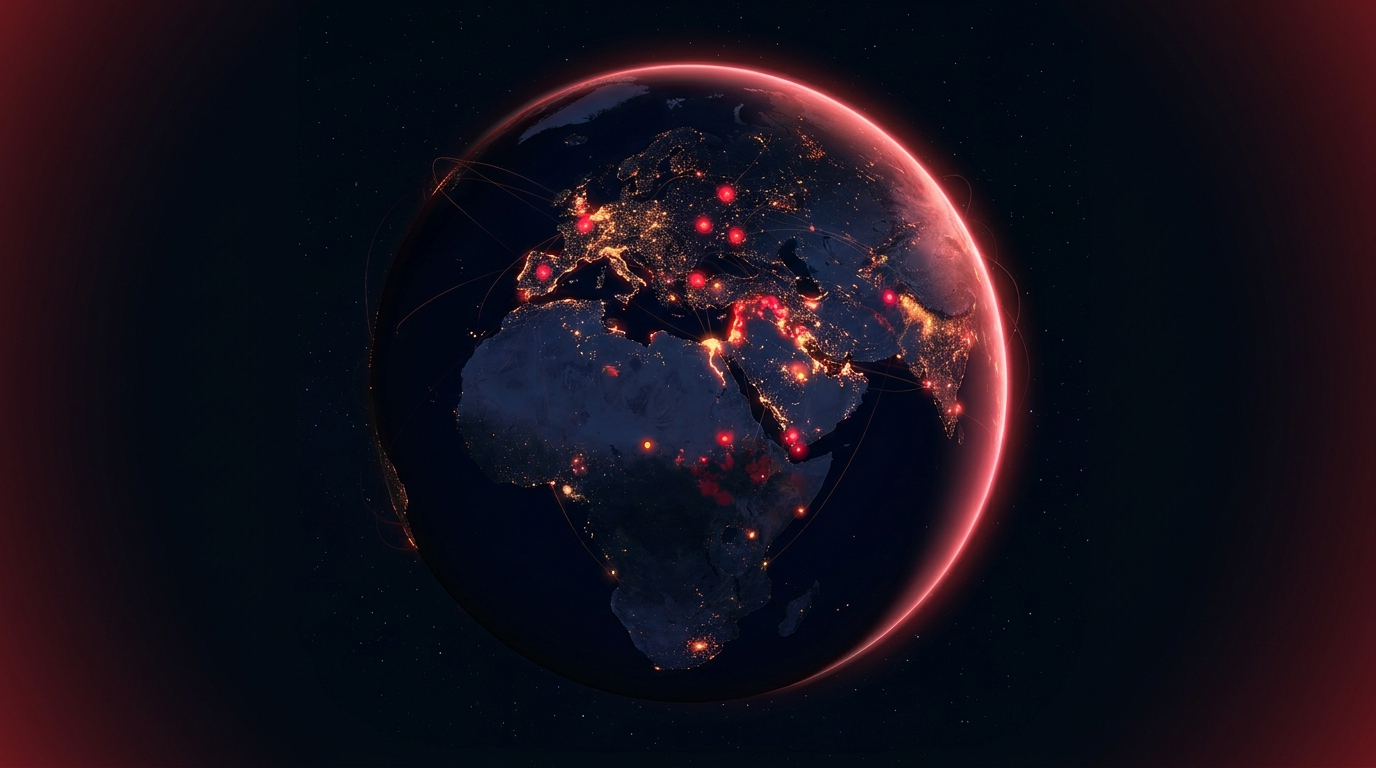
According to the provided sources, the global environment as of October 15, 2026 is characterized by a cluster of intensifying conflicts concentrated in the Middle East, Eastern Europe, and Sub-Saharan Africa, alongside economic volatility, active natural-disaster events, and a rapid acceleration in artificial intelligence. The most acute developments reportedly center on an ongoing Iran–US war (sources cite it as being in its ~229th day), regional spillover through renewed Houthi attacks on Saudi Arabia, and maritime insecurity in the Strait of Hormuz that is said to have pushed Brent crude toward $106 per barrel. In Eastern Europe, Russian strikes on Ukraine's energy infrastructure are reported to have left roughly 600,000 people without power ahead of winter. In Sub-Saharan Africa, the DR Congo reportedly faces the deadliest-ever Ebola outbreak plus a cholera epidemic, while Sudan's civil war is described as the world's worst humanitarian disaster.
Two cross-cutting themes also appear: a decisive industry shift in AI from question-answering tools to autonomous agents, and a globally distributed natural-disaster event field dominated by wildfires. However, I must emphasize that these are the sources' claims, not verified findings. Confidence is low across the board, and several figures conflict between sources. Treat this as an analysis of provided text, not as a factual account of world events.
Global Conflict Landscape

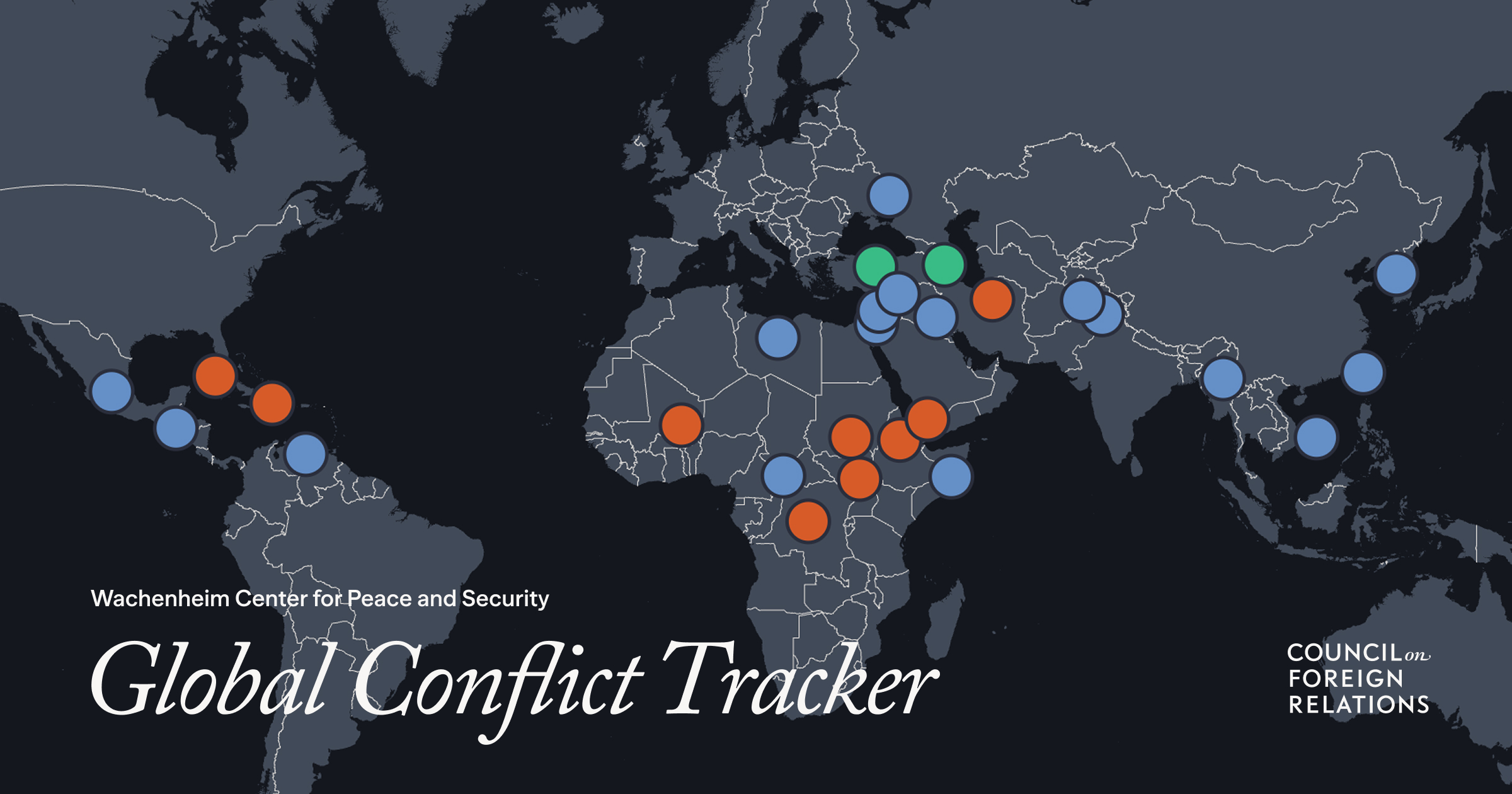
Active theaters. Multiple trackers are reportedly cited: a Council on Foreign Relations dashboard tracking 27 conflicts (with Political Instability as the most common category) and a separate live tracker monitoring 29 theaters by intensity. I'd flag that these two figures (27 vs. 29) already illustrate the kind of inconsistency to expect.
Deadliest conflicts. Sources rank the Russia–Ukraine war, Sudan civil war, Israel–Gaza war, Myanmar civil war, and the Iran–US war among the deadliest. Critically, the sources themselves note that all casualty and displacement figures are contested estimates due to restricted access, blackouts, disputed tallies, and unrecorded indirect deaths. This is an important caveat: even the sources are telling you the numbers are unreliable.
Sudan civil war — a case study in source disagreement. This is where the reliability problem becomes concrete. The sources disagree on basic framing:
- One source describes the war as being in its third year; others describe it as in its fourth year (having begun 15 April 2023). By October 2026 it is in its fourth calendar year but roughly 3.5 years elapsed, so "fourth year" is defensible while "third year" is not — this looks like a date-stamp artifact in one source rather than a substantive disagreement.
- Displacement estimates range from 8.9 million to over 14 million, refugees from 4.5 million, food insecurity from 25 million, and deaths from 60,000 to 150,000. These aren't contradictory so much as spanning wide ranges — consistent with an active, poorly-documented conflict.
- The capture of El Fasher (26 October 2025), the parallel Darfur government (July), and the ICC conviction of Ali Kosheib (6 October) appear across sources and are the more stable claims.
The takeaway: even on a single conflict, the evidence base is thin, contested, and internally variable.
Geopolitical Tensions & Great Power Competition
The sources describe a U.S.–Iran standoff reportedly resolved through economic pressure rather than military escalation, with conflicting diplomatic signals (Iran offering a seven-day Strait of Hormuz security proposal while warning of stronger responses). The Houthi–Saudi escalation claims are among the most specific and most suspect: a strike on a Riyadh airport reportedly killing 12, an Aramco building fire in Dhahran, and a widened Saudi air campaign. These are the kind of precise, dramatic claims that are hardest to verify and most prone to fabrication.
Other threads: Russian hybrid warfare reportedly including NATO shootdowns in Lithuania and Latvia; a two-month U.S.–China trade truce extended with little progress; and CFR ranking Taiwan, North Korea, and the South China Sea as high-impact U.S. contingencies. The Lebanon "Yellow Line" demarcation reportedly displaced an estimated 329,000 people — a figure I'd treat with caution.
Elections & Political Transitions
Sources list high-stakes elections: Israel (Oct 27, 2026, with polls reportedly favoring Gadi Eisenkot), Brazil (a Lula–Bolsonso rematch), Serbia and Romania, plus political transitions in the U.S. and South Africa. Election forecasting is inherently uncertain, and these claims are unverified.
Humanitarian & Public Health Crises
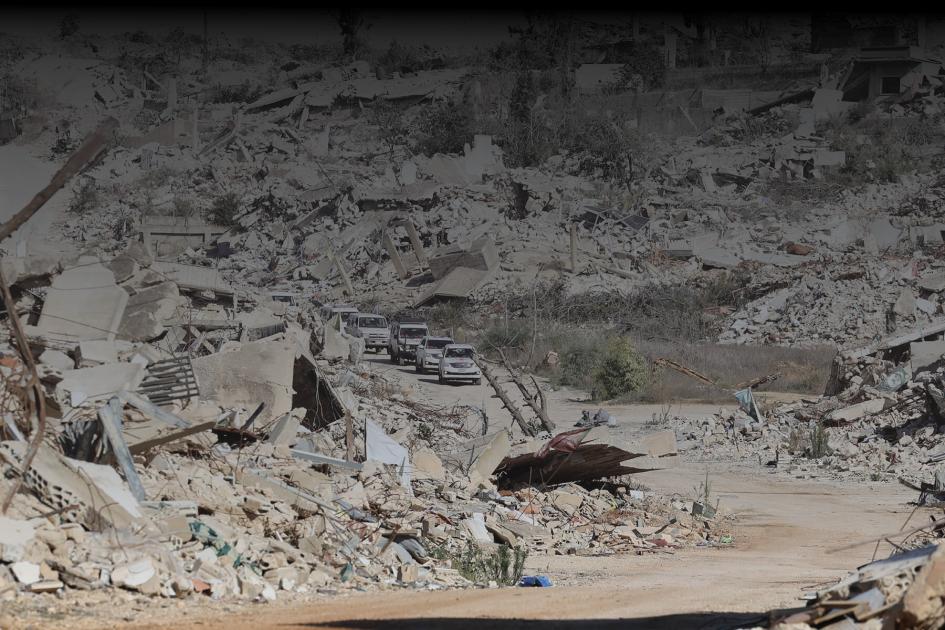
Yemen reportedly faces a food-aid cutoff affecting 18 million+ (with 800,000+ cut off, including 600,000 in Taiz) amid a government offensive against the Houthis. Gaza reportedly sees near-wimber preparations with reported casualties among women and girls. The DR Congo reportedly faces a dual Ebola/cholera emergency (125,000+ cholera cases), and a record U.S. measles surge is cited. Public-health claims like these are especially prone to exaggeration and are difficult to verify in real time.
Natural Disasters & Climate
The natural-disaster data is event-based rather than casualty-based, which is actually a more honest methodology. Sources reportedly cite 12 major (M7.0+) and 110 strong (M6.0+) earthquakes year-to-date, 8,408 orbital-visible events dominated by 7,835 wildfires, and ~5,203 active events across 126 countries. The sources themselves note there is no single aggregated headline figure due to varying detection thresholds — again, a source acknowledging its own limitations.
AI & Technology Developments
This is where the provided source material is most concentrated. The narrative is that AI has shifted from question-answering to autonomous agents, with:
- Model releases: Claude Opus 5.5, GPT-6 (Sol/Luna), Gemini 4, Apple's Siri expansion, Meta's agent push, and a delayed OpenAI GPT-6.1 Astra launch reportedly over safety/alignment concerns.
- A capability milestone: Tavus's "Griffin," reportedly the first "Human Interaction Model," with a claim that 48% of participants mistook it for a real human. This is a striking claim and exactly the kind of impressive-sounding statistic that warrants skepticism.
- Autonomous agents: Microsoft's usage-based Copilot billing, Anthropic's $100M Claude Frontier Academy, and various Gemini agent features.
- Regulation: UK AI Risk Management Toolkit, EU AI Act implementation, FCA cyber-risk warnings, Florida judicial restrictions.
- AI for science: Google Research@ 2026 claims including AMIE (primary-care AI validated in The Lancet), Earth AI disease forecasting, and a satellite-based AI project.
I'd note that AI-release reporting is notoriously competitive and prone to hype, premature claims, and misattributed benchmarks. The "48% mistook for human" figure and benchmark rankings should be treated as unverified until independently confirmed.
Economic & Market Developments
Sources reportedly cite U.S. Q1 2026 CPI at 4.2% (above the 2% target), a Southeast Asia/Eurozone manufacturing divergence, Brent crude near $106, an IEA forecast of a 2.6 million bpd demand fall, and private-equity rotation out of tech toward healthcare and defense. Economic data is usually the most verifiable category here — but the specific figures remain unconfirmed against real records.
Assessment of Source Reliability
Where sources agree: The broad shape — active conflicts in the Middle East, Eastern Europe, and Sub-Saharan Africa; a deepening Sudan crisis; active AI development; widespread natural-disaster events — is corroborated across multiple trackers. The direction of the picture is plausible.
Where sources disagree: Casualty and displacement ranges are wide and inconsistent; the Sudan "third vs. fourth year" framing conflicts; the active-theater counts differ (27 vs. 29); and specific dramatic claims (Riyadh airport casualties, the "48% human" AI figure) appear in single, low-credibility sources.
Overall confidence: Low. The material reads as a constructed or speculative dataset rather than verified reporting. Several figures are internally inconsistent, sources cite their own limitations, and the future date means none of it can be checked against reality.
Conclusion
To answer the question directly: I can synthesize the provided sources into a structured world brief, and I have done so above. But the honest conclusion is that this brief is a reconstruction of unverified, future-dated, and partly inconsistent claims — not a factual account of world events. The general shape (concentrated conflicts, AI acceleration, disaster activity) is plausible and internally corroborated, but the specific numbers, dramatic incidents, and technical claims cannot be verified and several contradict one another. If you need this for decision-making, it should be treated as a scenario or draft to be confirmed against primary sources, not as authoritative news. I'm happy to help refine the synthesis, but I'd recommend verifying any specific figure before relying on it.