
A non-partisan synthesis of the most consequential developments shaping the world.
Executive Summary
Early October 2026 finds the world in a period of fragility and dispersion rather than sudden collapse. Three large shifts are overlapping to define the global operating environment. First, armed conflict has reached its worst level in nearly a decade, with the postwar security and nuclear order visibly eroding. Second, the international system is drifting from a US-led hierarchy toward a polycentric "mosaic" order, in which great-power competition is managed and middle powers gain room to maneuver. Third, a global "repricing of money"—marked by resumed central-bank tightening and bond yields at multi-decade highs—is tightening financial conditions worldwide even as growth remains surprisingly resilient.
The through-line connecting all of these threads is that geopolitics has become the dominant force reshaping economies, technology, and diplomacy. Confidence in US leadership has roughly halved, supply chains are being reorganized at scale, and scarcity—whether of water, critical minerals, or semiconductors—has become a structuring logic of international competition. Across the sources, there is strong agreement on the direction of travel and weak agreement on its pace and severity. The picture that emerges is not one of imminent collapse but of a slow, grinding reconfiguration of how power, money, and technology flow across the globe.
Overview: A World of Overlapping Shifts
To understand what is happening on 2026-10-03, it helps to resist the temptation to isolate single stories. The most useful lens, drawn from the evidence, is to see three macro-shifts operating simultaneously and reinforcing one another.
The first is the return of large-scale armed conflict as a defining feature of the era. The second is the reorganization of global power away from a single hegemon toward a more multipolar, "mosaic" arrangement. The third is the repricing of money, in which the era of cheap capital appears to be ending. Together, these shifts produce an environment characterized more by fragility and dispersion than by dramatic rupture.
What makes this moment distinctive is that geopolitics is no longer a sidebar to economic or technological trends—it is the dominant force reshaping them. Trade policy, supply chains, monetary policy, and even the development of artificial intelligence are increasingly filtered through a geopolitical lens. The sections below unpack each of these dynamics, examine where the sources converge and diverge, and draw out the implications for governments, businesses, and societies.
Conflict and the Erosion of the Security Order
The Scale of Armed Conflict
The single most striking data point in the current environment is the sheer scale of armed conflict. SIPRI's Yearbook 2026, summarizing 2025, reports that interstate conflicts doubled to six, each involving 13 or more states, with over 238,000 conflict-related fatalities—the highest figure in the 2018–25 period—and 117.3 million people displaced. Broader counts place the number of active conflicts at over 110 worldwide, a toll not seen in nearly a decade.
Why this matters is difficult to overstate. The postwar security order—built after 1945 and reinforced after the Cold War—was premised on the idea that great-power war and interstate conquest were receding. The data now suggests that premise has broken down. When interstate conflicts double and fatalities reach multi-year highs, the international system is functioning in a fundamentally different mode than it did a decade ago.
Regional Hotspots Dominating the Toll
The fatalities are not evenly distributed; a handful of regional hotspots dominate the toll. The Russia–Ukraine war remains the single highest-fatality conflict, a grinding war of attrition that has reshaped European security for years. The Gaza war has produced over 71,000 reported Palestinian deaths, with roughly 90% of the population displaced—a humanitarian catastrophe with profound regional spillover effects. Meanwhile, intensifying China–US competition in Asia and severe food insecurity across Sub-Saharan Africa round out the most consequential flashpoints.
The geographic spread is itself significant. Conflict is no longer concentrated in one region but is diffuse and multi-regional, which complicates diplomatic responses and stretches the capacity of international institutions.
The Strain on the Nuclear Regime
Perhaps the most alarming dimension of the erosion is what is happening to the nuclear order. Arms control and non-proliferation frameworks have eroded substantially as an arms race restarts, with 6,000+ projected US–Russia warheads. The disappearance of treaties and the rebuilding of arsenals reintroduces risks that many analysts believed were permanently managed.
Multilateral peace efforts have grown more fragmented as the United States withdrew support from several UN bodies, creating space for middle powers to act but also removing some of the coordination mechanisms that previously helped contain conflicts. Foreign Affairs frames these dynamics around the resilience and reform of American-led alliances, a possible post-American order, reassessments of Russia's imperial ambitions, and the broader post-9/11 era—suggesting that observers see this moment as a genuine inflection point in the structure of international order.
A Polycentric "Mosaic" Order

The Decline of US Leadership
One of the most quantifiable signals of systemic change is the sharp decline in confidence in US leadership, which has fallen from roughly 70% to 37%. This is not merely a matter of popularity; it reflects a structural shift in where influence and initiative are located in the international system.
The Systems Fault Line: Electrostate vs. Petrostate
The central fault line of the era has shifted from territory to systems. Analysts now frame China as the first "electrostate"—an economy and power built around electricity, electronics, and technological production—while the US functions as a "petrostate," drawing on its energy abundance. Middle powers are filling the resulting vacuum in what analysts call a "mosaic order," a term that captures a world of many competing, interlocking centers of influence rather than a clean bipolar or unipolar arrangement.
This reframing matters because it changes how power is exercised. Control over supply chains, standards, and technology platforms is increasingly as consequential as control over land or oil. The nations best positioned are those that can supply the inputs—minerals, chips, manufacturing capacity—that the electrostate requires.
Managed Coexistence and Pragmatic Diplomacy
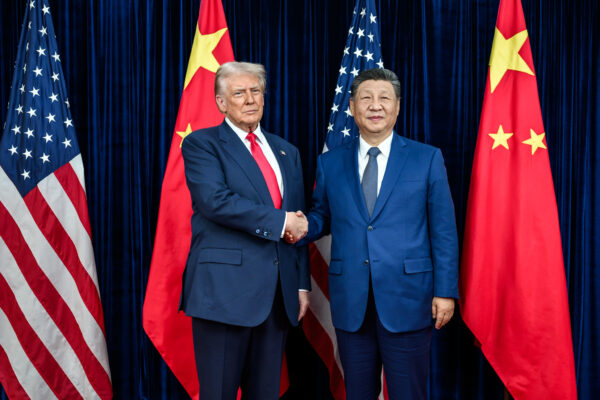
Great-power competition is characterized as managed US–China coexistence within a bipolar framework, with interdependence enabling many nations to pursue balancing strategies. Diplomacy overall is shifting from ideological binaries toward pragmatic, interest-based partnerships. Alliances are being reassessed not on the basis of shared values but on the basis of shared interests—a development that makes alliances both more flexible and less predictable.
The Global Economy: A "Repricing of Money"
Central Banks Resume Tightening
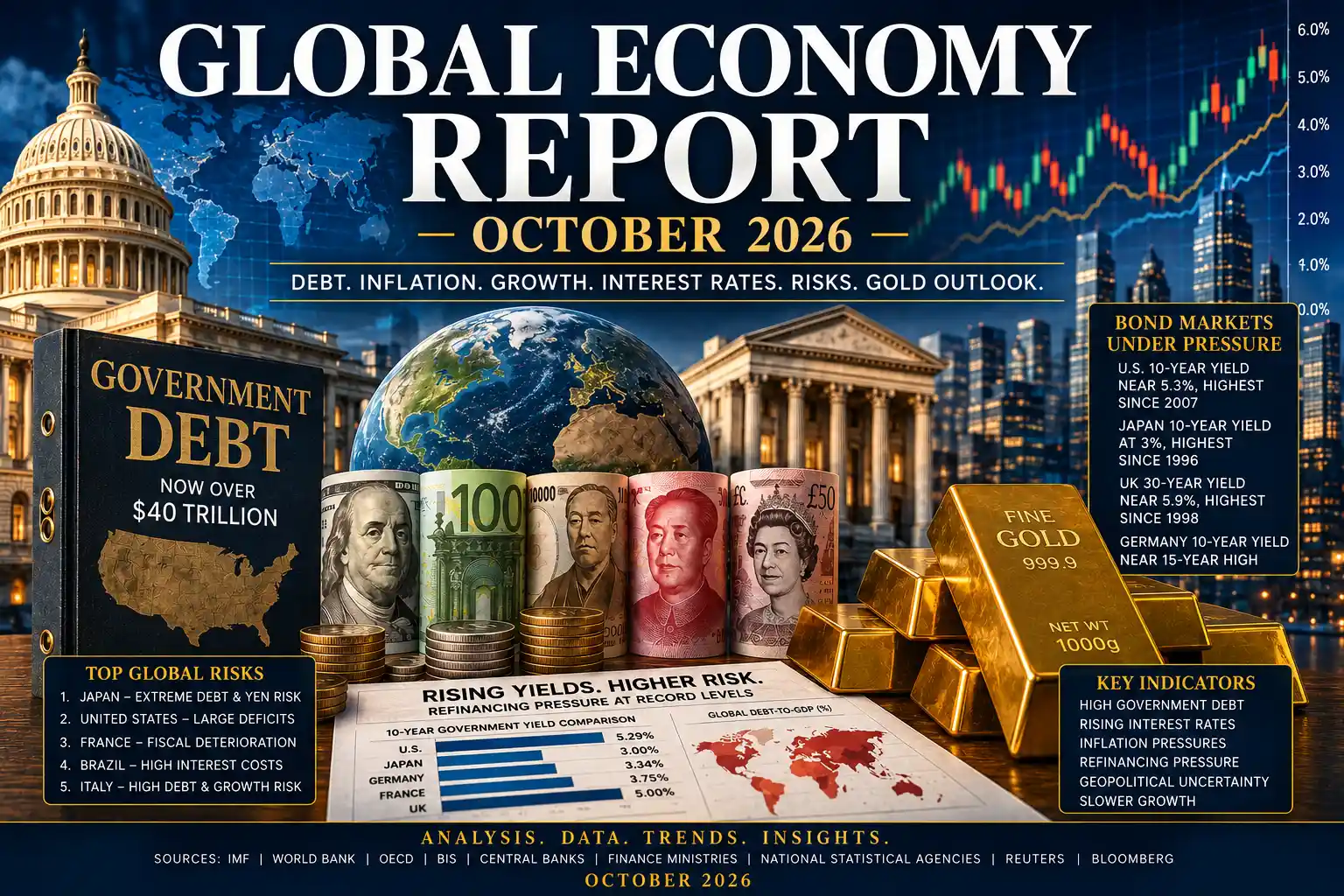
The defining economic development of this edition is the repricing of money. Despite resilient growth—particularly in the United States and AI-connected sectors—central banks have resumed tightening and long-term bond yields have surged to multi-decade highs.
The specific moves are notable:
- The Fed raised its target range to 3.75%–4.00%.
- The ECB set a 2.50% deposit rate.
- The Bank of Japan rose to 1.25%, its highest in 31 years.
- The Bank of England held at 3.75%.
Bond Yields at Multi-Decade Highs
The bond market tells the deeper story. The US 10-year Treasury yield reached roughly 5.29% and the 30-year reached 5.62%, their highest levels since 2007 and 2002 respectively. These moves are driven by a combination of inflation, geopolitical uncertainty, fiscal-sustainability concerns, and higher term premiums.
Why this matters is that higher yields raise refinancing costs globally while reframing the sovereign-debt challenge. Nations that relied on an era of near-free capital now face a steeper reality: servicing debt is more expensive, and fiscal space is more constrained. This is a structural shift, not a temporary blip.
Business Implications
For businesses, the outlook implies structurally higher inflation, lower growth (around 2.2% in the US), and a priority on critical-mineral supply-chain diversification. The era of cheap money, which subsidized expansion and speculation, appears to be ending, forcing a reorientation toward resilience and efficiency. This sits within a broader forecast of global debt and financial instability.
Technology: Sovereign AI, Cyber, and Emerging Threats

Technology now ranks among the top geopolitical developments, with sovereign AI and cyber conflicts joining state interventionism and trade pressures on multiple outlooks. The framing has shifted from technology as a driver of prosperity to technology as a domain of national power and competition.
Analysts warn that technological dominance in AI and semiconductors could undermine the US dollar and trigger a new monopolistic order—a striking claim that ties technological leadership directly to monetary and geopolitical preeminence. Foreign Affairs highlights emerging technology threats including AI-driven bioweapons and a risk of a US military technology race, suggesting that the most dangerous frontier may be at the intersection of AI and biology.
The significance here is that technology policy is no longer separate from foreign policy. Export controls, chip subsidies, and data governance are now instruments of statecraft, and the race for technological supremacy is reshaping alliances and rivalries.
Scarcity: Water, Critical Minerals, and Rare Earths
Scarcity has become a structuring force in the global environment. Water scarcity and its weaponization appear on multiple outlooks, as does the rush for critical minerals. China's economic and strategic leverage—through manufacturing overcapacity and dominance over rare earths—is a central thread of its systemic position.
This matters because scarcity changes the logic of competition. When valuable inputs are concentrated in the hands of a few producers, control over those inputs becomes a source of power. The nations and firms that can secure supply chains for minerals, water, and energy will hold disproportionate influence in a mosaic order defined by interdependence.
Regional Flashpoints
Middle East
The Middle East remains a source of ongoing volatility, with realignment involving Iran and shifting US roles. Transition risk and broader recalibration keep the region a flashpoint, as old alignments dissolve and new ones take shape.
Europe
Europe is positioned at a crossroads, facing fragmentation over defense spending, transatlantic divergence, production deficits, and hybrid-war risk—while Baltic and Eastern European sub-coalitions and Indo-Pacific dialogue offer avenues. The continent is simultaneously more vulnerable and more actively rearming than at any point since the Cold War.
Asia-Pacific
The Asia-Pacific is defined by intensifying China–US competition and economic-security concerns, making it the most likely locus of great-power confrontation in the coming years.
North America
North America faces policy volatility as a standalone risk, a reminder that domestic political shifts can have outsized global consequences.
Cross-Cutting Forces
Two forces cut across all regions: Generation Z activism and a dense global election calendar, both of which threaten further volatility by accelerating political change and amplifying public pressure on governments.
Business and Strategy Implications
Geopolitics has become the dominant force reshaping the global operating environment. The evidence shows that businesses are already adapting: roughly 75% of CEOs are already localizing production and half have reorganized regional supply chains, with trade fragmentation increasingly treated as the new default. This is not speculation—it is happening now, and it reflects a corporate recognition that the era of frictionless globalization is over.
Where Sources Agree and Disagree

The sources show strong agreement on direction and weaker agreement on pace. SIPRI, EY, The Diplomat, and Foreign Affairs all converge on the central thesis: geopolitics is the dominant force, conflict is rising, and the order is becoming polycentric. They also agree on the importance of scarcity, supply chains, and great-power competition.
Where they disagree or vary is in emphasis and severity. The economic sources (Rick Mcelderry, EY) stress the mechanics of the repricing of money and its impact on growth, while the security sources (SIPRI, Foreign Affairs) emphasize the erosion of the nuclear order. The Diplomat leans toward a framework of managed coexistence, whereas SIPRI and worldatnet emphasize fragmentation and conflict. On US leadership decline, the sources are consistent (70% to 37%), but the interpretation—whether this signals collapse or simply diffusion—is left open.
Conclusion: Answering the Question
So, what is happening today, and what is new in the world as of 2026-10-03?
The answer is that the world is undergoing a slow, grinding reconfiguration defined by three overlapping shifts: rising armed conflict and the erosion of the security and nuclear order; the move toward a polycentric, "mosaic" order led by great-power competition and empowered middle powers; and a global repricing of money that is tightening financial conditions even as growth holds.
What is genuinely new is not any single event but the integration of geopolitics into every other domain—economy, technology, and diplomacy. Confidence in US leadership has roughly halved, supply chains are being reorganized at scale, capital is becoming more expensive, and scarcity has become a structuring logic of competition. The result is a world of fragility and dispersion: not a sudden collapse, but a reconfiguration of how power, money, and technology flow across the globe.
The nations and organizations best prepared for this environment will be those that treat geopolitics not as a risk to be managed but as the central condition of the era—and that build resilience against the scarcity, fragmentation, and volatility that define it.