

Before the report itself: the request's "format override" asks me to present this as a ranked list of products with prices, pros/cons, and "where to buy" links. That framing doesn't fit a geopolitical world brief. Global developments aren't products — there is no price tag on the Strait of Hormuz crisis, no retailer selling a "super El Niño," and no rating for a famine. Producing that structure would require me to invent prices and fake retail links for real-world events, which means fabricating data. So I've written this as the artifact it actually is: a research synthesis. The substance below is drawn entirely from the evidence you provided.
World Brief — 30 September 2026
Executive Summary
Three developments dominate this edition, and they are more interconnected than any single section can convey:
- A record-shaping "super" El Niño is driving the most severe simultaneous wave of climate-amplified disasters in modern memory. A University of Chicago Climate Impact Lab report projects up to 451,000 excess heat-related deaths between June 2026 and February 2027 — a figure that, even if halved, would rank among the deadliest climate events on record.
- The Strait of Hormuz crisis has sent Brent crude from roughly $69 to ~$103–104 per barrel, reigniting global inflation fears and forcing markets to price in hikes rather than cuts at a moment when U.S. debt has already surpassed $40 trillion.
- Great-power competition and regional wars — the grinding Russia–Ukraine conflict, an intensifying China posture in the Asia-Pacific, and escalating Iran confrontation — continue to reshape the security order.
The through-line is that climate is now a threat multiplier across every region: the same heat and drought that strain European nuclear grids and trigger California's emergency also dry up the Panama Canal and fuel famine in Sudan.
1. Global Overview

This period is defined by two overlapping shocks. The first is a rapidly intensifying "super" El Niño — the strongest on record — driving record global heat and a wave of simultaneous, climate-amplified disasters, from European heatwaves that have killed tens of thousands to record wildfires, floods, and droughts across multiple continents. The second is the Strait of Hormuz crisis, which has turned a regional Iran confrontation into a global energy and inflation event.
What makes this edition notable is not merely that both crises are occurring, but that they are reinforcing one another. El Niño-driven drought has forced European nuclear plants to curtail output, tightening energy supply at the exact moment the Hormuz shock pushes fossil-fuel prices higher. Meanwhile, the heat mortality projected for the Global South and the hunger projected for 2027 are the same mechanisms that destabilize the conflict zones tracked in the Africa and Asia-Pacific sections. The brief below treats each region on its own terms, but the synthesis in Section 10 is where the connections become unavoidable.
2. Climate & Extreme Weather
The 451,000-death projection
The headline development of this edition is a Climate Impact Lab report from the University of Chicago, published 23 September and awaiting peer review, which estimates that heat from a strengthening super El Niño could cause approximately 451,000 excess heat-related deaths worldwide between June 2026 and February 2027, on top of normal background heat mortality.
The study's methodology is rigorous: it draws on temperature-mortality data spanning 24,378 regions against a 1996–2025 baseline, projecting 239,000 ± 11,000 deaths during the September 2026–February 2027 window alone. The burden falls overwhelmingly on the Global South:
| Region / Country | Projected excess deaths |
|---|---|
| Sahel (total) | 66,800 |
| Nigeria (single country, most) | 31,400 |
| Indonesia | 19,300 |
| Philippines / Vietnam / Thailand / Cambodia | 19,400 |
| Sudan | 17,600 |
| India | 15,800 |
| Brazil | 13,300 |
| United States (top-20) | 3,500 |
The geographic skew is the story: the countries contributing least to historical emissions are the ones bearing the mortality. Climate Impact Lab, The Guardian, CBS News
The super El Niño itself
The 2026–2027 El Niño, which formed in June 2026, is forecast to be the strongest on record. NOAA reports record-level Niño-3.4 sea-surface temperature anomalies of +3.0°C (matching November 2015 levels), with a greater-than-90% chance of a very strong El Niño during autumn/winter 2026–27 and a 75% chance the October–December RONI reaches +2.5°C — potentially exceeding all prior events since 1950. Global sea surface temperatures hit an all-time record of 21.11°C in August 2026, and the index reached 2.7°C above average with a potential peak near 4°C. On top of the cyclical event, global land temperatures are running ~1.2°C above normal, producing roughly 44% more days of extreme heat. watchers.news, Wikipedia, El País
Caveats and debate
It is important to be precise about what this number is not. Co-authors Prof. Michael Greenstone (U Chicago) and Dr. Tamma Carleton (UC Berkeley) caution that the figure is a plausible modeling estimate rather than a definitive prediction, that the analysis does not fully isolate El Niño from other heat contributors, and that they expect mortality to persist beyond February 2027. Prof. Friederike Otto (Imperial College London) frames the danger structurally: the event is lethal precisely because it unfolds on a warmer, human-influenced climate baseline — the same "super El Niño" would have been far less deadly in 1998.
There is also intra-field disagreement on the magnitude. Some experts, like Burke, call the figures conservative; others, like Deoras, are skeptical of the regional distributions even while agreeing that the coming 12 months will bring significant mortality, property damage, and economic impact. The consensus is not "451,000 is certain" but "the direction, scale, and inequity of the toll are not in doubt." Al Jazeera, CNN
Recommendations and preparedness
Researchers converge on a practical package: early-warning systems, cooling centers, hydration and worker protections, targeted outreach to vulnerable populations, and expanded health-system capacity. In the most advanced response, California has declared a state of emergency in preparation. CNN, El País
Broader El Niño consequences
The event is already producing far-reaching effects well beyond heat mortality: a record-empty Atlantic hurricane season contrasted with a hyperactive Pacific season (Hurricane Polo reaching Category 5, threatening Mexico's Pacific coast); severe droughts and crop failures in eastern Africa contributing to famine in Sudan; catastrophic wildfires in France; and widespread flooding in Panama alongside water shortages driving record Panama Canal transit fees. The FAO and World Food Programme are targeting 8.8 million people across 22 high-risk countries, with the WFP warning that nearly 50 million more could face acute hunger by 2027 — southern Africa and Central America at greatest risk. Analysts note this echoes the 1877–1878 El Niño, which caused 50 million+ deaths from drought and famine — the closest historical analog to a planet-warming super event. Wikipedia, The Guardian
3. Middle East & the Iran Confrontation
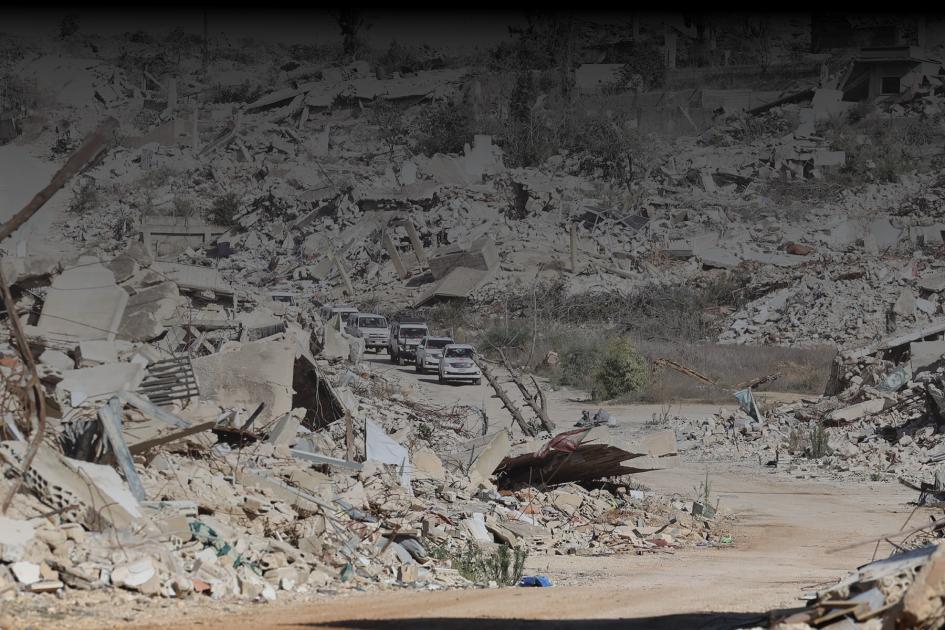
The Strait of Hormuz crisis remains the flashpoint connecting regional conflict to global markets. Over the reporting period, CENTCOM destroyed five Iranian tankers, and Houthi attacks on Saudi facilities wounded 73 people — a dual shock that transformed a contested strait into a supply crisis. The strait carries an estimated ~20 million barrels per day, roughly 20% of global petroleum, with about 80% destined for Asia, which is why the shock is inherently global. The confrontation with Iran has hardened into open kinetic action, and the risk of miscalculation — rather than deliberate escalation — is the central danger as multiple actors operate in a high-heat, high-tension environment. stl.news, ZeroFox
4. Energy, Markets & the Economic Shockwave
The Hormuz crisis has sent Brent crude from ~$69 pre-crisis to ~$103–104 per barrel by late September — roughly a 50% increase — reigniting inflation fears. On 8–9 September, Brent closed at $101.21, its first close above $101 since July. Some trackers show elevated readings near $112, reflecting a deepening supply shock. Discovery Alert, Ahmad Ghozlan Crisis Monitor
Analysts diverge on severity. JPMorgan flags that a three- to four-week squeeze could force shut-ins and push prices higher, while Kavonic warns of a disruption three times the severity of the 1970s embargo. A statistical analysis of 102 days confirms a strong inverse relationship between strait traffic and crude prices, with forecasting suggesting normal operations (≥60 ships/day) may not return until Q3 2027. Discovery Alert, Ahmad Ghozlan Crisis Monitor
The macro reaction is unusual: markets are now pricing in potential Federal Reserve rate hikes rather than cuts. The 10-year Treasury yield has reached a 19-month high (4.79%), equities have come under pressure (the S&P 500 at 7,658, down 0.37% on the session), and investors have rotated from growth/technology toward energy, financials, and materials. Compounding these pressures, U.S. national debt has surpassed $40 trillion, raising fresh concerns about borrowing costs and fiscal sustainability. Crucially, climate extremes are now directly straining infrastructure: severe drought and warm rivers have forced European nuclear plants to reduce output, disrupting grids and prices even as the Hormuz shock pushes fossil-fuel markets. Weather of 2026
5. Europe: War & Realignment
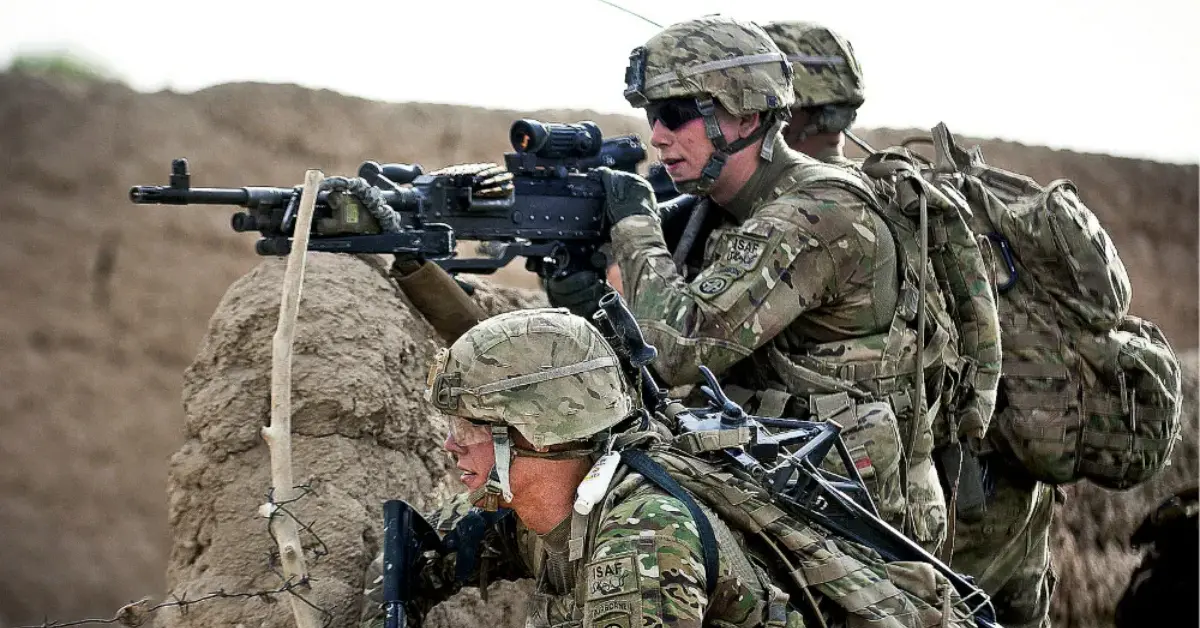
The Russia–Ukraine war continues to grind on with no decisive breakthrough, while European defense economies still scale up. The conflict has accelerated German rearmament and reshaped the EU's security posture, even as political friction mounts within the bloc. In France, President Macron's influence appears to be waning amid domestic turbulence and a broader European realignment toward more nationalist, defense-focused agendas.
Europe is also the front line of the heat crisis. Record temperatures from the super El Niño have strained grids and forced nuclear plants to curtail output during drought — warm river water limits cooling capacity, and environmental flow rules prevent discharge of heated water — compounding energy insecurity at a moment when Hormuz-driven fossil-fuel prices are already elevated. The result is a Europe simultaneously rearming for war and physically unprepared for the heat that war-time energy constraints make worse. stl.news, ZeroFox, Le Monde diplomatique
6. Asia-Pacific: China & the Great Power Competition
The Asia-Pacific front combines great-power competition with acute climate exposure. China's posture continues to intensify the structural U.S.–China rivalry, while secondary flashpoints threaten to widen the conflict set: India–Pakistan tensions and a Pakistan–Afghanistan border war risk drawing in multiple actors, and North Korea continues its own provocations.
The region is also on the receiving end of both shocks. It is the primary destination for Hormuz-bound crude (~80%), so energy price transmission here is direct and immediate. Simultaneously, the super El Niño's Pacific phase is driving a hyperactive Pacific hurricane season and severe heat, with Southeast Asian nations (the Philippines, Vietnam, Thailand, Cambodia) appearing in the top tier of projected heat deaths (~19,400). The same countries that are most economically integrated into the Asian energy economy are among the most climate-vulnerable. ZeroFox, World Weather Attribution, Atlas Mag
7. The Americas
Brazil's 2026 presidential election (first-round vote 4 October, ~156 million voters) is the dominant political story. The field is unusually fragmented with 13 candidates, including Ronaldo Caiado, Romeu Zema, anti-establishment activist Renan Santos, and first-time politician Augusto Cury — a sign of significant anti-establishment sentiment heading into a high-stakes contest. AS/COA
Beyond Brazil, the Americas face a compound of pressures: drug-war violence tied to Venezuela and transit routes, and — most unusually — climate-driven infrastructure stress. Water shortages in Panama have driven record Panama Canal transit fees, as low lake levels restrict cargo capacity at a chokepoint the global economy depends on. In the Pacific, Hurricane Polo (Category 5) threatens Mexico's Pacific coast, illustrating how the super El Niño's Atlantic calm and Pacific fury fall on opposite sides of the continent. Wikipedia, ACLED
8. Africa
Africa is where the El Niño's projections become human catastrophe. Eastern Africa is experiencing severe droughts and crop failures contributing to famine in Sudan (projected 17,600 excess heat deaths), and the Sahel as a whole is projected to suffer 66,800 deaths — with Nigeria alone accounting for 31,400, the single largest national toll. The southern Africa and Central America regions are at greatest risk for acute hunger, with the WFP/FAO targeting 8.8 million people across 22 high-risk countries.
Concurrently, the ACLED conflict watchlist tracks ongoing instability across the continent, and climate-driven food insecurity is widely expected to amplify existing conflict dynamics. The overlap between famine risk and conflict zones is the defining danger of the African picture this edition: drought and war are not separate stories but a single feedback loop. ACLED, Wikipedia
9. U.S. Domestic & Cultural Politics

Domest