

Executive Summary
The global landscape on August 11, 2026, is defined by a dangerous convergence of escalating geopolitical friction and unprecedented climate extremes. In the Middle East, diplomatic channels have effectively frozen as the United States and Iran engage in a high-stakes standoff over the Strait of Hormuz, with Tehran threatening to close the vital waterway indefinitely while Washington demands reparations for historical damages. Simultaneously, the Levant remains in a state of political paralysis, with Israel rejecting a U.S.-brokered peace framework for Gaza, and the UN warning that Houthi aggression in Yemen threatens to reignite a broader regional conflagration.
Nature has delivered a harrowing counterpoint to these human conflicts. July 2026 was recorded as the hottest month on record for 33 countries, with European temperatures approaching lethal thresholds of 40°C. The physical manifestation of this climate crisis struck hard this week: Typhoon Dolphin caused catastrophic flooding in Shanghai, forcing the evacuation of over one million residents and grounding more than 900 flights; a 7.4 magnitude earthquake devastated parts of Colombia, killing at least 47 people; and Indonesia battled wildfires consuming over 107,000 hectares. Amidst this turmoil, India marked a historic energy milestone by surpassing 300 gigawatts of non-fossil fuel capacity, offering a beacon of progress in the global energy transition even as the world grapples with the dual threats of warming and war.
Geopolitics & Diplomacy: A World at the Brink of Multiple Crises

The Strait of Hormuz Standoff: US-Iran Escalation
The most critical development this week is the intensifying confrontation between the United States and Iran, which has moved beyond rhetoric into a direct naval and economic confrontation. Iran has vowed to keep the Strait of Hormuz closed until Washington lifts its naval blockade, a move that threatens to disrupt a significant portion of global energy supplies. The strait is not merely a waterway; it is the world's most important oil chokepoint, through which roughly 20-25% of global petroleum consumption flows daily. Source
The diplomatic friction has reached a nadir. The Trump administration has counter-demanded reparations for "historical regional damage," a demand that effectively stalls any possibility of negotiation. This framing of reparations signals a shift in US policy from containment to punitive accountability, though it risks further alienating Tehran. Source For the global economy, the implications are severe. A prolonged closure of the strait would send shockwaves through energy markets, exacerbating inflation and threatening the economic stability of import-dependent nations in Asia and Europe. The standoff represents a failure of diplomacy to manage the nuclear and regional security architecture that has been the focus of international efforts for decades.
The Levant: Stalemate in Gaza and Escalation in Yemen
In the Levant, the prospects for peace appear to be receding. Israel has declined a U.S.-brokered 15-point peace framework for Gaza, conditioning any acceptance on the full disarmament of Hamas. Source This rejection highlights the deep chasm between the parties: while the framework likely addresses humanitarian aid, reconstruction, and governance, Israel's insistence on disarmament as a precondition suggests that the military dimension of the conflict remains unresolved. The decline of a comprehensive framework risks prolonging the humanitarian crisis in Gaza and removing the diplomatic off-ramps that could prevent further radicalization in the region.
Concurrently, the situation in Yemen has deteriorated. The UN has issued a stark warning regarding escalating Houthi assaults on the port of Mocha. Source Mocha, historically one of the most significant trade ports in the Red Sea, is now a flashpoint. The targeting of this port threatens to reignite a broader regional war, potentially drawing in more state and non-state actors. The Houthi escalation, combined with the US-Iran standoff in the Persian Gulf, creates a pincer movement of instability across the Middle East, threatening to stretch the resources of international peacekeeping and humanitarian organizations to their breaking point.
Russia's Strategic Pivot: The New Rail Corridor to India
While maritime chokepoints dominate headlines, Russia is accelerating a strategic pivot away from vulnerable sea lanes. Moscow is fast-tracking a new rail corridor linking directly to India and the Indian Ocean. Source This infrastructure project is a direct response to the sanctions regime and the risks associated with maritime trade routes that can be blockaded or monitored by Western navies.
The geopolitical significance of this rail corridor cannot be overstated. It represents Russia's attempt to secure a land-based trade route that bypasses the Arctic and European chokepoints, integrating more deeply with the Indian economy. For India, this offers an alternative supply chain that reduces dependence on maritime routes controlled by potential adversaries. However, it also deepens the fragmentation of the global economy into competing blocs, as Russia cements its economic ties with New Delhi while tensions with the West continue to rise.
Armed Conflicts: Deepening Attrition in Ukraine
Asymmetric Strikes on Russian Infrastructure
The war in Ukraine has entered a phase of deepened asymmetric warfare, with Ukrainian forces striking deep into Russian territory to target critical infrastructure. A Ukrainian drone attack successfully struck a Russian oil refinery in Tatarstan, resulting in the deaths of 13 people. Source This strike demonstrates the continued degradation of Russian air defense capabilities and the willingness of Kyiv to target energy assets that support the Russian war machine.
The attack on the Tatarstan refinery is part of a broader strategy to erode Russia's economic capacity to sustain the war. By targeting refineries, Ukraine aims to disrupt the supply of fuel for Russian military logistics and reduce the revenue generated from refined oil exports. The killing of 13 civilians in the strike, however, underscores the human cost of such operations and the blurred lines between military and civilian infrastructure in modern warfare.
Industrial Mobilization and Cultural Destruction
Moscow is simultaneously ramping up its own industrial mobilization. Reports indicate that Russia is targeting a production goal of 11,000 drones for August alone. Source This massive output reflects the industrialization of the conflict, where drone warfare has become a central pillar of Russian tactics. The ability to produce such volumes suggests significant support from allied manufacturing bases, likely including North Korea and Iran, further internationalizing the conflict.
In a grim parallel to the military escalation, Moscow has documented widespread destruction of Ukrainian educational materials. Source This targeting of cultural and educational assets is a tactic of war aimed at eroding the long-term resilience of Ukrainian society. By destroying schools, libraries, and educational resources, Russia seeks to break the spirit of the population and undermine the foundations of a future independent state. This cultural attrition complements the physical destruction of infrastructure, creating a multi-front war against Ukraine's sovereignty and identity.
Natural Disasters & Climate: A Planet Under Stress
Typhoon Dolphin and the Vulnerability of Megacities
The climate crisis delivered a visceral demonstration of its power this week as Typhoon Dolphin caused severe flooding in Shanghai. The storm grounded over 900 flights and forced the evacuation of more than one million residents. Source Shanghai, a global financial hub with a population exceeding 24 million, is highly vulnerable to extreme weather events due to its low-lying geography and dense urbanization.
The scale of the evacuation—over one million people—highlights the limitations of even the most developed cities in the face of intensifying storms. The grounding of 900 flights disrupted global supply chains and travel networks, illustrating how regional climate events can have immediate global economic reverberations. As sea levels rise and storm intensity increases, the protection of megacities will require unprecedented investment in resilience infrastructure.
Seismic and Wildfire Catastrophes
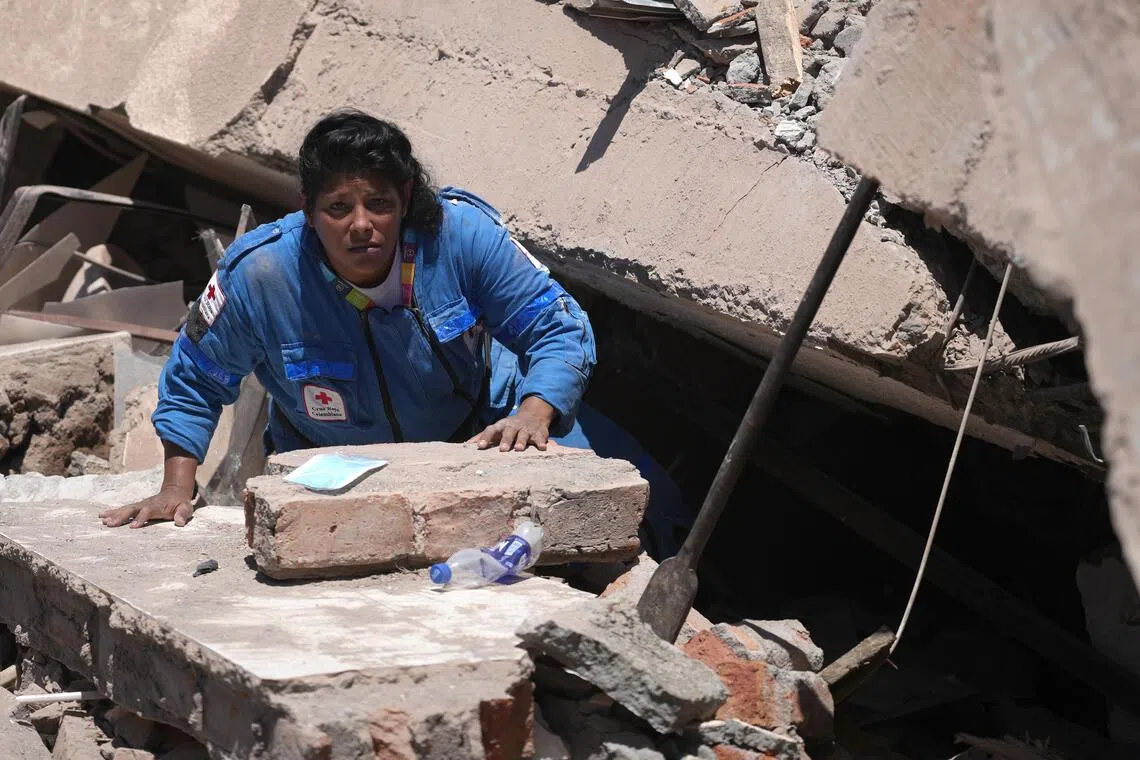
The disasters did not stop with the typhoon. In South America, a 7.4 magnitude earthquake struck Colombia, killing at least 47 people. Source Colombia sits along the volatile boundary of the Nazca and South American tectonic plates, making it prone to powerful seismic activity. The death toll of 47 reflects the destructive potential of such quakes, particularly in areas with older building stock.
In Southeast Asia, Indonesia faced extensive wildfires with blazes covering over 107,000 hectares. Source These fires, often fueled by peatlands and dry conditions exacerbated by climate patterns, release massive amounts of carbon dioxide and particulate matter, creating a feedback loop that worsens air quality and contributes to further warming. The scale of 107,000 hectares indicates a loss of biodiversity and a threat to the livelihoods of communities dependent on the land.
Record Heat and the European Heat Dome
Climatologically, the data for July 2026 is alarming. The month was recorded as the hottest on record for 33 countries globally. Source This statistic is not merely a number; it represents a widespread failure of ecosystems and agricultural systems to cope with thermal stress. The heat affected billions of people, with impacts ranging from crop failures to heat-related mortality.
Europe was particularly hard hit, with temperatures nearing 40°C. Source This triggered widespread wildfires and drought restrictions across the continent. The approach to 40°C in Europe is a stark reminder that the continent is not immune to the extreme heat previously associated with the Middle East and South Asia. The combination of heat, wildfires, and drought threatens Europe's food security and energy stability, as hydropower generation may decline and demand for cooling surges.
Energy & Infrastructure: A Milestone in the Green Transition
India Surpasses 300 Gigawatts of Non-Fossil Capacity
Amidst the gloom of conflict and climate disasters, India achieved a significant sustainability milestone. The nation surpassed 300 gigawatts of non-fossil fuel electricity capacity, a threshold driven primarily by record-breaking solar installations. Source This achievement places India among the elite group of nations leading the global energy transition.
The significance of 300 GW is multifaceted. First, it demonstrates that rapid decarbonization is possible even in a developing economy with growing energy demands. Second, the reliance on solar power highlights the plummeting costs of photovoltaic technology and the effectiveness of India's policy incentives. Third, this capacity provides a degree of energy security, reducing dependence on imported fossil fuels and insulating the economy from the volatile oil markets exacerbated by the US-Iran standoff. India's success serves as a model for other developing nations, proving that economic growth and environmental stewardship can proceed in tandem.
Source Analysis and Discrepancies

Convergence of Reporting
An analysis of the provided sources reveals a high degree of convergence regarding the major events. Both the-world-now.com and saachibaat.com report on the Typhoon Dolphin flooding in Shanghai, the Colombia earthquake, and the Indonesia wildfires, indicating that these events are widely recognized and documented across different media ecosystems. Source Source
Divergence in Focus
However, there is a notable divergence in editorial focus. the-world-now.com appears to prioritize geopolitical and diplomatic developments, with detailed coverage of the US-Iran standoff, the Gaza peace framework, and the Ukraine-Russia drone production goals. Source In contrast, saachibaat.com places greater emphasis on regional developments in South and Southeast Asia, including the Houthi assaults on Mocha, the Russia-India rail corridor, the Indonesia wildfires, and India's energy milestone. Source
This divergence suggests that while the events are global, the framing and priority differ based on regional relevance. Readers relying on a single source may receive an incomplete picture; for instance, a reader of the-world-now.com might miss the strategic importance of the Russia-India rail corridor, while a reader of saachibaat.com might underappreciate the nuances of the US-Iran reparations demand.
No Direct Contradictions
Within the provided text, there are no direct contradictions between sources. Both sources agree on the core facts of the disasters and the geopolitical tensions. The agreement on the India energy milestone and the Russia-India rail corridor reinforces the significance of these developments as they appear in multiple reporting streams.
Conclusion
The World Brief for August 11, 2026, paints a portrait of a planet under severe duress. The geopolitical landscape is characterized by a breakdown in diplomacy, with the US-Iran standoff over the Strait of Hormuz posing an existential threat to global energy security and the rejection of the Gaza peace framework signaling a deepening stalemate in the Levant. The war in Ukraine has evolved into a war of industrial attrition, with both sides targeting infrastructure and cultural assets in a bid for long-term dominance.
Simultaneously, the climate crisis has moved from a future threat to a present reality. The record heat affecting 33 countries, the catastrophic flooding in Shanghai, the earthquake in Colombia, and the wildfires in Indonesia demonstrate that the natural world is delivering consequences at an accelerating pace. The approach to 40°C in Europe shatters the illusion that temperate regions are safe from extreme weather.
Yet, the report also contains a note of hope. India's achievement of 300 gigawatts of non-fossil fuel capacity proves that decisive action on climate change is possible. It offers a pathway for other nations to decouple economic growth from carbon emissions, even as the world grapples with the immediate shocks of conflict and disaster. The challenge for the international community is to harness this momentum for the energy transition while simultaneously de-escalating the geopolitical tensions that threaten to consume the resources needed to address the climate crisis. The window for effective action is narrowing, and the developments of this week underscore the urgency of the moment.