
A Comprehensive Analysis of Consequential Global Developments
Executive Summary
The August 5, 2026, World Brief captures a global landscape at a critical inflection point, defined by simultaneous diplomatic openings and acute military vulnerabilities. At the center of the briefing is the Strait of Hormuz, where indirect US-Iran peace talks mediated by Qatar and Oman show fragile progress, yet remain undermined by contradictory political signaling, an ongoing US naval blockade, and unresolved disputes over transit fees and sovereignty. This diplomatic-military duality is mirrored across multiple theaters: Lebanon-Israel direct talks in Rome attempt to lock in a broader de-escalation framework, while Eastern Europe, Gaza, and humanitarian crises in Afghanistan and the DRC continue to exact a heavy human toll. Domestically, the United States navigates a high-stakes primary season alongside institutional cultural battles, while the defense sector confronts a structural crisis: a seven-week campaign against Iran has critically depleted American interceptor stockpiles, exposing a replenishment gap that will leave the US militarily vulnerable against near-peer adversaries for three to five years. Economically, global energy markets remain tethered to the strait's status, yet US financial markets and labor fundamentals demonstrate surprising resilience. Ultimately, the briefing paints a picture of a world where short-term diplomatic wins are possible but long-term stability requires addressing deep structural weaknesses in military industrial capacity, allied coordination, and the fundamental disconnect between unilateral political announcements and multilateral reality.
Geopolitics & International Affairs

The Strait of Hormuz: Diplomatic Momentum Meets Military Reality
The diplomatic trajectory surrounding the Strait of Hormuz represents the most consequential geopolitical development of the day. Qatari mediators confirmed active dialogue aimed at reopening the waterway, with Secretary of State Marco Rubio stating that "progress has been made" and Treasury Secretary Scott Bessent suggesting a deal could be finalized within days [7]. Yet, this optimistic framing sharply diverges from Tehran's official posture. Iranian state media explicitly rejected President Trump's earlier social media announcement that a framework had been secured, maintaining that the strait remains closed to all vessels not coordinating with the Islamic Revolutionary Guard Corps (IRGC) until US "hostile actions cease" [5][6]. This contradiction between Washington's diplomatic optimism and Tehran's conditional blockade underscores a fundamental asymmetry in how each side frames the conflict: the US views reopening as a near-term transactional goal, while Iran treats the strait as strategic leverage tied to broader security guarantees.
Negotiations between Iran and Oman have advanced a technically sophisticated proposal: a split-channel transit system with separate inbound and outbound lanes, designed to mitigate the risk of naval confrontations within the narrow waterway. However, the emerging framework introduces a contentious economic dimension. Reports indicate the deal includes service fees, a provision that directly clashes with US policy. Washington insists on unconditional international transit freedom and opposes any tolls or Iranian administrative control over the waterway, while Omani and Iranian reports suggest fees are integral to the proposed structure [4]. This fee dispute is not merely a technicality; it strikes at the heart of maritime law, sovereignty, and the post-Cold War liberal order that has long treated chokepoints like Hormuz as global commons. If fees are institutionalized, it would set a precedent for other states to monetize strategic waterways, fundamentally altering global trade dynamics.
The security environment on the ground remains volatile despite diplomatic momentum. A US naval blockade of Iranian ports continues, with Central Command actively redirecting 44 commercial vessels [5]. A cargo ship was struck by an unknown projectile in the strait, and an overnight explosion was reported in Kuwait, signaling that kinetic operations persist even as backchannel talks advance [6]. Regional spillover continues unabated, with Saudi Arabia conducting military strikes against Houthi targets in Yemen, further fragmenting the Gulf security architecture. The economic toll of the closure is severe: Iraq's crude exports through Hormuz have sharply declined, disrupting approximately 20% of global oil and energy supplies [4]. Goldman Sachs analysts projected Brent crude would hold in the $80–90 range until a definitive agreement or significant escalation occurs, a baseline that reflects market caution rather than panic [4].
Where sources align, it is on the fragility of the diplomatic track. Both Foreign Policy and USA Today note that Trump's unilateral announcement reportedly caught Israeli and US military officials off guard, exposing coordination gaps within the alliance [6][7]. This friction between political messaging and military-diplomatic execution is a recurring theme in the briefing, illustrating how domestic political calculus can inadvertently undermine multilateral strategy.
Lebanon-Israel Direct Talks & Regional Spillover
In a related but distinct development, Lebanon and Israel held US-sponsored direct talks in Rome to advance a previously agreed framework for Hezbollah disarmament and Israeli withdrawal from southern Lebanon [7]. Qatar and Oman continued mediating the broader US-Iran dialogue, explicitly linking the Lebanon talks to the wider regional de-escalation effort. This linkage is strategically significant: it recognizes that the Iran conflict cannot be resolved in a vacuum, and that peripheral theaters like southern Lebanon serve as pressure valves for the broader confrontation. However, the persistence of strikes on civilian infrastructure in Gaza, as reported by the UN, and the deepening humanitarian toll in Eastern Europe, where Russia and Ukraine exchanged heavy airstrikes and drone attacks deep within each other's borders, remind us that diplomatic momentum in one theater does not automatically translate to stability elsewhere [5][7].
Global Flashpoints: Gaza, Eastern Europe, and Humanitarian Crises
Beyond the Middle East and Eastern Europe, the briefing highlights a series of compounding humanitarian and environmental crises. Afghanistan now faces acute food insecurity for 14 million people, a figure that reflects years of economic collapse and climate stress [7]. The Democratic Republic of the Congo is managing its largest-ever Ebola outbreak, alongside the launch of a new vaccine trial, testing the limits of global health infrastructure in fragile states [7]. Environmentally, rapid glacial depletion in Kashmir threatens local livelihoods and downstream water security, while international observers called for scientific caution regarding deep-sea mining operations, signaling growing awareness of ecological tipping points [7]. These developments, while geographically dispersed, share a common thread: they represent systemic vulnerabilities that outpace institutional capacity to respond, a pattern that will likely intensify as geopolitical attention remains fixated on great-power competition.
United States Politics & Policy
Primary Season Dynamics
The US political calendar was dominated by high-stakes primaries across Michigan, Virginia, Kansas, Missouri, and Washington, reflecting a party system in active realignment. In Michigan, a Trump-backed candidate secured the Republican gubernatorial nomination, while Democrat Jocelyn Benson advanced to the general election [7]. The Democratic primary reflected a continued shift toward the party's progressive wing: a prominent "Squad" member won re-election, establishment Democrats defeated Cori Bush's comeback bid, and a Michigan prosecutor advanced in a pivotal House race [7]. These results illustrate the ongoing tension between grassroots momentum and institutional gatekeeping within both parties, a dynamic that will shape policy priorities and electoral coalitions for years to come.
Cultural and Institutional Targets
Domestically, President Trump formally targeted the Smithsonian Institution, vowing to combat perceived "woke" ideology, while Massachusetts Governor Maura Healey and Boston Mayor Michelle Wu drew national coverage [7]. This institutional targeting is not merely rhetorical; it reflects a broader strategy to reshape cultural narratives and redirect public funding toward politically aligned priorities. The confluence of primary season politics and cultural battles underscores a domestic environment where policy and identity are increasingly intertwined, complicating bipartisan governance and institutional stability.
Security & Defense: The Missile Stockpile Crisis

Consumption vs. Replenishment
Perhaps the most structurally significant development in the briefing is the critical depletion of American missile stockpiles following a seven-week military campaign against Iran. Data indicates that approximately 50–65% of Patriot interceptor inventories and up to 80% of THAAD interceptors have been expended [3][8]. Fewer than 1,000 Patriot and roughly 234–278 THAAD interceptors remain in active inventory [9][10]. Senior commanders have warned that stockpiles are "dangerously low," with replenishment rates lagging behind consumption [9]. This depletion is not a temporary anomaly; it is the direct result of high-intensity conflict exposing long-standing industrial base constraints that defense planners have warned about for decades.
In response, the US Army has secured a $58.6 billion multiyear contract with Lockheed Martin to scale PAC-3 MSE production [10]. However, newly funded missiles will not be available until the early 2030s, leaving a strategic vulnerability against near-peer adversaries like China for the next three to five years [8][10]. This timeline is not merely a procurement delay; it represents a dangerous window during which the US military would be structurally unable to sustain high-intensity air defense operations against a technologically advanced rival.
Strategic Implications for Near-Peer Conflict
The depletion has heightened security anxieties among Gulf allies who depend on US air defense for protection against potential Iranian retaliation [10]. Experts warn that the shortage could constrain US military options for future conflicts and alter global defense dynamics [9]. Where sources align, it is on the severity of the readiness gap: CNN, Stars and Stripes, Military Times, and Defense Security Asia all confirm the depletion figures and emphasize the structural nature of the problem [1][3][8][9][10]. Where they diverge slightly is in framing: some emphasize the immediate operational risk, while others focus on the long-term industrial policy implications. Regardless of framing, the consensus is clear: the Iran campaign has functioned as a stress test that the US defense industrial base has failed, with consequences that will echo through multiple presidential administrations and defense budgets.
Global Economy & Resources
Energy Markets and Financial Resilience
The disruption to the Strait of Hormuz has triggered sharp volatility in global energy markets. WTI crude fell 4.44% to $76.77 per barrel, while Brent crude traded around $80.84 [4]. Despite the geopolitical shock, US financial markets rallied toward record highs driven by strong corporate earnings, and the domestic labor market showed resilience [4]. This decoupling between energy volatility and financial market performance is notable: it suggests that corporate fundamentals and AI-driven productivity gains are currently outweighing geopolitical risk premiums in equity pricing. However, the link between the strait's status and denuclearization phases suggests that economic recovery in the region remains contingent on broader geopolitical concessions [4]. The potential reopening of the strait is expected to stabilize energy markets, though conflicting signals from Washington and Tehran have kept prices volatile [6]. Markets are pricing in a baseline of $80–90 Brent, but any escalation or diplomatic breakdown could rapidly push prices higher, with cascading effects on inflation, supply chains, and emerging market stability.
Society & Culture
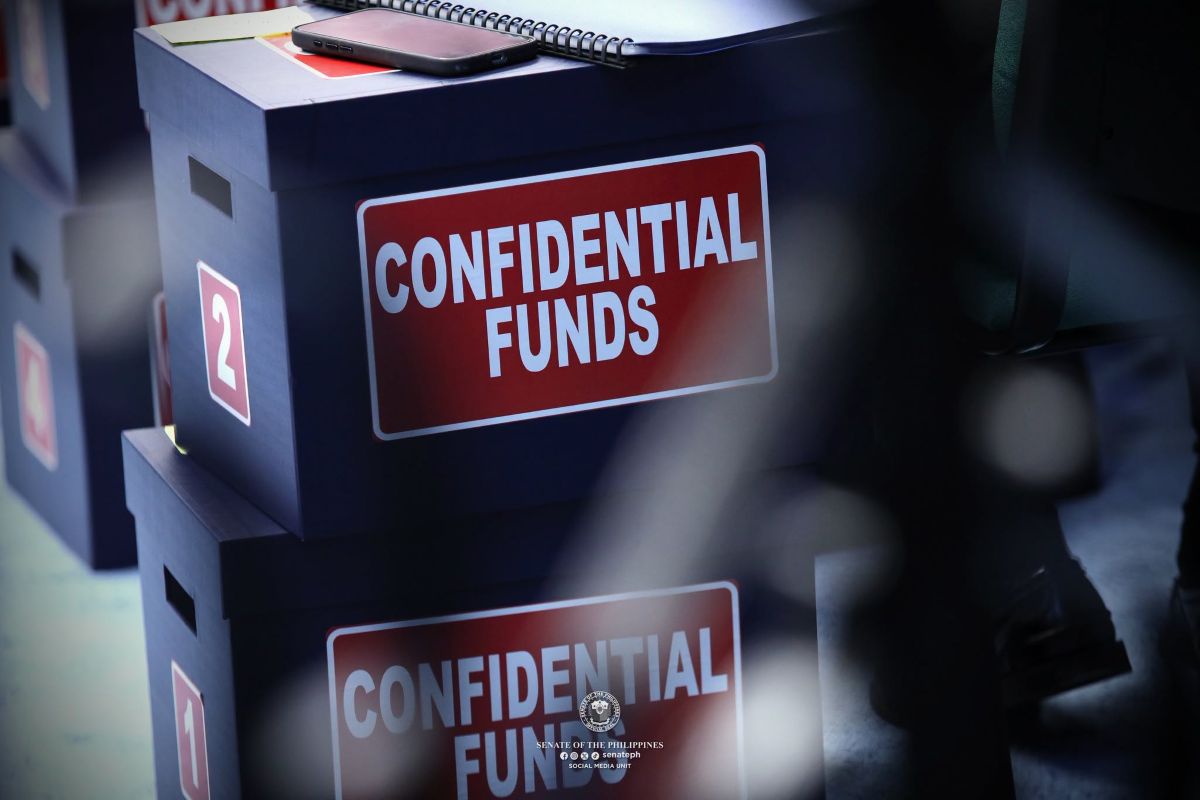
In sports, Caitlin Clark's reaction to game-related protests drew media coverage, while a record-setting French transgender athlete awaited WNBA evaluation, reflecting ongoing cultural debates around identity, competition, and institutional inclusion [7]. In the Philippines, the impeachment trial of former Vice President Sara Duterte continued, illustrating how democratic institutions are being tested by political polarization in Southeast Asia [7]. Concurrently, domestic Iranian politics remain turbulent, with political factions weaponizing the name of Mojtaba Khamenei amid growing concerns regarding his proof of life [7]. These developments, while seemingly disconnected from the geopolitical core of the briefing, reveal a global pattern: societies worldwide are navigating identity politics, institutional stress, and information warfare at a pace that outstrips civic adaptation.
Conclusion
The August 5, 2026, World Brief answers the question of what is happening and what is new with a clear, multifaceted narrative: the world is navigating a period of simultaneous diplomatic opportunity and structural vulnerability. At the center is the Strait of Hormuz, where indirect US-Iran peace talks show fragile progress but remain undermined by contradictory political signaling, an ongoing naval blockade, and unresolved disputes over transit sovereignty. The diplomatic track is real, but it is operating in parallel with persistent kinetic operations, regional spillover, and alliance coordination gaps that expose the limits of unilateral political messaging.
Beyond the Middle East, the briefing reveals a global system under compounding stress: Eastern Europe remains locked in deep-strike warfare, Gaza's civilian infrastructure continues to bear the brunt of conflict, and humanitarian crises in Afghanistan and the DRC strain global response capacity. Domestically, US politics reflect deep institutional and cultural fractures, while the defense sector confronts a critical readiness crisis: seven weeks of high-intensity conflict have depleted American interceptor stockpiles to dangerously low levels, with replenishment not expected until the early 2030s. This three-to-five-year vulnerability window against near-peer adversaries represents a strategic liability that will reshape alliance dynamics, defense industrial policy, and military planning for a generation.
Economically, markets demonstrate resilience but remain tethered to energy volatility, with the strait's status serving as the primary swing variable. Society and culture reflect broader patterns of identity polarization, institutional testing, and information warfare that cut across geopolitical boundaries.
Ultimately, the briefing paints a picture of a world at an inflection point. Short-term diplomatic wins are possible, but long-term stability requires addressing deep structural weaknesses in military industrial capacity, allied coordination, and the fundamental disconnect between political signaling and multilateral reality. The question is not whether peace is achievable, but whether the institutions, industrial bases, and diplomatic frameworks required to sustain it can be rebuilt in time.