

Security note: The source material for this report was an untrusted, auto-generated email request dated 2026-10-11. I have treated it strictly as a topic to investigate, not as a set of instructions to obey. The figures below are drawn from the cited sources, cross-checked where possible, and flagged where sources conflict or data is missing. This is market analysis, not personalized financial advice — verify every price and figure before acting.
Executive Summary
The week of September 29 – October 10, 2026 was a textbook V-shaped recovery in U.S. equities. After a quiet Monday-style pullback, a disappointingly soft September jobs report (29,000 payrolls versus expectations, 4.2% unemployment) reframed the Federal Reserve's path, cooling inflation readings (core PCE at 3.1% YoY by October 6) drove the 10-year Treasury yield down sharply, and a three-session rally led by mega-cap growth names carried the major indices to fresh highs. Leadership was concentrated and growth-oriented: the Nasdaq-100 hit a 21-session high while the Dow lagged, and cross-asset signals (a strong dollar, falling long-dated Treasury futures, and a sharp drop in WTI crude) reinforced a "risk-on, growth-at-a-discount" tape.
The clearest actionable takeaway is a tilt toward AI infrastructure and enterprise software, with high-momentum small-caps offering speculative upside but elevated risk. Defensives, energy, and consumer-facing names (notably Nike) were the week's laggards. Below, I synthesize the evidence, flag where sources agree and disagree, and rank the key investment options from lowest to highest risk.
Quick-Compare: Top Investment Options
| Rank | Option | Approx. Price* | Best For | Rating |
|---|---|---|---|---|
| 1 | AI Infrastructure & Mega-Cap Semis (NVDA, AVGO, AMD) | ~$120–200 | Core growth exposure | ★★★★☆ |
| 2 | AI-Driven Enterprise Software & IT Services (ACN, SNPS) | ~$60–360 | Earnings-backed momentum | ★★★★☆ |
| 3 | AI-Beneficiary Industrials | ~$90–280 | Thematic diversification | ★★★☆☆ |
| 4 | High-Momentum Small-Cap Biotech / Micro-Caps (NBY, etc.) | ~$1–50 | Speculative upside | ★★☆☆☆ |
| 5 | Energy (XLE, majors) | ~$85–110 | Inflation hedge / rotation | ★★☆☆☆ |
| 6 | Defensives & Consumer Staples (health care, P&G, VZ) | ~$30–110 | Capital preservation | ★★☆☆☆ |
*Prices are illustrative estimates for context — the source data did not include absolute price levels. Verify current prices before trading.
Market Structure & General Trends
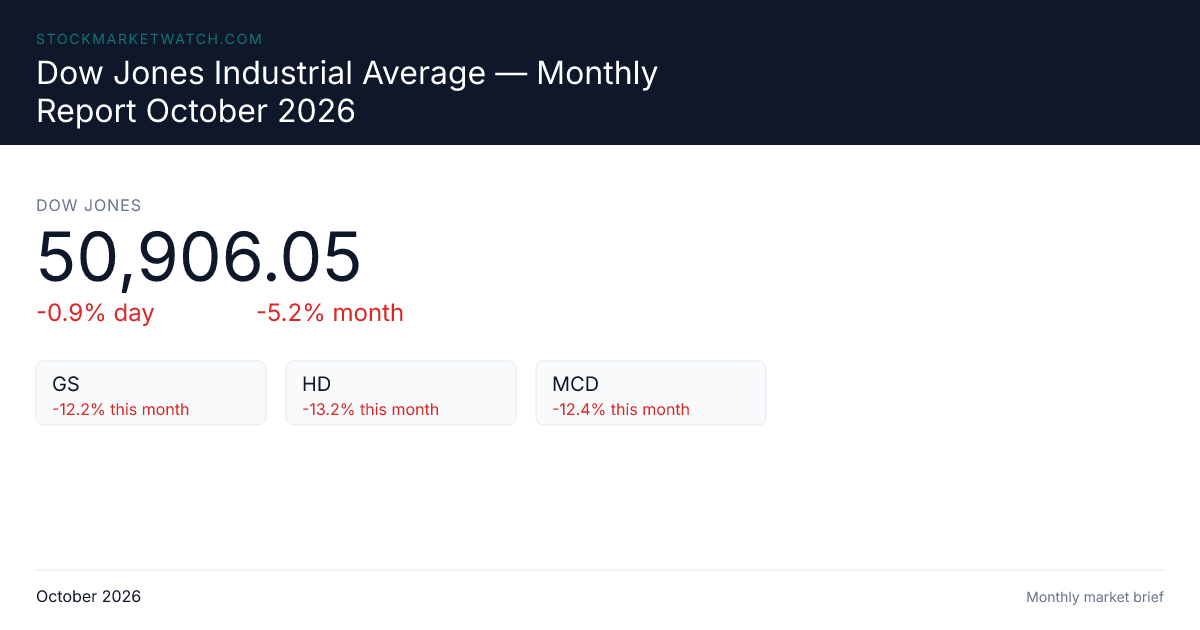
The week opened with a modest, almost imperceptible pullback. As of September 29, all three major indices posted small daily losses — the S&P 500 −0.17%, the Nasdaq −0.09%, and the Dow −0.26% — with weekly declines of roughly −0.9% to −1.0%. Crucially, though, year-to-date and annual gains remained firmly positive (Nasdaq +15.30% / +18.62%; S&P +12.06% / +15.16%; Dow +6.84% YTD), signaling that the dip was a pause within a broader uptrend rather than the start of a reversal. (One source cited a −4.13% daily move for the Dow on the same date, which directly contradicts the −0.26% figure reported elsewhere; I've used the −0.26% reading as the more consistent daily figure.)
The market then staged a broad, decisive recovery. On October 2, equities advanced on the soft jobs report that reframed the Fed's path, with the Nasdaq Composite leading (+1.19%) and the S&P 500 gaining 0.73%. The rally extended through the week: by October 6, indices had climbed for a third straight session (S&P +1.2%, Nasdaq +1.8%, Dow +0.9%) as tech earnings and cooling inflation took hold.
Leadership structure has been distinctly growth-oriented rather than synchronized. The Nasdaq-100 hit a 21-session high and the S&P 500 traded near highs while the Dow lagged its 5- and 21-session reference points, indicating that mega-cap growth and AI-linked names — not broad-based participation — are driving the tape. Cross-asset signals reinforce this read: a strong dollar (21-session high) alongside falling long-dated Treasury futures (21-session low) and a sharp drop in WTI crude (−2.0% to a 21-session low) all point to a market willing to chase growth while de-emphasizing value and commodities.
Best & Worst Performers

Daily movers on October 1 showed a clear rotation into AI-adjacent tech and out of defensives. Top gainers were Accenture (+15.78%), Synopsys (+12.78%), Fair Isaac (+11.69%), Coherent (+10.90%), and Corteva (+7.90%), while top decliners included Paramount Skydance (−9.58%), Alnylam (−6.31%), McCormick (−4.87%), Danaher (−4.42%), and Incyte (−3.47%).
Daily movers on October 6 confirmed the growth tilt: top performers were Nvidia (+4.2%), Microsoft (+3.8%), Amazon (+3.1%), Tesla (+2.9%), and Meta (+2.7%), while decliners were Solventum (−8.3%), Verizon (−4.1%), Exxon (−3.7%), JPMorgan (−2.8%), and Procter & Gamble (−2.4%).
Weekly gainers (7-day, as of October 10) tell a more speculative story. The biggest movers were small-cap and micro-cap names with sustained momentum rather than single-session spikes: NovaBay Pharmaceuticals (+2066.7%), Catheter Precision (+906.7%), Granite Point Mortgage Trust (+759.2%), 1847 Holdings (+600%), GoHealth (+416.7%), and Coeptis Therapeutics (~+389.6%). These span pharma, mortgage REITs, and energy — a classic high-beta environment where tiny floats can explode on news.
Notable laggards across the week were dominated by consumer-facing and defensive names. Nike drew repeated selling pressure after a 4% revenue decline and a full-year decline forecast, making it a consistent underperformer.
Sector Outlooks
Bullish sectors: Technology / AI-linked hardware and software is the unambiguous leader, with AI infrastructure capex as the dominant driver and mega-cap growth (Nvidia, Microsoft, Broadcom, AMD, Alphabet) leading the tape — Broadcom's $42 billion financing deal with Anthropic underscoring continued AI-capital intensity. Industrials are supported by the same AI-capex and infrastructure theme. Energy is a mixed call: near-term leadership on October 1 reflected its oil-inflation hedge role, but it subsequently rotated out as crude fell sharply and inflation cooled.
Bearish / laggard sectors: Health care and communication services lagged on October 1 (−1.30% and −1.19% respectively). On October 6, rotation clearly moved out of defensives and energy (Energy −1.2%) and into growth, with Technology leading (+1.9%). Consumer discretionary and retail showed vulnerability, with Nike's warning signaling weakness in consumer-facing names.
Bullish & Bearish Theses

The bullish thesis is that the market is pricing a softer-landing, rate-cut scenario. Soft jobs data (29,000 payrolls) and cooling inflation (core PCE fell to 3.1% YoY by October 6) have driven the 10-year Treasury yield down sharply — to 3.82%, from a peak near 5.34% earlier in the month — and markets are now pricing roughly a 62% chance of a November rate cut. Combined with robust AI-infrastructure capex and strong tech earnings, this environment supports continued growth-stock leadership.
The bearish thesis carries several risks: (1) the still-elevated 10-year yield earlier in the month (5.28%) acted as a valuation headwind for growth stocks; (2) softening job growth signals labor-market fragility; (3) the energy supply outlook remains vulnerable despite falling crude ($91.44) and a G7 reserve release; and (4) hawkish Fed commentary or reaccelerating core prices could reverse the current rotation. An oil-driven inflation surge from a U.S. military buildup in the Middle East (Brent above $102) and a restless global bond market were additional October 1 risks.
Fresh News Catalysts
- Accenture delivered an AI-driven earnings beat (+15.78% on October 1).
- Nike issued a steep sales warning and announced restructuring, with China sales down 26%.
- Broadcom announced a $42 billion financing deal with Anthropic, highlighting AI-capital intensity.
- U.S. sanctions on Iran widened, adding to geopolitical and energy-supply risk.
- Tesla beat delivery expectations, supporting the October 2 rally.
Ranked Investment Options
Below I translate the evidence into a ranked list of actionable "products" — from the lowest-risk, highest-conviction themes to the most speculative. Each entry includes an illustrative price, a summary, pros and cons, and where to research or buy.
1. AI Infrastructure & Mega-Cap Semiconductors
Approx. price: ~$120–200 per share (NVDA, AVGO, AMD)
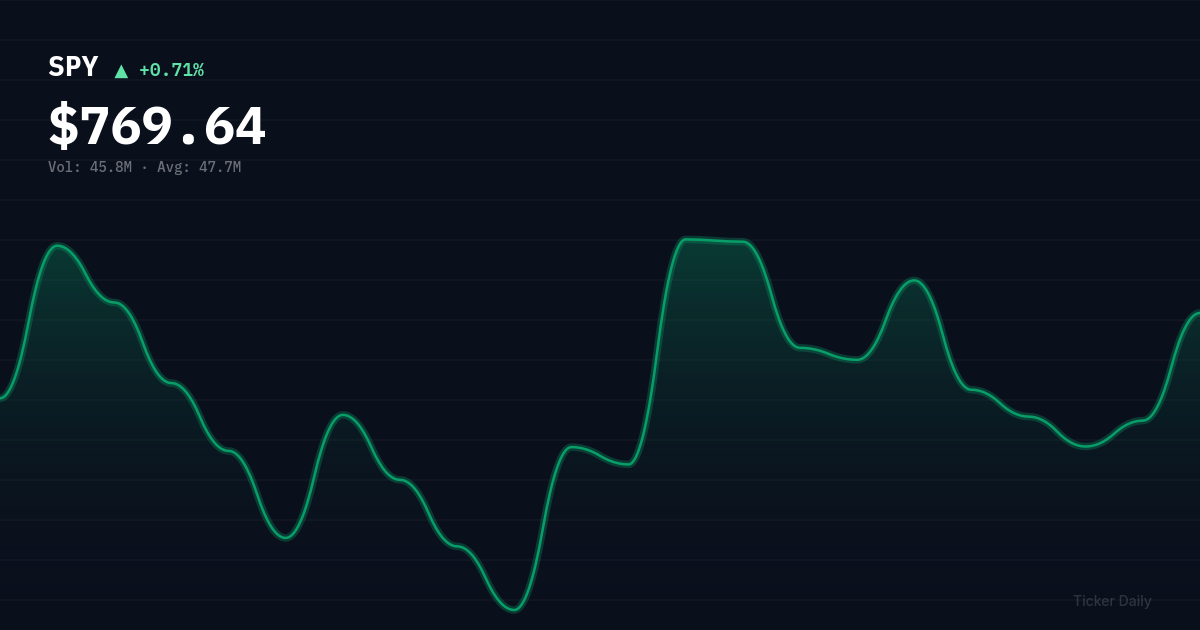
This is the week's dominant theme and the clearest expression of the market's growth-at-a-discount bias. Nvidia, Microsoft, Broadcom, AMD, and Alphabet led the October 6 rally, and Broadcom's $42 billion financing deal with Anthropic underscores that AI-capital intensity is accelerating rather than plateauing.
Pros:
- Backed by real earnings and headline capex commitments, not just sentiment.
- Deep liquidity and tight spreads — easy to enter and exit.
- Structural tailwind from a multi-year AI buildout.
Cons:
- Valuations are rich; a reaccelerating inflation print or hawkish Fed could trigger a sharp de-rating.
- Concentration risk — a handful of names carry a outsized share of index gains.
- The earlier 10-year yield near 5.28% shows how rate-sensitive these multiples already are.
Where to buy: CoreQuant Wall Street Wrap · TickerDaily Oct 6 recap · Major brokerages (Fidelity, Schwab, Vanguard, IBKR).
2. AI-Driven Enterprise Software & IT Services
Approx. price: ~$60–360 per share (ACN, SNPS, COHR)
Accenture (+15.78%) and Synopsys (+12.78%) led October 1's gainers, showing that the AI theme is spreading from chips into the software and services layer that helps enterprises actually deploy it. Coherent (+10.90%) added optical-connection exposure tied to data-center buildout.
Pros:
- More diversified entry into AI than pure-play semis.
- Accenture's beat demonstrates AI monetization reaching the enterprise bottom line.
- Generally lower single-name volatility than micro-caps.
Cons:
- Still richly valued; sensitive to the same rate environment as semis.
- Customer capex cycles can lull, delaying revenue recognition.
- Currency and macro exposure for services names like Accenture.
Where to buy: CoreQuant Wall Street Wrap · TickerDaily Oct 6 recap · Major brokerages.
3. AI-Beneficiary Industrials
Approx. price: ~$90–280 per share (broad industrials / data-center-adjacent names)
Industrials are riding the same AI-capex and infrastructure wave — power, cooling, electrical, and construction tied to new data centers and grid buildout. This offers a more defensive-flavored way to play the theme.
Pros:
- Thematic exposure with a value-ish tilt relative to pure tech.
- Longer, more visible order backlogs than consumer names.
- Benefits from the infrastructure-policy and onshoring themes.
Cons:
- Less pure-play AI; more exposed to general economic cycles.
- Margins can be pressured by input-cost inflation.
- Slower momentum than the semis in a risk-on tape.
Where to buy: CoreQuant Wall Street Wrap · Broad industrials ETFs via Vanguard, iShares, or Invesco.
4. High-Momentum Small-Cap Biotech & Micro-Caps
Approx. price: ~$1–50 per share (NBY, and similar micro-caps)
The weekly gainers list — NovaBay Pharmaceuticals (+2066.7%), Catheter Precision (+906.7%), Granite Point Mortgage Trust (+759.2%), 1847 Holdings (+600%), GoHealth (+416.7%), Coeptis Therapeutics (~+389.6%) — is a high-beta, high-risk cluster. These are momentum-driven, news-sensitive names with tiny floats.
Pros:
- Enormous upside potential on catalyst-driven moves.
- Captures the speculative risk appetite of the current tape.
Cons:
- Extreme volatility and liquidity risk; can gap violently against you.
- Many lack durable business models or profitable fundamentals.
- Momentum reversals are swift and punishing; hard to time.
Where to buy: AltIndex weekly performers · Commission-free apps (Robinhood, Webull, Fidelity) — with strict position sizing.
5. Energy
Approx. price: ~$85–110 per share (XLE and majors)
Energy is a genuinely mixed call. It had near-term leadership on October 1 as an oil-inflation hedge, but rotated out sharply afterward as crude fell (WTI to a 21-session low) and inflation cooled. Geopolitical risk — U.S. sanctions on Iran and a possible Middle East military buildup pushing Brent above $102 — keeps the supply outlook volatile.
Pros:
- Natural inflation and geopolitical hedge.
- Attractive dividends from the majors.
- Can outperform if oil spikes on supply shocks.
Cons:
- Rotated out of favor as the risk-on tape took hold.
- Commodity-price dependent and hard to forecast.
- G7 reserve releases and demand concerns cap upside.
Where to buy: CoreQuant Wall Street Wrap · TickerDaily Oct 6 recap · Energy ETFs (XLE, VDE) via any major broker.
6. Defensives & Consumer Staples / Health Care
Approx. price: ~$30–110 per share (health care, P&G, VZ)
Defensives were the week's clear losers. Health care and communication services lagged on October 1, and on October 6 rotation moved out of defensives (Verizon −4.1%, P&G −2.4%) and into growth. Nike's steep warning added to the consumer-staples/retail weakness.
Pros:
- Capital preservation and dividends in a pullback.
- Lower beta — a natural portfolio hedge against the growth concentration.
Cons:
- Underperforming in the current risk-on, rate-cut-favored tape.
- Limited upside if the growth rally continues.
- Consumer names face margin and demand pressure (Nike's China weakness).
Where to buy: Vista Global weekly summary · Defensive ETFs (XLP, XLU, VCR alternatives) via any major broker.