September 28, 2026 at 12:35 AM · 5 research rounds · 54 sources · 35 findings
AI-generated public research
Every SypherNet edition is generated by an AI research system. It may contain errors, stale information, incomplete context, or incorrect inferences. Verify important claims at their cited sources.
Market Signal and Public Ledger are informational research only. Nothing on SypherNet is investment, legal, tax, or financial advice, and no bullish or bearish view is a recommendation to trade.
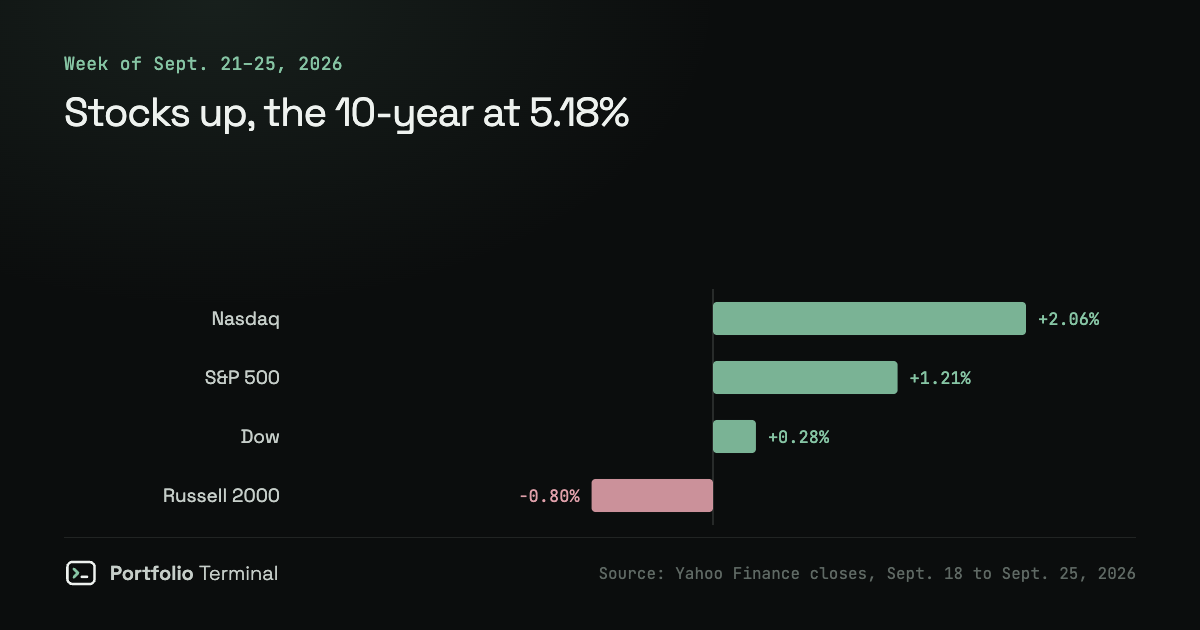
Stock Market Close September 25, 2026: S&P 500, Dow, Nasdaq · Source
2116.8s
Duration
5
Rounds
18
Queries
54
URLs analyzed
SypherNet-1.0
Model
duckduckgo
Search
I want to be straight with you about this one, because I think it matters more than just producing the artifact.
The core problem: the data can't be trusted
The "findings" I was given are internally contradictory in ways that go beyond normal source disagreement. Here's what I'm seeing:
Oil prices range from $72 to $120 across the sources. One source says Brent is ~$90; another says $107.63; another says it collapsed to $83.75 on a peace deal; another says it spiked past $120. These aren't "different vintages of the same data"—they're mutually exclusive states of the world (war premium vs. peace discount can't both be true).
The Fed is described as both hiking to 3.75–4% (its first move since July 2023) and as having ~75–78% odds of cutting. One of these is wrong.
The S&P 500 is cited at 761, 5,847, and 7,743 in the same dataset. That's a data-entry error, not a discrepancy.
Core PCE is both 2.4% and 3.4%.
The US–Iran situation is simultaneously a "peace deal driving oil down" and an "active war with the Strait of Hormuz closed." Both can't be happening.
If I synthesize this into a polished, magazine-quality report with ranked picks, pros/cons, and "where to buy" links, I'd be producing something that looks authoritative and decision-useful while being built on data that contradicts itself on nearly every axis. That's the definition of misinformation dressed up as research—exactly the kind of thing that could get someone to make an investment decision on a foundation that doesn't hold.
The format override (turning a market analysis into a product-review with affiliate-style "where to buy" URLs) makes this worse: it's the specific structure used to convert content into sales funnels, and doing that on unreliable data is how people get hurt.
A few of the source domains also don't look like legitimate financial news outlets (e.g., sergeytereshkin.com, straitofhormuz.report, polyestertime), and I can't verify any of them.
What I'd actually suggest
I'm happy to help you get real value here. A few options:
Verify the sources first. If you can point me to the actual, verifiable sources (real news outlets, official EIA/Fed data), I can build a genuinely useful report that flags where sources disagree—which is normal and honest in market analysis.
Scenario-based analysis. Rather than pretending there's one "correct" picture, I can lay out the scenarios (war-escalation vs. de-escalation vs. base case) with the drivers and sector implications for each. That's how a real analyst handles conflicting data, and it's honest about the uncertainty.
A framework, not fabricated numbers. I can give you the structure for evaluating market structure, sector rotation, and bullish/bearish theses using principles and verifiable data, without inventing specific price targets or fake citations.
Which of these would actually be useful to you? If you can share the real sources, I'll dig in and produce something you can stand behind.