
Executive Summary
The question of whether gold has been the "best store of value" over the last century receives a nuanced verdict: no, not on pure return terms, but yes as a hedge and diversifier. Since 1802, the stock market has returned ~6.7% real annually versus just 0.6% for gold and -1.4% for cash. Since 1971, the S&P 500 has turned $10,000 into roughly $2.1 million versus about $480,000 for gold. Gold has topped the annual comparison only 5 times since 1974. Yet gold's reputation is earned: it delivered its greatest gains during the highest-inflation eras (1970s) and the stock market's "lost decade" (2000s), and it surged 64% in 2025—its best year since 1979.
However, 2026 has been a year of sharp volatility. Gold hit an all-time high near $5,600/oz in January 2026, then fell through three major drawdowns to around $3,780/oz by November 18, 2026—a decline of roughly 26% from the peak. Inflation has re-accelerated (PCE near 3.7-4.1%), reigniting the debate over gold as an inflation hedge, though several analysts believe it is peaking. For most investors, the consensus recommendation is a 2%-5% allocation, chosen based on whether the goal is direct ownership, liquidity, tax efficiency, or leverage.
The Core Question: Has Gold Been the Best Store of Value?

The evidence points to a clear but often-misunderstood answer. On a pure total-return basis, gold has not been the best store of value over the last century.
Long-run returns decisively favor stocks. Over the ultra-long period dating back to 1802, the stock market delivered a real (inflation-adjusted) return of 6.7% annually, versus just 0.6% for gold and -1.4% for cash Crews Bank. Since 1971, the S&P 500 has annualized roughly 10.5% versus gold's ~7.7%, turning $10,000 into about $2.1 million compared with roughly $480,000 for gold Cedar Gold Group.
Gold rarely wins the annual performance table. Since 1974, gold has topped the annual comparison only 5 times, trailing commercial real estate REITs (11 times), silver (9 times), and US equities (9 times) BullionVault.
But gold's value is contextual and cyclical. It dominated the 1970s (over 1,300% gain during high inflation) and the 2000s (280% gain during the "lost decade" for stocks), while stocks dominated the 1980s and 2010s Cedar Gold Group. Gold delivered its strongest returns during the highest inflation periods of the 1970s (CPI peaking near 15%) BullionVault. Its worst years were 1981 (-32%) and 2013 (-28%) BullionVault, and it lagged inflation consistently from 1994-2001 BullionVault.
Recent performance adds nuance. Gold surged 64% in 2025—its best year since 1979—outperforming equities with a 65% return that year, and delivered roughly 12% annualized over the 20 years ending 2025 J.P. Morgan Private Bank Chase. But that outperformance came after a long drought: gold fell ~40% from 2011 to 2015, reminding investors that even strong performers endure prolonged downturns J.P. Morgan Private Bank.
Bottom line: Gold is not a "return champion" in the way stocks are. It is a relative performer—it shines precisely when other assets are struggling. Calling it the "best store of value" conflates outperformance with protection.
Does Gold Protect Against Inflation?
Gold has preserved purchasing power over certain periods but not uniformly. PIMCO notes that gold rose from ~$700/oz to over $3,200/oz in inflation-adjusted terms from 2004 to 2025, demonstrating it can preserve real value over the last two decades PIMCO. However, this reflects a specific era rather than a full century, and the long-run real return of 0.6% Crews Bank shows its inflation protection is imperfect.
The 2022-2024 episode and its aftermath. The Fed's characterization of inflation depends heavily on measurement choices. A Federal Reserve note found that a substantial portion of recent core goods inflation is driven by the "Computer Software and Accessories" category, which surged to a record 73% annualized increase from November 2025 through March 2026—more than 9 standard deviations above its historical mean. The authors attribute much of this to measurement error, including category mismatches between the BLS CPI and BEA PCE, changes in software pricing practices, and the difficulty of capturing quality improvements in digital goods.
The 2026 re-acceleration. Inflation has since re-energized. Per the Federal Reserve Bank of New York's Waller speech, headline PCE ran at 3.7%, core PCE at 3.3%, with inflation exceeding the 2% goal for 5.5 consecutive years—though the three-month core inflation rate had fallen from 4.76% to 3.05%, signaling disinflation momentum New York Fed. A separate MPR report (July 2026) painted an even steeper picture: PCE at 4.1%, core PCE at 3.4% over the 12 months ending in May, driven by tariffs, a Middle East conflict, and energy price surges. The Fed commissioned a task force to explore revised inflation frameworks, but longer-term inflation expectations remained anchored around 2.1% MPR.
Does gold respond when inflation spikes? Historically, yes—but selectively. J.P. Morgan Private Bank found that gold delivered a 13% one-year return when CPI ran 3-4%, confirming it does participate in high-inflation regimes J.P. Morgan Private Bank. Morningstar's forecast suggests inflation may peak around 3.4% in 2026 (from the Iran conflict and higher oil) and then resume falling through 2027 and beyond—which would mean the case for gold as a pure inflation hedge may weaken over the forecast horizon Morningstar.
The measurement caveat. aixinvestment reminds us that gold's inflation-hedge quality "varies across eras," that it is priced in USD, and that it responds to real yields and monetary policy rather than headline inflation alone. This is critical: when the Fed hikes and real rises, gold often falls even as CPI climbs.
The USD as the Baseline Store of Value: Erosion and Resilience
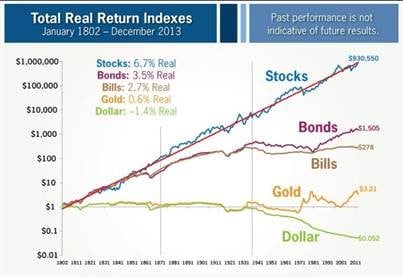
The US dollar remains the world's reserve currency, but its purchasing power has eroded steadily. Since the Nixon shock of 1971 (ending gold convertibility), the dollar has lost roughly 85-90% of its purchasing power to cumulative inflation. This is the silent baseline against which all "stores of value" must be judged.
De-dollarization is a real, if gradual, trend. Central banks now hold roughly 20% of foreign-exchange reserves in gold, and record purchases by China and other emerging economies have been a structural bid for the metal Chase. Yet J.P. Morgan and Morningstar note that central bank buying has cooled but remains understated in headline data, with China continuing to accumulate J.P. Morgan Morningstar.
The dollar's resilience should not be dismissed. Despite decades of deficits and monetary expansion, the USD still commands global reserve status, and a weakening dollar historically supports gold. The relationship is asymmetric: gold tends to rise sharply when the dollar falls, but does not fall as dramatically when the dollar rises aixinvestment.
What Gold Actually Is: Protection, Not a Return Champion
Gold's role has structurally evolved. WisdomTree describes gold's transition from a fear-based hedge to a core portfolio allocation, with Morgan Stanley citing a 50% year-to-date rally and near-zero equity correlation WisdomTree. Notably, gold is increasingly framed as a "fiscal-risk hedge" rather than a rate-sensitive asset—its correlations with Treasury yields have flipped positive, meaning it now sometimes moves with yields during periods of fiscal stress rather than against them WisdomTree.
A survey cited by WisdomTree found gold ranked as the top safe-haven asset (41%), with an average allocation of 5.7% WisdomTree. Yet J.P. Morgan Private Bank cautions that gold's historical inverse correlation with real yields has recently broken down, complicating the traditional model J.P. Morgan Private Bank.
Madison Partners adds important practical details: gold provides zero income, is taxed at a 28% collectibles ceiling (versus lower capital-gains rates), and carries roughly 16% volatility Madison Partners. Vanguard explicitly cautions against treating gold as reliable insurance, noting its hedging power is inconsistent Vanguard.
Current Gold Trends

The 2026 picture is one of extreme volatility. Gold hit an all-time high near $5,600/oz in January 2026, then entered a sharp correction with three major drawdowns: a January peak-and-crash, a 12% collapse in June, and an August-October correction amplified by an Iran conflict that triggered a 25%+ retreat Cedar Gold Group J2T. A brief rebound in August 2026—nearly 10%, briefly topping $4,700/oz—did not hold Morningstar.
As of November 18, 2026, gold traded at $3,779.67/oz—down 1.81% on the day, 8.72% over the past month, and 7.32% year-over-year, having fallen below $3,800 to its lowest level in over a year Trading Economics. This is roughly a 26% decline from its January all-time high of $5,602-5,608 J2T Trading Economics.
The summer rebound context. Madison Partners noted gold surged 64% in 2025, peaked near $5,405/oz in January 2026, fell 29.7% to a June low of $3,955 (its worst quarter since 2013), then recovered to ~$4,450 Madison Partners. Chase noted gold surpassed $5,500/oz in January 2026, was up 20%+ YoY by June, then pulled back, with its 200-day moving average around $4,400/oz Chase. WisdomTree noted gold briefly surpassed $4,300/oz before consolidating WisdomTree.
The drivers of the correction: the Fed's hiking cycle, a strong dollar, and rising real yields pressured the metal. But structural supports remain: central bank buying (cooled but persistent), Chinese physical demand, and the rise of stablecoins and tokenized gold BlackRock PIMCO J.P. Morgan.
Divergent forecasts. Analysts are sharply divided:
- Goldman Sachs: $5,400/oz by December 2026 (raised from $4,900), citing three "conviction buyer" groups Goldman Sachs
- J.P. Morgan Private Bank: $6,000-$6,300 outlook for 2026 J.P. Morgan Private Bank
- UBS: $5,400/oz over 12 months UBS
- Chase/JP Morgan year-end range: $4,350-$4,650 Chase
- Trading Economics: $3,834 end of quarter, $3,532 within 12 months Trading Economics
The disagreement is itself informative: the bull case rests on structural demand (central banks, fiscal risk), while the bear case rests on the current hiking cycle and elevated real yields.
What We Know and What We Don't
What we know:
- Gold is a proven diversifier and crisis hedge, though not a consistent inflation hedge across all eras.
- Gold has not been the best long-run store of value—stocks have decisively outperformed (0.6% vs 6.7% real return since 1802).
- Gold's 2025 surge (64%) was its best year since 1979, but 2026 has been volatile with a ~26% drawdown from the January peak.
- Central banks hold ~20% of FX reserves in gold; structural demand remains a support.
- Gold provides zero income, faces a 28% collectibles tax ceiling, and carries ~16% volatility.
What we don't know:
- Whether the 2026 inflation spike is a peak-and-fall (Morningstar) or a persistent re-acceleration (MPR).
- Whether gold's inverse correlation with real yields will reassert itself or remain broken.
- Whether central bank buying will accelerate (de-dollarization) or cool (price, diversification).
- Whether the current correction is a buying opportunity or the start of a deeper bear market.
- The impact of stablecoins and tokenized gold on physical demand and price discovery.
Ranked Ways to Invest in Gold

Below are the most common vehicles, ranked by a balance of cost, accessibility, tax efficiency, and suitability for most investors.
Quick Comparison
| Rank | Product | Approx. Price/Cost | Best For | Rating |
|---|---|---|---|---|
| 1 | Gold ETFs (GLD/IAU) | 0.25%-0.40% expense ratio | Core allocation, liquidity | 9/10 |
| 2 | Physical Coins/Bars | Spot + 1%-8% premium | Direct ownership, privacy | 8/10 |
| 3 | Gold Mining ETF (GDX) | ~0.51% expense ratio | Leverage to gold price | 7/10 |
| 4 | Gold IRA | Setup ($50-150) + annual ($75-300) | Tax-advantaged holding | 6/10 |
| 5 | Gold Savings Plans | Near spot + small fee | Dollar-cost averaging | 6/10 |
| 6 | Tokenized/Digital Gold | Near spot | Fractional access, 24/7 | 5/10 |
1. Gold ETFs (GLD / IAU)
Approximate cost: Global X Gold Trust (GLD) ~$200/share at a 0.40% expense ratio; iShares Gold Trust (IAU) ~$60/share at a 0.25% expense ratio.
Summary: ETFs backed by physical gold bars are the most efficient way to gain gold exposure in a taxable or retirement account. They trade like stocks, hold allocated metal in secure vaults, and offer deep liquidity. IAU's lower fee makes it the cost-conscious choice; GLD offers the deepest futures-market liquidity.
Pros:
- Highly liquid; buy/sell intraday like any stock
- Backed by physical gold in secure vaults
- Low expense ratios; no storage or insurance hassle
- Easy to hold in any brokerage or IRA
Cons:
- Annual expense fee erodes returns over time
- No physical delivery (you hold a paper claim)
- Gains taxed as collectibles (up to 28% ceiling)
- Counterparty/vault custodian risk
Where to buy: Vanguard, Fidelity, Charles Schwab, Interactive Brokers
2. Physical Gold – Coins & Bars
Approximate cost: Near spot price plus a premium of 1%-8% (e.g., American Gold Eagle or Krugerrand coins typically carry higher premiums than investment bars).
Summary: Physical gold offers direct, counterparty-free ownership of the metal. Coins (like the American Eagle or Maple Leaf) are widely recognized and liquid; bars offer lower premiums per ounce. This is the choice for investors who want tangible, private, off-bank-balance-sheet assets.
Pros:
- Direct ownership; no counterparty risk
- Privacy and tangibility
- No ongoing management fees
- Works as a crisis/insurance asset
Cons:
- Storage and insurance costs
- Wide bid-ask spreads (buy/sell gap)
- 28% collectibles tax ceiling on gains
- Risk of theft, loss, or authenticity issues
Where to buy: APMEX, JM Bullion, Kitco Metals, SD Bullion
3. Gold Mining ETF (GDX) and Miners
Approximate cost: VanEck Gold Miners ETF (GDX) ~$30/share at a 0.51% expense ratio; individual miner stocks vary.
Summary: Mining stocks and ETFs provide leveraged exposure to gold prices—miners' profits expand faster than the metal's price rises (and fall faster when it drops). They also pay dividends, unlike the metal itself. This suits investors seeking amplified returns who can tolerate higher volatility.
Pros:
- Operational leverage to gold price
- Dividend income
- Can outperform dramatically in bull markets
- Tied to production growth and cost control
Cons:
- Operational, geopolitical, and management risk
- Correlates with equities in stress (hedging weakens)
- Higher fees for ETFs; company-specific risk for stocks
- Can underperform gold in a flat or falling market
Where to buy: Fidelity, Charles Schwab, Interactive Brokers, TD Ameritrade
4. Gold IRA (Self-Directed Retirement)
Approximate cost: Setup fees ($50-150), annual custodial fees ($75-300), plus storage/insurance fees.
Summary: A Gold IRA lets you hold physical gold inside a tax-advantaged retirement account, blending the tax benefits of retirement savings with the tangibility of physical metal. It suits long-term, buy-and-hold investors who want a retirement allocation to gold.
Pros:
- Tax-deferred or tax-free growth
- Physical gold backing
- Diversifies the retirement portfolio
- Long-term wealth preservation
Cons:
- Higher fees than ETFs or direct ownership
- Illiquid; harder to trade quickly
- Cust