
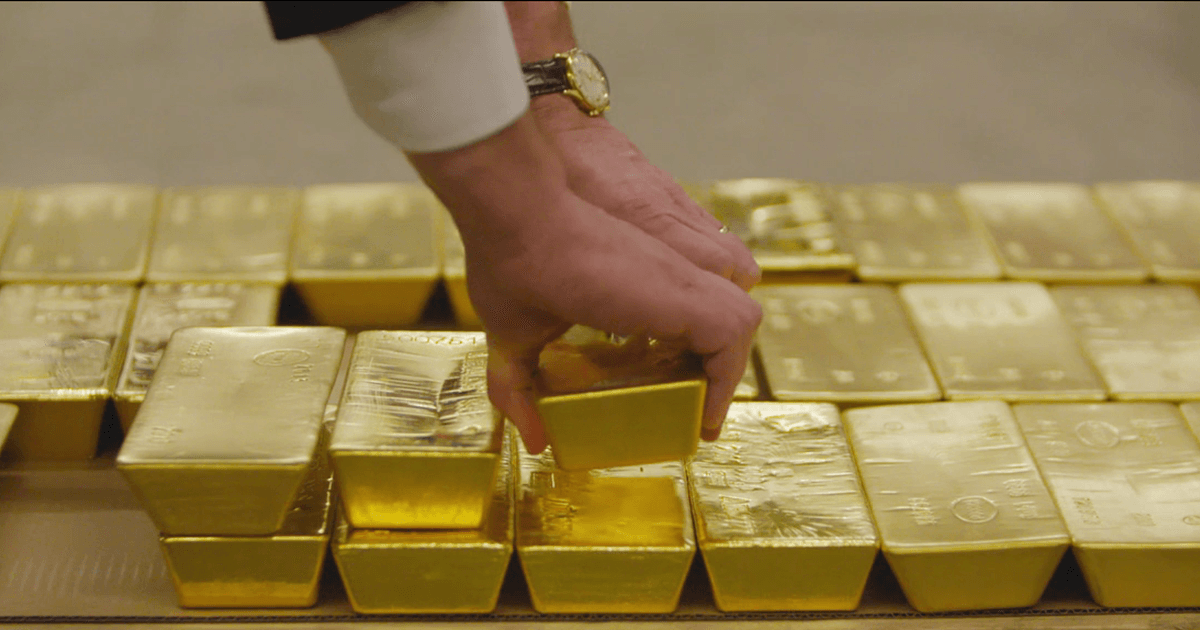
Executive Summary
Gold has a centuries-old reputation as the ultimate store of value, and in 2026 that reputation is more contested—and more relevant—than ever. After reviewing the current evidence, here's the bottom line:
- Has gold been the best store of value? Not unambiguously. Over the last century it has preserved purchasing power and outperformed bonds, but it has lagged equities, REITs, and silver over many periods, and it excels mainly during crises rather than in calm years.
- Is it an inflation hedge? Only imperfectly. Gold tracks real interest rates more reliably than headline inflation, so it shines when rates are low or negative and struggles when they're high—which is partly the current environment.
- What are current trends? Gold is volatile but leaning up: it spiked above $5,500/oz in early 2026, pulled back below $4,000 by November on higher rates, yet record central bank buying and ETF holdings underpin a structural floor.
- What should you do? For most people, a small, diversified allocation—via low-cost ETFs for ease, physical for tangible ownership, or miners for leverage—makes sense as portfolio insurance, not a bet on outperformance.
This report ranks the main ways to access gold, then answers the deeper questions about its store-of-value credentials, its relationship to inflation, and what the evidence says about the path ahead.
Quick Comparison of Top Picks

| Rank | Product | Approx. Price | Best For | Rating |
|---|---|---|---|---|
| 1 | Gold ETFs (GLD / IAU) | GLD ~$400 / IAU ~$85 per share | Easy, liquid exposure | ★★★★☆ |
| 2 | Physical Gold (coins & bars) | ~$4,000–4,200/oz + premium | Tangible ownership, privacy | ★★★★☆ |
| 3 | Gold Miners ETF (GDX) | ~$30–35 per share | Leverage to gold price | ★★★☆☆ |
| 4 | Tokenized Gold (PAX Gold) | ~$4,000–4,200/token | Fractional, 24/7 access | ★★★☆☆ |
| 5 | Gold IRA | Setup + storage fees | Tax-advantaged retirement | ★★★☆☆ |
| 6 | Gold Mutual Funds | NAV varies | Hands-off management | ★★☆☆☆ |
The Core Question: Has Gold Really Been "the Best" Store of Value?
Before picking a product, it's worth settling the premise. The brief asks whether gold has been the best store of value over the last century—and the honest answer is: it depends on the window and the metric.
On the bullish side, Sprott notes that since the US abandoned the gold standard in 1971, gold has grown at roughly an 8.1–8.7% CAGR, and over the 1999–2025 window it returned an average of 10.97% annually, ahead of US equities (8.06%) and US bonds (4.06%) Sprott. Sprott frames gold as having outperformed major asset classes over the last century, with positive average performance in the five leading fiat currencies in 9 of the past 10 years (58.01% in 2025) Sprott.
But the record is more mixed than the headline. Gold has led US asset-class returns only 5 times since 1974, behind REITs (11x), silver (9x), and US equities (9x) BullionVault. Over the 30-year period ending April 2025, gold's annualized return of 7.38% lagged stocks (10.29%) and real estate (8.78%) CNBC. It has also lagged CPI in stretches like 1994–2001 and suffered sharp drawdowns in 1981 (−32%) and 2013 (−28%) BullionVault.
The apparent contradiction resolves with one insight: gold's gains have been concentrated in crises, not spread evenly across all years. Since 2007 it has returned an average of 29.65% during crisis periods versus −3.58% for the S&P 500 Sprott. In other words, gold is excellent portfolio insurance—it pays off precisely when everything else is falling—but it is a cyclical, not a constant, store of value. Its total-return edge over equities is real but narrow and time-frame dependent.
Public sentiment reflects this nuance. A recent Gallup poll found gold's appeal as the best long-term investment rose five points to 23%, still below its 2011 record high of 34% CNBC; Gallup. Real estate remains Americans' top choice at 37% for a 12th straight year, and notably lower-income respondents favor gold while higher-income respondents favor stocks Gallup.
Bottom line: Gold is a top-tier store of value over long horizons, but "best for the last century" overstates it. Its value is cyclical, and its best moments tend to coincide with stress, not calm.
The Best Ways to Own Gold (Ranked)
1. Gold ETFs — GLD and IAU
Approx. price: GLD ~$400/share; IAU ~$85/share
Exchange-traded funds that hold physical gold in trust are the most practical way for most investors to gain gold exposure. GLD (SPDR Gold Shares) is the largest and most liquid, while IAU (iShares Gold Trust) is the cheaper alternative. Both track the spot price of gold and trade like stocks.
Pros:
- Highly liquid and easy to buy/sell in any brokerage account
- No storage, insurance, or authentication headaches
- Low cost—IAU charges 0.25%, GLD 0.40% annually
- CNBC explicitly advises using ETFs rather than physical bullion for most investors CNBC
Cons:
- Counterparty/trustee risk—you own a claim on the trust, not the metal
- No physical possession in a crisis
- Expense ratios erode returns over time
Where to buy: Vanguard, Fidelity, Schwab
2. Physical Gold — Coins and Bars
Approx. price: ~$4,000–4,200/oz (spot) plus a premium for coins
Direct ownership of physical bullion—coins like the American Gold Eagle or Krugerrand, or investment bars—remains the purest expression of gold as a store of value. It carries no counterparty risk and is portable and private.
Pros:
- Zero counterparty risk—you physically hold the asset
- Private and portable; usable in scenarios where the financial system is stressed
- No ongoing expense ratio (only one-time premium and storage)
Cons:
- Premiums over spot (especially for coins) and buy/sell spreads
- Storage and insurance costs if you don't hold it yourself
- Slightly less liquid than a click of a keyboard
Where to buy: APMEX, JM Bullion, Kitco Market
A cautionary note: A promotional piece from GoldGuys argues gold decisively beats real estate over 80+ years, using the example of a bespoke suit costing a consistent number of gold ounces GoldGuys. Treat this as advocacy, not independent analysis—its methodology cherry-picks a single long-running price series and ignores gold's multi-year drawdowns.
3. Gold Miners ETF — GDX
Approx. price: ~$30–35/share
For investors who want leverage to the gold price rather than the metal itself, a gold miners ETF like GDX (VanEck Gold Miners ETF) holds a basket of mining companies. When gold rises, miners' profits can rise faster—and vice versa.
Pros:
- Built-in leverage to the gold price
- Often pays dividends that physical gold cannot
- Sprott suggests a tactical 0–5% allocation to gold-related equities for this purpose Sprott
Cons:
- Higher volatility and company/operational risk (fuel, labor, jurisdiction)
- Not pure gold exposure—affected by management and cost overruns
- Can underperform the metal in a gold bear market
Where to buy: Vanguard, Fidelity, iShares
4. Tokenized / Digital Gold — PAX Gold (PAXG)
Approx. price: ~$4,000–4,200/token (one token = one troy ounce)
Tokenized gold like PAX Gold is blockchain-backed, with each token redeemable for a physical gold bar held in a vault. It represents a modern middle ground—digital convenience with physical backing.
Pros:
- Fractional ownership enables small purchases
- Trades nearly 24/7, unlike traditional markets
- Redeemable for physical metal; audited reserves
Cons:
- Regulatory and custody risk tied to the crypto ecosystem
- Dependent on the issuer's integrity and vault arrangements
- Less familiar to traditional financial advisors
Where to buy: PAXOS, major crypto exchanges
Amundi Research frames digital assets broadly as hedges against eroding USD purchasing power, projecting a weaker—but non-linear—dollar for 2026 Amundi. Tokenized gold sits at that intersection.
5. Gold IRA
Approx. price: Setup fees ($50–$300) plus annual storage ($100–$300)
A self-directed Gold IRA lets you hold physical gold inside a tax-advantaged retirement account. It's a way to bake gold into a long-term plan without triggering immediate taxes.
Pros:
- Tax-deferred or tax-free growth depending on account type
- Brings a store of value into a retirement strategy
- Combines the diversification benefits with tax efficiency
Cons:
- Higher fees than ETFs (setup, custody, storage, insurance)
- Less liquid; physical metal in an IRA has restrictions
- Complexity in administration
Where to buy: August Gold, Arrington Gold, Irving Gold
6. Gold Mutual Funds
Approx. price: NAV varies
Actively managed gold mutual funds pool investor money to hold gold, miners, or a mix, with professional management. They suit hands-off investors but come at a cost.
Pros:
- Professional management and rebalancing
- Automatic dollar-cost averaging via plan investments
- Can blend gold with other assets for a single holding
Cons:
- Higher expense ratios than ETFs
- May lag a simple gold ETF over time
- Less transparency on holdings
Where to buy: Fidelity, Vanguard, Charles Schwab
How Gold Relates to Inflation (and Why the Fed's Dismissal Matters)
The brief rightly pushes back on the Fed's "inflation isn't a big deal" stance. The evidence on gold as an inflation hedge is subtle: gold correlates with real interest rates, not headline inflation. It rises when rates are low or negative and falls when they rise, with the strongest correlation during low-rate periods NBER. There have been stretches—such as 1994–2001—when inflation rose but gold stayed flat or fell SmartAsset.
This is exactly why the current environment is a paradox. Inflation sits persistently above the Fed's 2% target—around 3.4%—driven by volatile energy prices and AI-driven demand Federal Reserve (Jefferson speech). The trajectory is itself contested: J.P. Morgan projects inflation rising through mid-2026 (peaking below 4% YoY, largely tariff-driven) before cooling to 2% by year-end J.P. Morgan, while the broader outlook sees sticky-but-stable inflation near 3% J.P. Morgan Global Research. The BIS's 2026 Annual Economic Report warns of "an inflation comeback" fueled by energy shocks and heightened "trust in money" concerns within a fragmenting, two-tier monetary architecture BIS. Hoover Institution analysis adds that fiscal pressures have repeatedly pushed central banks toward monetary excess Hoover.
Here's the crux: in a USD-based system where the central bank struggles to rein in inflation, that backdrop supports gold as a store of value. But because real rates remain positive and the Fed has actually raised rates to 3¾–4% Federal Reserve (Sept 2026 projections), it's also a genuine headwind. Gold's effectiveness is highest when real rates are low or negative—which is not the current state. The Financial Stability Report's observation that Treasury yields have risen markedly while equity valuations remain elevated and inflation-adjusted commercial real estate prices are flat underscores an environment in which investors increasingly hunt for stores of value Federal Reserve.
Current Gold Trends (2026): Volatile, But Leaning Up
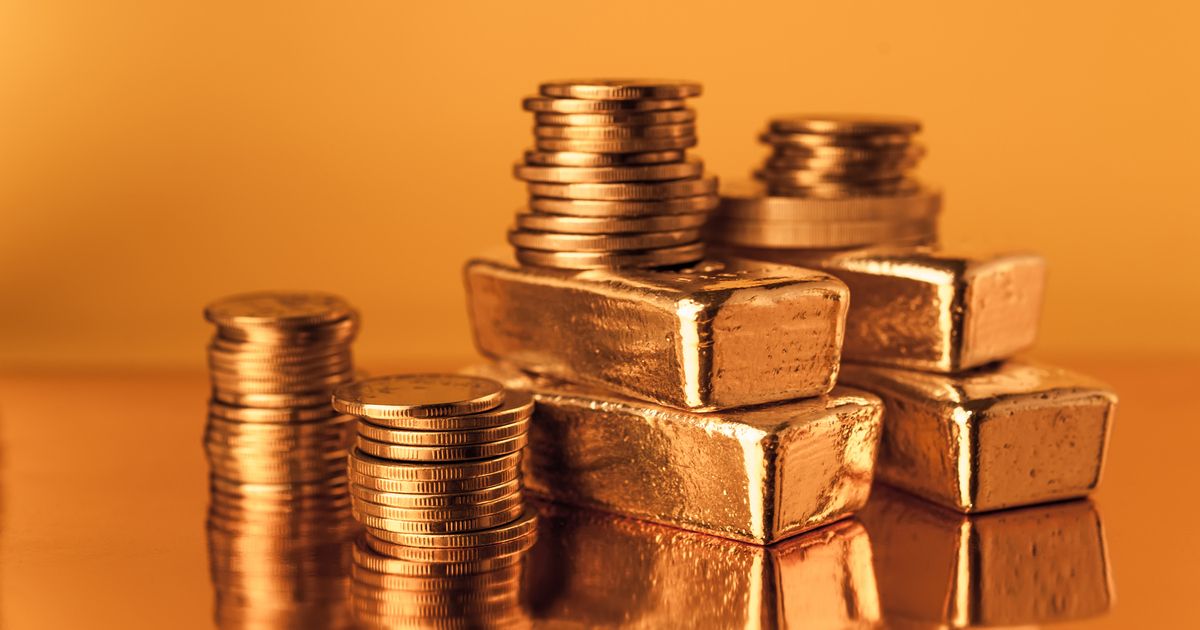
Gold has traded in a wide range rather than following a clean uptrend. It peaked above $5,500/oz in January 2026 before declining through the year, with an intra-year floor around $4,170/oz, and by early November had fallen below $4,000/oz amid a two-month downtrend driven by higher rates and a stronger dollar Kitco; J.P. Morgan Global Research. For the year it averaged roughly $4,300/oz GoldRepublic. WisdomTree frames this as a healthy correction, with gold now closer to model-implied valuations and increasingly valued as a defensive asset in its own right, rather than purely as a function of real yields WisdomTree.
The structural floor remains intact. Central bank demand was the most consistent support: the World Gold Council reported net purchases of 321t in Q3 2026 (+42% YoY), pushing year-to-date demand to 675t World Gold Council. But the data is opaque—roughly 63% of Q3 buying was unreported Kitco, and alternative data suggests actual purchases were far higher than reported J.P. Morgan Global Research. Record ETF holdings (4,256 tonnes) and record inflows (US$31 billion in Q3) signal sustained demand even as prices fell Kitco.
Forecasters remain broadly constructive but disagree sharply. Goldman Sachs most recently cut its end-2026 target to $4,150/oz (from $4,650), citing the Fed's hawkish stance Yahoo Finance. J.P. Morgan is more bullish, forecasting gold averaging $6,000/oz in 4Q2026 [J.P. Morgan Global Research](https://www.jpmorgan.com/insights/global