
Executive Summary
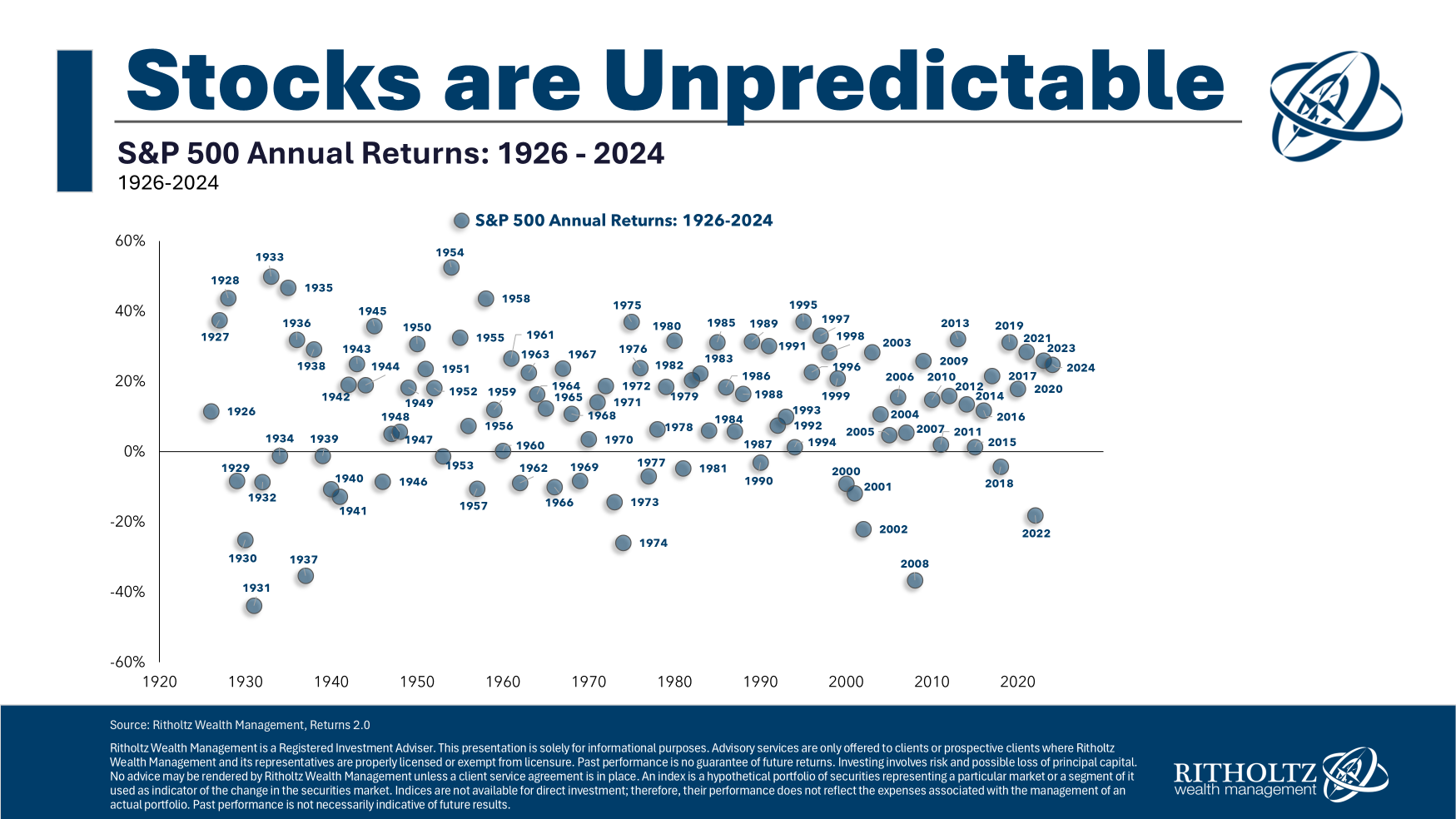
The premise most people bring to the gold debate is seductive: gold has always been the best store of value, so it must be the answer to inflation. The evidence says something more interesting and more useful. Over the full 20th–21st century, gold did not win — equities and real estate crushed it as wealth creators, with the S&P 500 returning roughly +9.94% annually versus gold's +5.12% nominal (1928–2024), and a $100 stake in gold becoming $21,025 versus ~$1.16 million for the S&P 500 over the same span finlume.net/en/blog/inflation-hedge-assets-comparison/; [pages.stern.nyu.edu/adamodar/New_Home_Page/datafile/histretSP.html](pages.stern.nyu.edu/~adamodar/New_Home_Page/datafile/histretSP.html). Gold is a regime-dependent asset: it excels during high inflation, negative real yields, and periods of declining trust in the dollar, but it lags badly in the calm, low-inflation, equity-booming stretches that have defined much of the modern era.
Gold's 2025–2026 run has been dramatic and then sharply volatile: it surged toward all-time highs near $4,300–4,350/oz in 2025, broke a record $5,589.38/oz intraday on January 28, 2026, then gave back roughly 25–28% of those gains through a multi-year correction, trading around $4,006–4,009/oz as of October 27, 2026 edgeconsultancykw.com/wp-content/uploads/2026/01/De-Dollarization-Gold-English.pdf; ainvest.com/news/gold-price-drivers-2026-outperform-expectations-central-bank-buying-dollar-weakness-2604/. Structural support from record central-bank buying and de-dollarization fears provides a floor, but the near-term path hinges on real yields and the dollar — and the consensus is to treat gold as portfolio insurance (roughly 10% of a diversified portfolio) rather than a primary growth engine metalcharts.org/guides/gold-price-forecast.
The bottom line: gold is a legitimate but imperfect hedge. For pure inflation protection, purpose-built instruments like I Bonds and TIPS are more reliable. For long-term wealth creation, equities and real estate are vastly superior. Gold's real role is as an asymmetric insurance policy against currency debasement, negative real rates, and tail risks — best held in modest size, alongside the alternatives below.
The Ranked List: Wealth-Protection Vehicles for a USD-Based World
Below are the vehicles ranked by how well they serve the specific goal of protecting purchasing power in a system built on the U.S. dollar. The ranking reflects a key distinction the evidence keeps drawing: there's a difference between preserving wealth (inflation hedging), growing wealth (total returns), and insuring against catastrophe (tail-risk protection). No single asset does all three.
| Rank | Name | Approx. Price | Best For | Rating |
|---|---|---|---|---|
| 1 | I Bonds | $5–$10,000/yr face value | Safest purpose-built inflation hedge | 4.5/5 |
| 2 | TIPS | $1,000 face value | Bond-style inflation protection | 4.3/5 |
| 3 | Physical Gold (coins/bars) | ~$4,000/oz + premium | Tangible tail-risk / debasement insurance | 4.0/5 |
| 4 | Gold ETFs (GLD/IAU) | ~$150–200/share | Liquid, low-cost gold exposure | 4.0/5 |
| 5 | Real Estate | Varies | Wealth-building + inflation hedge | 4.2/5 |
| 6 | Broad Equities (S&P 500) | ~$100–300/share | Long-term wealth creation | 4.5/5 |
| 7 | Gold Mining Stocks/ETFs | Varies | Leveraged gold bet | 3.5/5 |
1. I Bonds (Series I Savings Bonds)
Approximate price: Face value from $5 up to $10,000 per person per year.
I Bonds are the closest thing to a purpose-built inflation hedge the U.S. government offers: their interest rate has a fixed component plus an inflation component that adjusts twice a year to match the CPI-U, so the principal keeps pace with price rises by design. They're backed by the full faith and credit of the U.S. Treasury, and the interest is exempt from state and local tax and can defer federal tax until redemption or maturity.
Pros:
- Mechanical, guaranteed adjustment to inflation — no guessing game about whether gold "will" keep up.
- Completely risk-free on principal; no market volatility.
- Tax advantages (state/local exemption, federal deferral).
Cons:
- Hard purchase cap (~$10,000/person/year) limits how much protection you can buy.
- Liquidity lock-up: you can't redeem for the first 12 months, and you lose three months of interest if you cash out before five years.
- Returns are modest in low-inflation environments — they protect purchasing power, they don't dramatically grow wealth.
Where to buy: treasurydirect.gov
2. TIPS (Treasury Inflation-Protected Securities)
Approximate price: ~$1,000 face value when held to maturity; trade on the secondary market and via ETFs like TIP.
TIPS are the institutional cousin of I Bonds: the principal is indexed to CPI, so when inflation rises, your principal rises too, and the coupon is applied to that adjusted principal. They're the go-to for investors who want bond-style income and reliable inflation adjustment, and they're why many analysts argue gold's inflation-hedge reputation is overstated — TIPS adjust mechanically where gold does not treasuryinflationprotectedsecurities.vyncedigitalwiki.com/blog/tips-vs-gold-inflation-hedge-comparison/.
Pros:
- Reliable, mechanical inflation adjustment — the gold standard for "pure" inflation protection.
- Government-backed; preserves real purchasing power with far less volatility than gold.
- Available directly or cheaply through TIPS ETFs.
Cons:
- You may owe tax on "phantom" inflation adjustments even before you receive the cash.
- Sensitive to real yields — when real rates rise (as in 2022), TIPS, like gold, can underperform.
- No upside participation in growth; purely a preservation vehicle.
Where to buy: treasurydirect.gov; blackrock.com/interactives/uk/fundsummary/summary_en.pdf (TIP)
3. Physical Gold (Coins and Bars)
Approximate price: ~$4,006–4,009/oz as of October 27, 2026, plus dealer premiums and storage costs.
Physical gold — coins like Eagles or Maples, or bars — is the original store of value, and it's the asset at the center of this investigation. Its appeal in a USD-based system is that it carries no counterparty risk, no dollar dependency, and no government can seize what you hold in a safe abc17news.com/stacker-business-economy/2026/07/23/us-dollar-safe-haven-status-in-2026-de-dollarization-explained-for-traders/. Central banks are buying it at a record pace for exactly these reasons, averaging ~1,000 tonnes per year versus ~500t previously, with 863t purchased in 2025 alone gold.org/goldhub/research/central-bank-gold-reserves-survey-2026.
Pros:
- Truly tangible; no broker, custodian, or counterparty to fail.
- Strong hedge against currency debasement, financial sanctions, and tail risks.
- Historically excelled in high-inflation regimes (e.g., ~500% real gains at peak during 1966–1985) investorsfriend.com/asset-performance/.
Cons:
- Pays no income; its return depends entirely on a future buyer paying more economics.mba/finance/historical-investment-returns-stocks-bonds-and-risk/.
- High spreads and storage/insurance frictions erode returns.
- Over decades its real return has been near zero — a $10,000 gold investment in 2006 grew to ~$30,000 nominally (5.6% annualized) but only ~2% after inflation and storage treasuryinflationprotectedsecurities.vyncedigitalwiki.com/blog/tips-vs-gold-inflation-hedge-comparison/.
Where to buy: apmex.com; kitco.com/charts/gold
4. Gold ETFs (GLD / IAU)
Approximate price: ~$150–200 per share depending on the fund.
If you want gold's hedging properties without the hassle of vaulting physical metal, gold ETFs give you liquid, exchange-traded exposure backed by physical bullion held in trust. They've been a major driver of the recent rally — gold-backed ETF holdings reached a record 4,189 tonnes, with inflows persisting even during the September 2026 correction bestbrokers.com/gold-brokers/countries-gold-reserves/. They're the practical vehicle most analysts mean when they recommend a ~10% gold allocation.
Pros:
- Highly liquid — buy and sell like a stock in seconds.
- Low expense ratios (especially IAU), no storage or insurance hassle.
- Easy to embed in a retirement account or automated portfolio.
Cons:
- Custodial/counterparty risk — you own a claim on gold held by a trustee, not the metal yourself.
- Annual management fees slowly compound against you over decades.
- Same underlying weakness as physical gold: no yield, regime-dependent performance.
Where to buy: blackrock.com (GLD); shares.ishares.com (IAU)
5. Real Estate
Approximate price: Varies enormously by market; entry via property or REITs.
Real estate is the sleeping giant of this comparison. Over 50-year inflation-hedge windows, U.S. residential real estate has generally outperformed gold, benefiting from income generation, mortgage leverage, and tax advantages that gold simply lacks goldmarketdaily.com/gold-vs-real-estate-inflation-hedge-50-years/. It's an inflation hedge that also pays you to hold it — through rent — which is the quality gold fundamentally lacks.
Pros:
- Generates ongoing income (rental yield) that gold never does.
- Leverage: you control a large asset with a down payment, amplifying inflation-resistant value.
- Tax advantages (depreciation, deductions) and tangible utility.
Cons:
- Illiquid and capital-intensive; you can't sell a fraction of a house quickly.
- Requires active management or REIT fees.
- Prices don't always track inflation in the short run.
Where to buy: zillow.com; REITs via vanguard.com
6. Broad Equities (S&P 500 Index Fund)
Approximate price: ~$100–300 per share (VOO/SPY).
Equities are the century's undisputed wealth machine, and they're the uncomfortable truth the gold thesis has to confront: over 1928–2025, $100 in gold became $21,025 versus ~$1.16 million for the S&P 500 [pages.stern.nyu.edu/adamodar/New_Home_Page/datafile/histretSP.html](pages.stern.nyu.edu/~adamodar/New_Home_Page/datafile/histretSP.html). Stocks and real estate "better preserve purchasing power until inflation reaches extreme levels, at which point gold tends to excel" — so equities are your first line of defense against inflation, with gold as the backstop schwab.com/learn/story/gold-vs-stocks-as-inflation-hedge/.
Pros:
- Compounding growth and dividends; overwhelming long-run outperformance.
- Self-adjusting to inflation as companies raise prices over time.
- Liquid, cheap, and accessible.
Cons:
- High short-term volatility; doesn't protect during hyperinflation or equity crashes.
- Can underperform gold in acute currency-crisis regimes.
- Requires a long time horizon to realize the advantage.
Where to buy: vanguard.com; schwab.com
7. Gold Mining Stocks / ETFs (e.g., GDX)
Approximate price: Varies; GDX trades around $30–40/share.
Mining equities offer leveraged exposure to gold's price — a 10% move in gold can produce a larger move in miner profits — plus dividends. But they carry company-specific, operational, and geopolitical risks that physical gold avoids, and they've historically been more volatile than the metal itself. They're a speculative satellite, not a core store of value.
Pros:
- Operational leverage to gold's upside.
- Dividend income that pure gold lacks.
- Can outperform physical gold in a strong bull market.
Cons:
- Company, cost, and political risks (mines can be nationalized or mismanaged).
- More volatile than the underlying metal.
- Not a "safe haven" in the way physical gold is.
Where to buy: vaneck.com (GDX); any major brokerage
Where the Sources Agree and Disagree
Most sources agree on the structural bull case: central-bank buying is at a record pace, de-dollarization fears provide a floor, and gold has preserved purchasing power as paper currencies have depreciated over long horizons theboard.world/articles/markets/gold-forecast-2026-2027-central-bank-record-buying/; convextrade.com/metrics/gold. They also agree that gold's inflation-hedge reputation is overstated — its price tracks real interest rates and crisis sentiment, not CPI prints directly, which is why it fell in 2022 despite 9.1% inflation and dropped ~28% in 2013 despite positive inflation [goldmarketdaily.com/tips-vs-gold-inflation-hedge/](goldmarketdaily.com/tips