
Executive Summary
Gold is in the headlines again, and for good reason. After a brutal, volatile 2026 that saw the metal swing from a record high to a steep correction and back, the question "is gold still a good store of value?" is more relevant than ever. This report answers the core questions raised by the research brief: Is gold the best store of value over the last century? Is it a reliable inflation and USD hedge? And given current volatility, what should everyday people do to protect themselves?
The short answers: No, gold is not the best store of value over the last century (equities crushed it), but it has been a reliable store of value over decades and a strong short-term inflation hedge. The Fed's claim that inflation is "not a big deal" is technically defensible on headline numbers but ignores the structural debasement trade. And right now, gold trades at roughly $4,014/oz—about 28% below its January 2026 record of ~$5,589–5,595—which is arguably a more rational entry point than the euphoric top.
The report then translates this analysis into an actionable, ranked list of investment vehicles (ETFs, physical bullion, IRAs, miners, and tokenized gold) so readers can choose how to position themselves.
Part 1: The Research — Answering the Core Questions

Is Gold the Best Store of Value Over the Last Century?
The honest answer is no—but with an important caveat that explains why gold feels so hot right now.
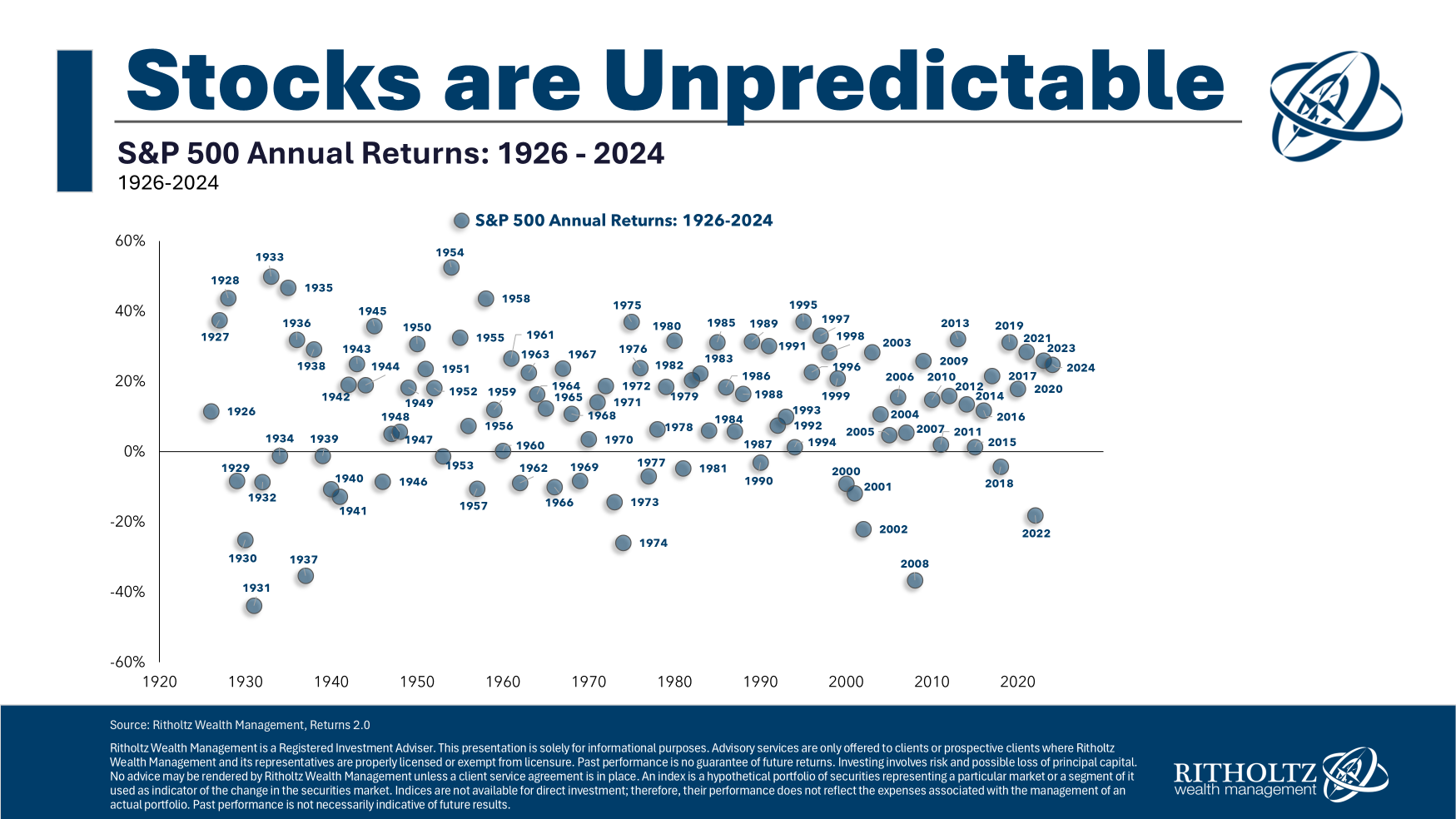
Over the full century, gold has been a decent store of value but a mediocre wealth builder. According to cumulative return indices, gold turned $100 into roughly $21,025 between 1928 and 2025, an annualized return of about +5.12%. That comfortably beat bonds (+4.50%), cash (+3.31%), and real estate (+4.23%), but it was utterly dwarfed by equities: the S&P 500 turned $100 into roughly $1.16 million, and US small caps into roughly $6.46 million over the same window. Since 1974, gold has topped US asset performance only five times. In other words, if you'd put your money in gold for a century, you'd be comfortable—but if you'd bought and held stocks, you'd be wealthy. https://stern.nyu.edu/~adamec/Finance/History/histretSP.html
The key insight is that gold is cyclical, not monotonic. Its history reads like a rollercoaster: it surged +2,300% in the 1970s during the high-inflation, oil-shock era (CPI hit 13%+ in 1979), then entered a brutal 20-year bear market from 1980 to 1999 as inflation was tamed and equities roared, bottoming near $252/oz. It then lost real value again from 2011 to 2015. A buyer who topped out at the January 1980 peak of $850 had to wait 45+ years just to break even in inflation-adjusted terms. https://www.goldpricetools.com/gold-price-history
So why does gold feel like the ultimate store of value? Because of the 1971–2025 window, which is exactly what the current bull run is echoing. Over those 54 years, gold grew purchasing power roughly 10.5x, versus an 8-fold rise in consumer prices—meaning it preserved real wealth across generations. Its 2025 average of $3,432 (inflation-adjusted) is the highest in a 56-year series. https://www.metalcharts.org/gold-price-adjusted-for-inflation This is the nuance most op-eds miss: gold is a reliable store of value over decades, but a notoriously unreliable one over individual years or decades.
Gold as an Inflation and USD Hedge
Here the research gets genuinely interesting, because the popular belief—"gold beats inflation"—is only half true.
Academic research on gold as an inflation hedge finds that it is a reliable short-term hedge but a poor long-term one. Gold's correlation with inflation is strongest at 1.5–2 month lags, performs best at higher price levels and in high-inflation regimes (above 0.55% monthly inflation), and weakens—and can even turn negative—over longer lag periods, especially in the United States. It is a partial, regime-dependent hedge, not a mechanical one, and it has proven superior to Bitcoin as a high-inflation store of value precisely because of its lower volatility. Regionally it varies too: strong in the US and China, weaker in the UK and India. https://www.actamont.tuke.sk/the-evolving-role-of-gold-as-an-inflation-hedge
The deeper mechanism matters more than the inflation print itself. Gold responds to real interest rates and USD strength, not to individual CPI reports. Sustained negative real yields have historically been the most reliable supportive condition for gold. When the Fed cuts while inflation runs hot, real yields go negative and gold shines—regardless of what the headline inflation number says. https://www.thewessexmint.com/gold-s-new-record-high-january-2026 This is the crux of the "is the Fed right that inflation isn't a big deal?" question: the Fed may be right on the headline, but the real-yield and dollar dynamics are what actually drive gold—and those point the opposite way.
Two structural forces are now supporting gold independent of inflation:
- Central bank buying. Central banks purchased roughly 863 tonnes in 2025—their fourth straight year of heavy accumulation—and gold has now exceeded US Treasuries as the top reserve asset. This is driven by China, India, and Turkey seeking to reduce dollar dependence. https://www.metalcharts.org/gold-all-time-high
- De-dollarization. The dollar's share of global reserves has fallen to roughly 57%, down from 72% in 2000, as BRICS nations and emerging markets diversify away from USD assets. https://www.statisticsoftheworld.com/gold-price-5000-2026-central-banks-dedollarization-record
A useful framework comes from one analysis that identifies four forces driving the current rally: (1) structural central bank buying, (2) a cyclical weakening dollar (DXY fell ~10%), (3) a cyclical Iran-war safe-haven bid that is now fading with peace signals, and (4) a structural "debasement trade" fueled by sovereign debt at 100%+ of GDP. The cyclical forces (dollar, geopolitical) can reverse, but the structural forces (central banks, debt) are harder to unwind. https://www.profitbyfriday.com/four-forces-drove-gold-5589
The Inflation Picture: Is the Fed Right That It's "Not a Big Deal"?
On the numbers, the Fed has defensible projections but a fragile narrative. The Federal Reserve's March 2026 dot plot and July policy materials project PCE inflation of ~3.6% for 2026, with the Fed funds rate sitting at 3.50–3.75% and CPI running above 3%, against a national debt of $39.24 trillion. https://www.federalreserve.gov/fomcprojtabl20260318 https://www.federalreserve.gov/2026-07-mpr-part3
So is inflation "not a big deal"? On a single-year basis, maybe. Over a decade, no. The distinction is exactly what the academic research above confirms: gold hedges inflation over months, not years, and the real threat to the USD is not a hot CPI print but the cumulative effect of persistent above-target inflation plus structural debasement. When real yields are negative and debt is growing faster than the economy, the purchasing power of the dollar erodes regardless of what the Fed's tone suggests. The KITCO analysis captures this well: what matters for gold is the Fed's response to inflation, not the inflation print itself—and a Fed that keeps rates below the inflation rate is quietly subsidizing gold's appeal. https://www.kitco.com/charts/gold
Current Gold Trends: Volatile, But Leaning Upside
As of the edition date (October 26, 2026), gold trades at approximately $4,014/oz—roughly 28% below its all-time high. https://www.metalcharts.org/gold-price-per-ounce
The all-time high itself is worth a caveat about source disagreement. Most sources agree gold hit a record of ~$5,589–5,595 in late January 2026 (metalcharts cites $5,589.38 on Jan 28; ebc.com cites $5,595.47 on Jan 29; aurumrates cites $5,603). https://www.ebc.com/gold-highest-price-ever-xauusd-record-2026 One outlier, The Wessex Mint, cites a lower figure of ~$5,110, which I treat as an anomaly or a different measurement basis. Notably, this 2026 nominal peak sits ~58% above gold's inflation-adjusted 1980 record (the $850 January 1980 peak equates to roughly $3,300–3,600 in 2026 dollars), meaning gold has finally broken its real all-time high after 45 years. https://www.metalcharts.org/gold-all-time-high
The 2026 trajectory was a wild ride:
- Late January 2026: Record ~$5,589–5,595
- By June 24: Crashed ~29% to $3,959 as geopolitical tensions eased
- August: Recovered with a 13% monthly gain
- September 22: ~$4,366 (still ~22% below record)
- October 26: ~$4,014 (consolidating in the $4,300–4,750 range it has traded in)
https://www.ebc.com/gold-highest-price-ever-xauusd-record-2026
What can we expect? Forecasts are unstable and wide, which itself is a data point. Goldman Sachs revised its target down to $4,600 (Aug 25) then back up to $4,900 (Aug 28). JP Morgan sees $6,300, HSBC sets a $5,000 floor, and bull-case targets reach $5,800–6,300 within 12–18 months. https://www.goldmansachs.com/gold-is-forecast-to-climb https://www.aurumrates.com/gold-price-all-time-high
What we know: the structural drivers (central bank buying, debt-driven debasement, dollar weakness) remain intact; gold is a reliable long-run store of value; it's a strong short-term inflation hedge. What we don't know: the timing of a recovery to the $5,000+ zone, whether the Fed will keep real rates negative, how fast de-dollarization accelerates, and whether a fading geopolitical bid will cap upside. The accelerating recovery pattern seen in past ATH cycles (1980, 2011, 2020, 2023, 2024, 2026) suggests the current dip could be absorbed