
Executive Summary
The premise that gold "has been the best store of value for the last century" does not survive contact with the data. Over the past hundred years, US equities and, in many periods, real estate have decisively outperformed gold. Gold's genuine strengths are different: it is a proven crisis hedge, a portfolio diversifier with near-zero long-term correlation to stocks, and a store of value that has preserved purchasing power across centuries. Its reputation as a reliable year-to-year inflation hedge rests on rare outlier years rather than consistent behavior.
The 2025–2026 gold market tells a different story than the historical one. Gold roughly doubled from roughly $2,700 to an all-time high near $5,400–$5,600, but this run has been driven less by the classic inflation-hedge narrative and more by structural central-bank buying, de-dollarization, and geopolitical risk. Whether it continues is genuinely unknowable, and the price currently sits at elevated valuations with no clear timing signal. The honest conclusion is that gold deserves a role as insurance in a diversified portfolio — not as a conviction bet or a "set and forget" compounding machine.
1. The Premise: Has Gold Been the Best Store of Value?

Let's start by testing the foundational claim, because everything else in this piece depends on it. The short answer is no: gold has been a strong runner-up, but it has not been the winner.
Multiple independent datasets converge on the same conclusion. Over the 97-year span from 1928 to 2024, gold returned roughly +5.12% annualized — comfortably beating bonds (+4.50%), cash (+3.31%), and real estate (+4.23%), but trailing US equities (+9.94%) and small caps (+11.74%) A Wealth of Commonsense. With inflation averaging around 3% per year across that span, that yields a real return of roughly +2.12% annually. That is a solid, respectable store of value — but it is not the top performer, and it is not close.
The picture is consistent across other time windows. Over 1972–2025, $1 invested in gold grew to approximately $12.89 in real terms, versus roughly $35.90 for the S&P 500 Of Dollars and Data. On an annual basis from 1974 to 2023, gold topped US asset-class performance only 5 times, trailing commercial real estate/REITs (11 years), silver (9 years), and US equities (9 years) BullionVault; Gold & Silver House.
Where sources agree: Every dataset reviewed here agrees that gold is a legitimate store of value that beats cash, bonds, and real estate over the long run. They also agree that equities have dominated the total-return race.
Where sources diverge: The magnitude of gold's underperformance relative to equities varies by window, and some retail-oriented sources (e.g., certain gold-focused blogs) cite figures that are inconsistent with more authoritative reporting. For instance, one source cites a 1,237-tonne 2025 central-bank purchase figure that conflicts sharply with the World Gold Council's ~863-tonne report — a discrepancy that should be flagged and resolved in favor of the WGC as the authoritative source onlinegold.org; World Gold Council.
Op-ed implication: The article's opening premise is factually shaky. A responsible op-ed should correct it head-on: gold is a strong #2 or #3, not #1.
2. Gold vs. Inflation: Reputation vs. Reality
The most persistent myth about gold is that it is a reliable inflation hedge. The data tells a more nuanced, and more interesting, story.
It is true that gold's most spectacular returns coincided with high-inflation periods. Gold surged +106% in 1979, +59% in 1973, and +49% in 1974, all clustered around the 1970s oil-crisis inflation, when CPI peaked at 12.1% in 1974 Of Dollars and Data; BullionVault. These are the numbers that give gold its reputation.
But reputation and reality diverge sharply when you look deeper. Gold's average return was highest during high-inflation periods (+5.6 percentage points), yet its median return was actually lower (–7.7 percentage points) Of Dollars and Data. In other words, gold's inflation-hedging reputation rests on a handful of rare, extreme outlier years — not on consistent, repeatable behavior. The typical high-inflation year for gold was, if anything, negative.
Even more striking: gold lagged CPI inflation consistently from 1994 to 2001 BullionVault; Gold & Silver House. And over the full 50-year period from 1975 to 2026, the S&P 500 has actually been a better long-term inflation hedge than gold, because corporate earnings and dividends rise alongside prices over extended periods Westmount Fundamentals.
The takeaway: Gold protects purchasing power over centuries and shines during acute inflation shocks, but it is not a reliable year-to-year inflation hedge. Anyone buying gold specifically to "beat inflation next spring" is betting on a myth.
3. Where Gold Genuinely Earns Its Keep: Portfolio Insurance
If gold is not the best performer and not a reliable annual inflation hedge, why do sophisticated investors still hold it? The answer is diversification and crisis protection — gold's genuine, evidence-backed edge.
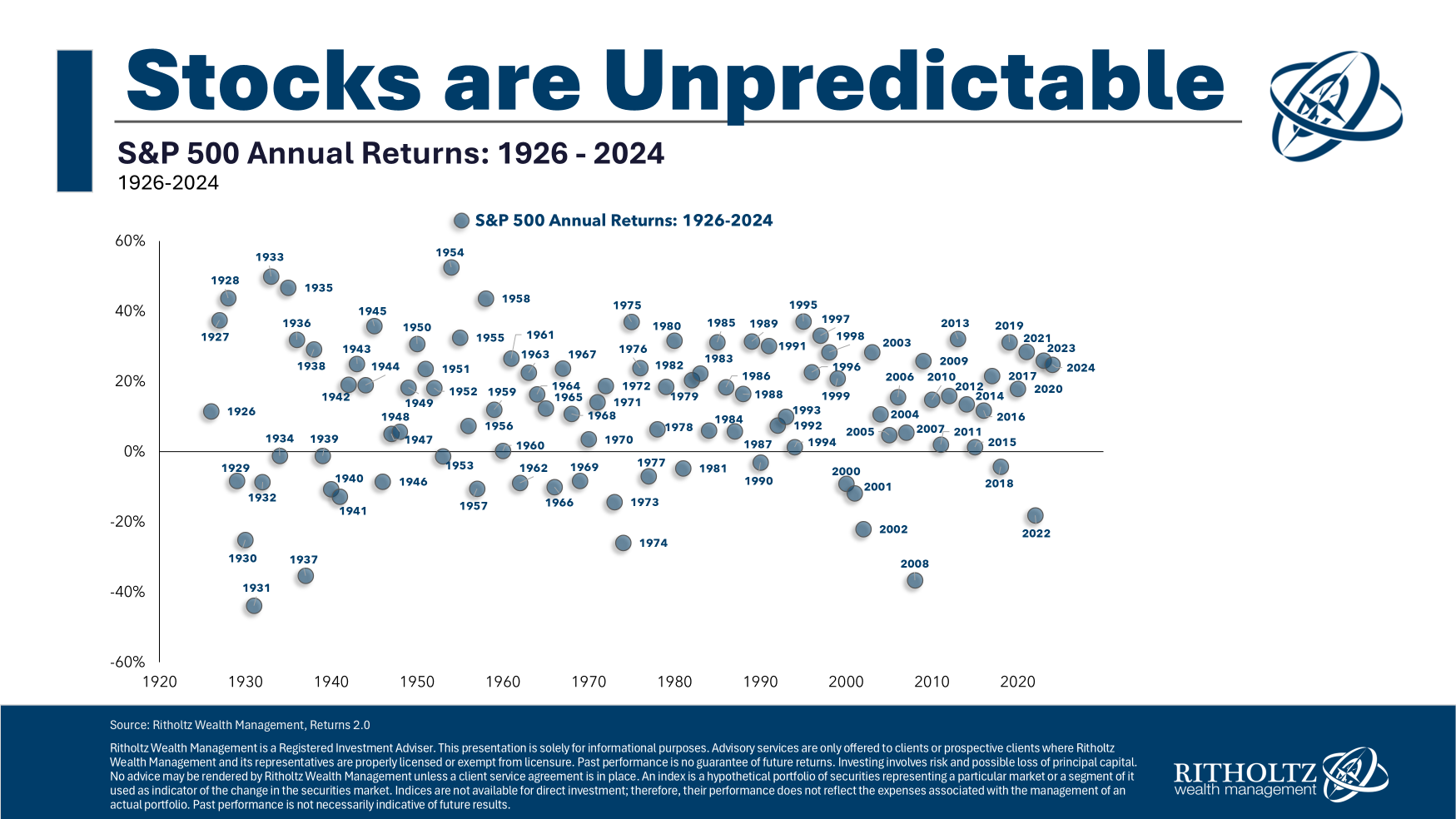
The most compelling statistic: until 2022, gold rose every single year that US stocks fell 10% or more — including 2022 itself, when gold slipped just 0.3% while the S&P 500 fell –18.1% BullionVault; Gold & Silver House. (Note: 2022 did break that streak amid the unusual "Covid re-opening" inflation shock that forced aggressive Fed tightening — a useful reminder that even gold's best track record has exceptions.)
Gold also outperformed stocks during the Great Recession (2007–2009) and was the steadiest major investment during the COVID-19 pandemic Commodity.com. Its correlation with the S&P 500 is near zero on a long-term basis, making it an effective diversifier against equity, interest-rate, and real-estate risk Westmount Fundamentals; Of Dollars and Data. This is why gold appears prominently in mathematically optimized portfolios — at 18% alongside housing, and 26% without it Of Dollars and Data.
Why this matters: Gold's value is not in how much it makes you — it's in how much it saves you during the bad years. A portfolio that holds 10% gold might deliver slightly lower long-run returns, but it will have a dramatically smaller drawdown when equities collapse. That is insurance, and insurance is worth paying a premium for.
4. The Volatility Problem
Any honest discussion of gold must confront its volatility, because it cuts both ways. Gold is the most volatile of the major asset classes studied here, with a 24.7% standard deviation over 1972–2025 Of Dollars and Data.
The swings are dramatic and disorienting: +106% in 1979, followed by –37.6% and –32% in 1981, –28% and –18.1% in 2013, and four negative years since 2011 Of Dollars and Data; BullionVault; Commodity.com.
This volatility is precisely why gold is a poor "set and forget" compounding vehicle — you can easily lose a third of your money in a year — but it is also what makes it a useful swing-absorber in a diversified portfolio. High volatility is fine for an asset that is meant to reduce overall portfolio risk, because it tends to spike exactly when other assets are falling. It is a poor choice for an asset you need to grow steadily year after year.
5. The Current Run: 2025–2026

Gold's recent price action is genuinely unusual and deserves close scrutiny, because it does not fit the textbook narrative.
Gold roughly doubled, rising from approximately $2,700 in January 2025 to an all-time high of $5,414 on January 28, 2026 — an extraordinary 100% rally — before touching a peak near $5,600/ounce in early 2026 Of Dollars and Data; statistics of the world; mining.com. It then pulled back ~20% to ~$4,339 following a June 2026 US-Iran peace deal, and saw a further **4% drop in a single week** — its worst week since June — as Middle East war-driven energy prices reignited inflation fears and cut rate-cut expectations statistics of the world; mining.com.
Despite the pullback, gold remained over 60% year-over-year higher and posted a +60% calendar year in 2025 Of Dollars and Data; statistics of the world.
Valuation backdrop: Real rates are low or negative (CPI above 3% versus Fed funds at 3.50–3.75%), which structurally supports gold statistics of the world. Analyst targets remain elevated and widely dispersed: Goldman Sachs $5,400, J.P. Morgan $6,300, HSBC $5,000 (cited as a structural floor) statistics of the world.
A data caveat worth stating plainly: Some sources' data only runs through early-to-mid 2026, so the very latest price action is not fully captured Commodity.com. Anyone reading gold forecasts should treat the most recent months as provisional.
Why this is unusual: A ~100% rally to record highs three years after inflation peaked is not typical of gold's inflation-hedging profile Of Dollars and Data; statistics of the world. If this were purely an inflation trade, gold would have cooled as inflation normalized. The fact that it has accelerated points to other drivers — which brings us to the real story of this cycle.
6. The Structural Driver: Central Banks and De-Dollarization
The most significant development in the current cycle is that demand from central banks has become a dominant, resilient structural force — reshaping the gold thesis beyond the traditional inflation/real-yield story.
Central bank buying has been positive for 15 consecutive years and accelerated sharply since 2022 metalcharts. The World Gold Council reports ~863 tonnes purchased in 2025 (with ~850 tonnes forecast for 2026), well above the pre-2022 average of 400–500 tonnes World Gold Council; mining.com. As noted above, one source cites a much higher 1,237-tonne figure that is inconsistent with WGC reporting and should be treated as an outlier onlinegold.org.
The intent is staggering: 68% of central banks plan to increase holdings in 2026 — the broadest intention recorded by the WGC — with 89% expecting global gold reserves to rise over the next 12 months and a record 45% expecting their own institution's reserves to grow monitoring-money; gold.org. Leading buyers include Poland (targeting ~700 tonnes, roughly 20% of reserves), China, and Kazakhstan, with new entrants from Southeast Asia and Africa monitoring-money. Central banks such as the Bank of Korea are diversifying into gold-backed ETFs, and Latin American banks (Chile, Guatemala, Bolivia, Uruguay) have begun accumulating gold.org. (Notably, Russia and Turkey have been sellers.)
The mechanics matter: net official-sector buying of over 1,000 tonnes/year (2022–2024) and 863 tonnes in 2025 removes **25–30% of annual mine supply (3,500 tonnes)**, creating structural upward price pressure metalcharts.
The motivations cluster around four themes: (1) no counterparty risk, accelerated after roughly $300 billion in Russian reserves were frozen in 2022; (2) reserve diversification away from the USD; (3) crisis performance during the 2020 pandemic, the 2022 inflation surge, and the 2025–2026 geopolitical escalation; and (4) long-run inflation insurance monitoring-money; metalcharts.
De-dollarization context: The dollar's reserve share has fallen to 57% — its lowest structural share since Bretton Woods, and BRICS+ nations now hold 17.4% of global gold reserves (up from 11.2% in 2019) statistics of the world; onlinegold.org. The erosion of the US Treasury "risk-free" assumption amid $39.24 trillion in national debt has reinforced gold's appeal as a non-sovereign store of value statistics of the world.
A crucial caveat: Central-bank buying sets a floor, not a ceiling — it does not reverse on short-term corrections, but near-term upside is still driven by real yields and Western ETF flows, and single-month announcements rarely move spot prices directly monitoring-money; metalcharts. Some states may also sell gold to shore up forex reserves, adding volatility mining.com. In short: the structural story explains the floor and the long-term bid, but it does not predict next month's price.
7. Is It a Good Time to Buy? What We Know and Don't Know

What we know
- Gold's recent run is unusual — a ~100% rally to record highs three years after inflation peaked does not fit its inflation-hedging profile Of Dollars and Data; statistics of the world.
- Gold tends to outperform when real interest rates are negative and inflation is high; stocks dominate during economic expansion and low inflation Westmount Fundamentals.
- Its role is best understood as insurance and diversification, not as the primary growth engine of a portfolio Westmount Fundamentals; Of Dollars and Data.
- Structural central-bank demand and de-dollarization provide a durable price floor, but do not guarantee continued upside monitoring-money; metalcharts.
What we don't know — and can't predict
- Asset-class leadership rotates by decade; no single asset stays on top forever A Wealth of Commonsense.
- The "best" portfolio is an illusion — optimal allocations shift with economic regimes, and the 1972–1998 optimal portfolio differed sharply from 1972–2025 Of Dollars and Data.
- The future is fundamentally unknowable; gold could simply "fall out of fashion" Of Dollars and Data.
- Previous trends are no guarantee of future performance BullionVault.
- At current elevated valuations, timing a purchase is especially difficult — analysts disagree wildly, from a $5,000 floor to a $6,300 target statistics of the world.
The honest framing: we can explain why gold has risen, but we cannot predict whether it will continue to rise. Anyone who claims otherwise is selling something.
8. What Should People Actually Do?
Stepping back from the price action, the responsible guidance for a reader is straightforward:
- Correct the premise. Gold has not been the best store of value — equities (and, in many periods, real estate) have won. Gold is a strong runner-up, not the champion.
- Reframe its value. It is not a reliable year-to-year inflation hedge or a compounding machine; it is portfolio insurance and a crisis hedge that shines during acute inflation and market stress.
- Contextualize the current run. Gold has roughly doubled in two years, but this is driven less by the classic inflation-hedge story and more by structural central-bank buying, de-dollarization, and geopolitical risk — and no one can predict whether it continues.
- Diversify rather than bet the farm. Gold has a legitimate role (optimized portfolios include it), but its value is in reducing risk, not maximizing returns. Dollar-cost averaging beats trying to time a peak — especially at elevated valuations with no clear signal.
- Respect the systemic concern. The Fed's "inflation isn't a big deal" framing, combined with a USD-based financial economy now showing signs of strain (dollar reserve share at Bretton Woods-era lows, $39 trillion in debt, the 2022 Russia reserve freeze), creates genuine concerns about long-term purchasing power. Gold is a rational hedge against that tail risk — but as one tool among many, best used as insurance and a diversifier away from USD-centric holdings, not as a conviction bet.
Conclusion
To answer the question directly: Gold is a legitimate, time-tested store of value and a powerful crisis hedge — but it is not the best-performing asset over the last century, and it is not a reliable year-to-year inflation hedge. US equities and, in many periods, real estate have dominated the total-return race. Gold's real edge is diversification: near-zero correlation with stocks, a near-perfect record of rising when equities fell sharply (until 2022), and proven purchasing-power preservation across centuries.
The 2025–2026 run is extraordinary, but it tells a different story than the historical one. Gold roughly doubled to a record near $5,600, yet this was driven less by inflation and more by structural central-bank buying, de-dollarization, and geopolitical fear — forces that set a floor but do not predict the future. At elevated valuations with analysts split between a $5,000 floor and a $6,300 target, timing a purchase is a coin flip.
So what should people do? Rather than betting the farm on gold at the top of an unusual run, the evidence points to diversification: hold a modest, disciplined allocation of gold as portfolio insurance and a hedge against systemic USD risk, funded by dollar-cost averaging rather than a lump-sum bet on a peak. Gold is a rational answer to the genuine, long-term concern about purchasing power in a strained dollar system — but it is one tool among many, best used as insurance, not as a conviction bet. The future is fundamentally unknowable; the disciplined move is to prepare for it, not to predict it.
This report is an analytical synthesis of publicly available research for educational purposes and does not constitute personalized financial advice. Asset allocations and investment decisions should be tailored to individual circumstances, ideally with a qualified financial advisor.