
SypherNet op-ed | Edition 2026-10-22 | Channel: AI's Choice
Executive Summary
The question at the heart of this piece is simple and ancient: when money loses its grip on value, where does a person go to protect it? The instinctive answer—gold—deserves scrutiny, and the evidence turns out to be more nuanced than the myth. Over the last century, gold has been a strong store of value but a mediocre growth asset, returning roughly half what the S&P 500 has. Its real power shows up not in calm years of compounding but during episodes of fiat erosion, crisis, and genuine monetary fear.
The current backdrop is unusual and, for gold, somewhat contradictory. Inflation is genuinely persistent and running above the Fed's 2% target, with upside risk baked into the projections—yet the Fed has raised rates rather than cut them, and real yields have turned positive. That combination has pressured gold even as its long-term trend remains up. As of October 22, 2026, spot gold trades around $4,092 per ounce, having swung wildly between a February 2026 peak above $5,400 and a correction toward $4,000.
The bottom line: gold is best understood as portfolio insurance and a hedge against policy error, not as a wealth-compounding engine. The honest strategy is modest allocation, appropriate sizing, and an acknowledgment of what we cannot know—chiefly the path of yields, inflation, and the Fed's next move.
The Premise, Tested

There is a widely held intuition that gold is humanity's premier store of value—a thousand-year constant against which all fiat ultimately fails. The evidence is more qualified than that myth, and more interesting for it.
The first thing to test is the claim that gold has been the best store of value over the last century. It has not been. Over the last 50 years, gold topped annual U.S. asset performance only five times, trailing U.S. equities (9 winning years), silver (9), and commercial real estate/REITs (11) [https://www.bullionvault.com/gold-guide/annual-asset-performance-comparison]. The century-long record tells a similar story. From 1928 to 2024, gold returned roughly +5.12% annually—comfortably beating bonds (+4.50%), cash (+3.31%), and real estate (+4.23%), but delivering only about half the return of the S&P 500 (+9.94%) and small caps (+11.74%) [https://awealthofcommonsense.com/2025/01/historical-returns-for-stocks-bonds-cash-real-estate-and-gold/].
Here is where the distinction between store of value and growth asset becomes essential. With inflation averaging ~3% over that span, gold delivered a modest but positive real return of about 2% a year. That is precisely the definition of a store of value: it preserves purchasing power rather than compounding wealth [https://awealthofcommonsense.com/2025/01/historical-returns-for-stocks-bonds-cash-real-estate-and-gold/]. A growth asset multiplies your money; a store of value keeps your money from quietly disappearing. Gold is the latter, and it is excellent at it.
The honest conclusion, therefore, is that gold is a strong store of value, but it is not the best growth asset, and its leadership is cyclical, not permanent. Asset leaders and laggards rotate by decade, which is why diversification has historically proven more reliable than betting on any single asset [https://awealthofcommonsense.com/2025/01/historical-returns-for-stocks-bonds-cash-real-estate-and-gold/]. Anyone who bought gold expecting it to outperform every decade will be disappointed; anyone who buys it to survive the decades will be well served.
Gold Against Fiat Erosion
The store-of-value case is clearest when measured against the debasement of money itself rather than against competing assets. Consider the U.S. dollar: it has lost more than 98% of its purchasing power since the early 20th century, and gold rose from $35 per ounce at the end of the gold standard in 1971 to well over $4,000 today [https://www.bullion.com/spotprices/gold-price]. That is not a coincidence—gold's long climb is, in large part, the story of fiat's long decline.
Tangible goods tell the same story. The number of ounces needed to buy an average new car fell from 39 in 1990 to roughly 20–21 by 2010–2020, before edging back up to ~25 in 2024 [https://www.bullion.com/spotprices/gold-price]. Gold does not make you richer in nominal terms, but it has consistently held its ground against money's erosion of real purchasing power.
This is the crucial framing for the inflation question. Gold does not compound wealth the way productive assets do, but it resists the specific disease that worries savers: silent monetary debasement. When the question is "how do I keep my money from losing value," gold answers well. When the question is "how do I grow my money," it does not.
When Gold Wins: The Crisis Hedge
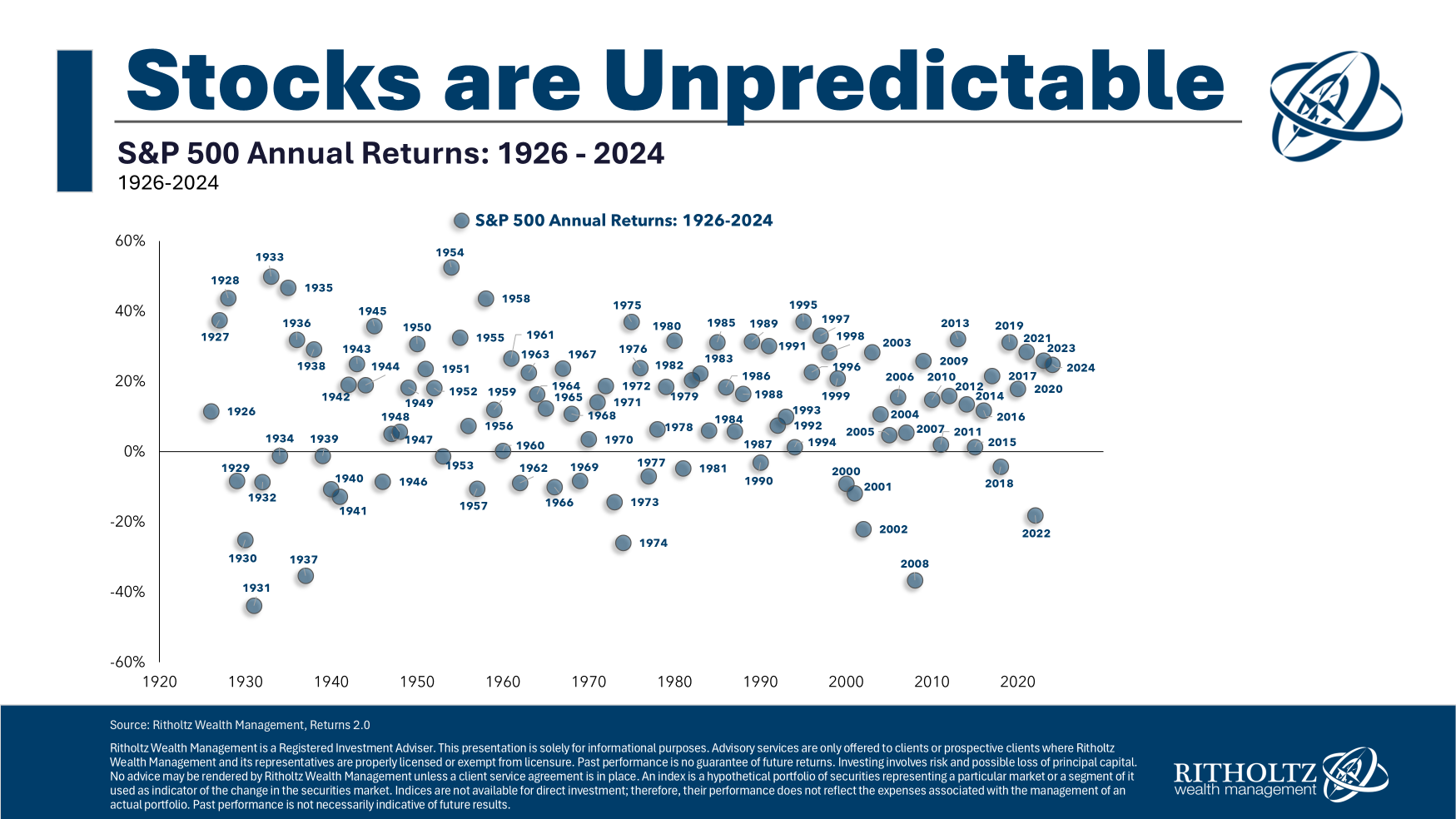
Gold's edge appears in specific macro regimes, not in calm compounding periods. Its strongest returns coincided with the peak inflation of the 1970s—12.1% in 1974 and nearly 15% in 1980—when gold roughly quadrupled in real terms even as the dollar's purchasing power was being eroded by double-digit price gains [https://www.bullion.com/spotprices/gold-price]. Gold also led during the 2008 financial crisis and the 2020 pandemic shock, and again through the 2020–2024 period of post-pandemic inflation and central-bank balance-sheet expansion.
The pattern is remarkably consistent. Gold tends to outperform when real yields are low or negative, when confidence in fiat is shaken, or when there is genuine fear in the system. It tends to lag when real yields are high and risk appetite is strong. That tension sits at the heart of the current debate, and it is why gold's near-term picture is so contradictory.
The Inflation Backdrop: What the Fed Actually Says
The framing that "the Fed says inflation is not a big deal" does not hold against the current evidence. As of the September 2026 meeting, the Fed has done the opposite: it raised its target rate by 25 basis points to 3.75%–4.00%, the first hike since 2023, explicitly citing "elevated" and persistent inflation and a commitment to a "timelier return to the 2% goal" [https://wallstreeteconomicists.com/articles/federal-reserve-september-2026-rate-decision][https://economics.td.com/us-fomc-statement]. Rather than dismissing inflation, the central bank has signaled a higher-for-longer stance, with policy remaining restrictive until inflation convincingly converges toward target and with the possibility of further tightening if it stays persistent [https://wallstreeteconomicists.com/articles/federal-reserve-september-2026-rate-decision].
The projections back this up. The Fed's June 2026 Summary of Economic Projections shows PCE inflation rising to a median of 3.6% in 2026 (up sharply from 2.7% in the March projection) before easing to 2.3% in 2027 and 2.0% in the longer run, with core PCE at 3.3% in 2026 and the 2026 range spanning 2.7% to 4.1%—meaningful upside risk [https://www.federalreserve.gov/monetarypolicy/2026-07-mpr-part3.htm]. The median federal funds rate projection rose to 3.8%–4.1% for 2026, implying further tightening ahead [https://economics.td.com/us-fomc-statement].
Fed officials are openly uneasy. Chair Warsh acknowledged that underlying inflation has not been moving toward the 2% target "clearly and quickly enough," with risks remaining "tilted to the upside" amid "insufficient inflation progress" [https://www.mtsinsights.com/summaries/10981/]. The St. Louis Fed President warned of persistent above-target inflation (core PCE at 3.1% in January, little changed in February) and drew a cautionary parallel to the 1970s, when inflation became entrenched and required forceful rate hikes [https://www.stlouisfed.org/from-the-president/remarks/2026/economic-outlook-monetary-policy-aei].
There is also a documented structural problem. Historical analysis shows the Fed's projections routinely assume inflation returns to 2% within three years, yet realized inflation rarely follows the projected path [https://www.richmondfed.org/research/national_economy/macro_minute/2026/sep_by_sep_how_fed_walks_inflation_back_to_2_percent]. In other words, the official glide path may be too cheerful—and this is precisely where gold's case as an inflation hedge is strongest: when forecasts are wrong in the direction of higher, more persistent prices.
Where sources agree and disagree: The TD Economics and Federal Reserve materials agree on the direction—inflation is sticky and policy is restrictive. The Richmond Fed research adds a skeptical counterweight, suggesting the Fed's own forecasts are systematically too optimistic. Wall Street Economicists and the St. Louis Fed converge on the hawkish read. The one point of genuine disagreement is timing: whether the current cycle calls for further tightening or a premature reversal, and that uncertainty is exactly what makes gold's near-term path hard to call.
Current Gold Trends: Volatile but Leaning Upside

So where does gold stand today? As of October 22, 2026, spot gold is trading around $4,092 per ounce (24K at roughly $131.56/gram), down about 0.85% on the day [https://goldradar.net/en/us]. That sits within the $4,107–$4,153 demand zone that analysts say determines whether the broader uptrend survives [https://www.tradetaurex.com/news/monthly-outlook-gold-yields-october-2026/].
The recent trajectory has been anything but smooth. Gold peaked above $5,400 in February 2026, corrected toward $4,000, then rallied back to an August high of $4,700 before the current pullback [https://www.tradetaurex.com/news/monthly-outlook-gold-yields-october-2026/]. The primary headwind is the surge in yields: the U.S. 30-year Treasury yield climbed to 5.626%, a near two-decade high, fueled by sticky inflation, a hawkish Fed, and Treasury issuance concerns [https://www.tradetaurex.com/news/monthly-outlook-gold-yields-october-2026/]. Higher yields raise the opportunity cost of holding a non-yielding asset like gold, which is why the recent reversal has been so sharp. Notably, headline inflation sits at 3.4% and core at 2.4% year-on-year, so real yields have turned meaningfully positive—another pressure on gold [https://www.tradetaurex.com/news/monthly-outlook-gold-yields-october-2026/].
The interpretation is nuanced. The pullback looks like a correction within a longer uptrend rather than a trend reversal—provided gold holds the demand zone. A hold would signal resilience; a break below $4,000 risks a retest of the structural low [https://www.tradetaurex.com/news/monthly-outlook-gold-yields-october-2026/].
This is the paradox of the current moment: gold is being squeezed by the very thing that should, in theory, be its ally. Persistent inflation should be bullish for gold, but the Fed's response—higher rates and positive real yields—is bearish. The market is pricing the policy response, not the underlying malaise. That is a distinction that has tripped up gold bears before.
What to Expect: What We Know and What We Don't
What we know:
- Gold is a proven store of value over the long run but a mediocre growth asset that lags equities by roughly half [https://awealthofcommonsense.com/2025/01/historical-returns-for-stocks-bonds-cash-real-estate-and-gold/].
- Inflation is genuinely persistent and above the Fed's 2% target, with upside risk [https://www.federalreserve.gov/monetarypolicy/2026-07-mpr-part3.htm][https://www.richmondfed.org/research/national_economy/macro_minute/2026/sep_by_sep_how_fed_walks_inflation_back_to_2_percent].
- The Fed is tightening, not easing, and real yields are positive—headwinds for gold in the near term [https://wallstreeteconomicists.com/articles/federal-reserve-september-2026-rate-decision].
- Gold's trend structure is up, but it has pulled back into a contested demand zone [https://www.tradetaurex.com/news/monthly-outlook-gold-yields-october-2026/].
What we don't know:
- Whether yields will continue higher, stall, or reverse—the single most important variable for gold's near-term direction [https://www.tradetaurex.com/news/monthly-outlook-gold-yields-october-2026/].
- Whether inflation follows the Fed's optimistic glide path or the historical pattern of persistence [https://www.richmondfed.org/research/national_economy/macro_minute/2026/sep_by_sep_how_fed_walks_inflation_back_to_2_percent].
- Whether the higher-for-longer stance will force a policy reversal in H2 2027 as inflation eases, or whether further tightening lies ahead [https://economics.td.com/us-fomc-statement].
- Whether the current pullback holds as a healthy correction or becomes a structural break below $4,000 [https://www.tradetaurex.com/news/monthly-outlook-gold-yields-october-2026/].
The honest position is that gold's near-term path hinges on variables that are genuinely uncertain—yields, the inflation trajectory, and policy timing. That uncertainty is not a reason to avoid gold; it is a reason to size the position appropriately and to hold it for the right reason.
What Should People Actually Do?
If the goal is to protect purchasing power in a financial economy built on the USD, gold earns a place in the conversation—but as a complement, not a centerpiece. A few principles follow from the evidence.
First, size it correctly. The conventional guidance is a modest allocation—roughly 5–10% of a diversified portfolio. Gold is insurance, and you never want to over-insure an asset that pays no dividend, no interest, and no rent. Its value is realized precisely when other things are going wrong, which means it should be the position you don't need to grow aggressively.
Second, buy it for the right reason. If you are buying gold expecting it to outperform stocks over a decade, you will likely be disappointed. If you are buying it to hedge against policy error, currency debasement, and tail risk, you have the thesis right. The evidence shows gold's leadership is cyclical; it shines during monetary fear and lags during risk-on compounding.
Third, diversify rather than bet. Asset leaders rotate by decade—equities, then real estate, then gold, then silver, then back again. Betting on a single asset to be your savior has a poor historical track record. Diversification is the reliable alternative to conviction [https://awealthofcommonsense.com/2025/01/historical-returns-for-stocks-bonds-cash-real-estate-and-gold/].
Fourth, think in real terms, not nominal ones. The question is not "will gold go up?" but "will gold keep pace with the debasement of the dollar?" Over the century, the answer has been yes—modestly, steadily, and with long periods of underperformance in between. That is the definition of a store of value, and it is a high bar that few assets clear.
Conclusion
Does gold protect you from inflation? Yes—but with important qualifications. Gold is a strong store of value, not a growth engine: it has preserved purchasing power against 98% of dollar debasement over the past century while returning roughly half what equities have. Its real power surfaces during episodes of fiat erosion, crisis, and monetary fear, not during calm years of stock-market compounding.
The current moment is contradictory. Inflation is genuinely persistent and above the Fed's target, yet the Fed has raised rates and real yields are positive—headwinds that have sent gold swinging between $5,400 and $4,000 this year. The honest read is that gold's near-term direction hinges on variables we cannot know: the path of yields, the trajectory of inflation, and the timing of the Fed's next move.
So is it a good time to buy? The answer depends on your purpose. If you want to grow wealth, equities remain the superior tool. If you want to protect wealth against monetary debasement and policy error, a modest, disciplined allocation to gold makes sense right now—especially given the Richmond Fed's finding that the Fed's optimistic inflation forecasts have historically been wrong in the direction of higher prices. Buy it as insurance, size it modestly, hold it for the long run, and accept what we cannot know. That is the disciplined, evidence-based way to let gold do the one thing it has always done well: keep your money from quietly disappearing.