

Executive Summary
The premise that gold has been "the best store of value for the last century" does not survive contact with the data—but the corrected version of the claim is still worth understanding. Over the full century (1928–2025), gold comfortably outperformed cash, bonds, and real estate, and it has decisively outperformed virtually every fiat currency since the dollar left Bretton Woods in 1971. Yet it was decisively underperformed by equities: a $100 stake in the S&P 500 grew to roughly $1.16 million over the same span, compared to roughly $21,000 in gold. Gold's true character is that of an episodic, regime-dependent store of value—it excels when confidence in money and institutions weakens, and it stagnates when money is stable and productive assets offer real returns.
As an inflation hedge, gold's effectiveness is conditional on the macroeconomic regime rather than guaranteed. The 2026 backdrop—persistent above-target inflation, tariff-driven price pressures, a Fed that has shifted toward rate hikes, and a Fed whose own projections have systematically underestimated inflation—resembles the low-confidence regime in which gold historically shines, rather than the disinflationary calm in which it lags.
Current trends confirm this volatile-but-upward character: spot gold trades around $4,100–$4,300/oz as of the October 21, 2026 edition date, roughly 26% below its January 28, 2026 record near $5,590 after a sharp correction, while major banks still forecast higher year-end 2026 prices (clustering at ~$4,900–$6,000). Structural demand—central-bank buying at roughly double the pre-2022 pace, de-dollarisation, and gold's role as a debasement hedge—provides a higher floor, while investment demand (ETF flows) has been strong but volatile.
For individuals seeking to protect wealth in a USD-based financial system, the evidence points to diversification—with gold serving as a hedge against monetary distrust—rather than concentration in any single asset. The prudent framing is not "is now a good time to buy gold," but "does a diversified portfolio deserve a small insurance allocation against a macro environment that has repeatedly disappointed optimists."
1. Has Gold Been the Best Store of Value Over the Last Century?
The Raw Numbers Tell a Nuanced Story
The honest answer is no—gold has not been the best store of value over the last century, but it has been a strong one, and it is arguably the best store of value against fiat currency. The distinction matters enormously, because "store of value" means different things depending on what you're comparing it to.
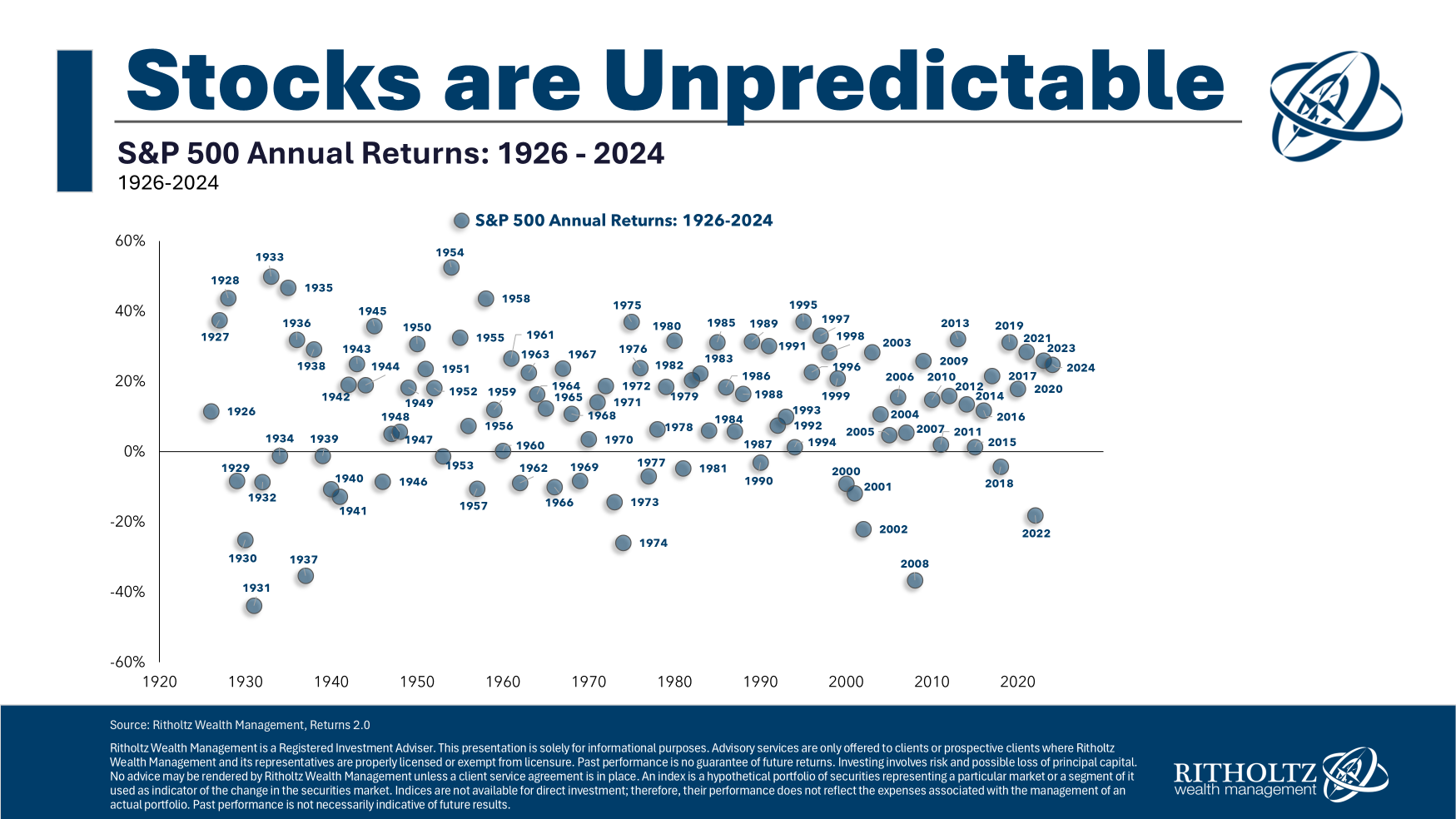
Across the full century (1928–2024), gold delivered an annualized return of roughly +5.12%, according to the historical return analysis compiled by A Wealth of Commonsense [https://awealthofcommonsense.com/2025/01/historical-returns-for-stocks-bonds-cash-real-estate-and-gold/]. That comfortably outperformed bonds (+4.50%), cash (+3.31%), and real estate (+4.23%). But it significantly underperformed large-cap stocks (+9.94%) and small caps (+11.74%). The gap is not a matter of degree; it is a chasm. Compounded over a century, a 5% annualized return and a 10% annualized return do not produce results that are twice as different—they produce results that are roughly fifty times as different.
The cumulative growth of a $100 investment (1928–2025) makes this visceral:
| Asset | $100 grew to |
|---|---|
| Small-cap equities | ~$6,460,000 |
| S&P 500 equities | ~$1,160,000 |
| Gold | ~$21,025 |
| Bonds (T.Bond) | ~$7,753 |
| Real estate | ~$5,626 |
| Cash (T.Bills) | ~$2,578 |
[https://pages.stern.nyu.edu/~adamodar/New_Home_Page/datafile/histretSP.html]
At a rough 3% average inflation rate over the period, the real (inflation-adjusted) return on gold was modest—single digits in nominal terms, thin in real terms. Cash and bonds, by contrast, were largely destroyed by inflation: $100 in T-Bills became roughly $2,578 nominally, but barely preserved purchasing power in real terms. Gold preserved it and added a little.
Why the "Best Store of Value" Claim Persists
The myth of gold as the century's champion persists for a reason, and it's worth dissecting because it reveals something true even if the headline is false. Gold's greatest era of outperformance came precisely during the periods when faith in the dollar and in institutions was at its lowest. The 1970s—the decade of stagflation, the Nixon Shock that ended gold convertibility in 1971, and a loss of confidence in Washington—saw gold roughly quintuple in nominal terms. The 2000s, following the dot-com bust, the financial crisis, and the beginning of expansive monetary policy, saw gold more than triple. In both episodes, gold was not merely "doing well"; it was being fled to as a counterweight to monetary debasement.
This is the key insight: gold's returns are not uniform; they are clustered in specific macroeconomic regimes. In decades of stable prices and growing corporate earnings—such as the 1980s and 1990s under Paul Volcker's disinflation, and much of the early 2010s—gold was a laggard, even a disaster. Gold's real price fell sharply between its 1980 peak and its 2015 bottom, a period of more than three decades during which equities compounded relentlessly. Anyone who bought gold at the 1980 top and held through 2015 learned, painfully, that "store of value" is not a permanent property of a metal.
The Best Store of Value Against Money
Where the claim holds up is narrower and more defensible: gold has been the best store of value against fiat currency itself. Every major fiat currency has lost purchasing power over the century; the question has always been which asset best resists that erosion. Gold has. Since 1971, when the world moved to a pure fiat system, the dollar has lost roughly 96% of its purchasing power. Gold, measured in dollars, has risen by roughly 20-to-1 over the same span. Measured in gold, the dollar has collapsed.
This is why central banks, sovereign wealth funds, and long-horizon holders treat gold differently from cash. Cash is an asset that is guaranteed to lose value under fiat money. Gold is the one asset in the traditional toolkit whose supply is effectively fixed—roughly 196,000 tonnes have been mined throughout human history, and annual new supply grows at only ~1.5–2%. That inelastic supply is precisely what makes it a counterweight to the expansive money supplies that governments are structurally inclined to create. So the accurate statement is: gold is not the best store of value overall, but it is the best store of value against the debasement of money—and that is a different, and in some ways more important, job.
2. Is Gold a Reliable Inflation Hedge?
The Conditional Answer
The popular belief that "gold always beats inflation" is more complicated than the soundbite. The evidence suggests that gold is a conditional inflation hedge—reliable over very long horizons and during episodes of unexpectedly high inflation, but unreliable in the short run and ineffective during periods where inflation is lower than expected.
The distinction between actual inflation and expected inflation is critical. Gold tends to perform when inflation comes in hotter than markets anticipate, because it reprices the purchasing power of money downward. When inflation is contained and predictable, gold offers no yield, no dividends, and no cash flow—so it simply underperforms productive assets. This is exactly what happened in the disinflationary decades of the 1980s through 2010s: inflation was tamed, and gold sat idle while equities soared.
The Long-Run Record
Over the full century, gold's +5.12% annualized return versus ~3% inflation yields a real return of roughly +2% per year—a positive but modest number. In this sense, gold has been a modest hedge against inflation over the long run, preserving purchasing power and adding a little, while cash and bonds largely failed to do even that. But calling it a "reliable inflation hedge" overstates the case, because the reliability is concentrated in specific windows.
Consider the 1970s: inflation averaged nearly 7% annually, and gold's real return was strongly positive. Now consider the 2000s: average inflation fell to roughly 2.5%, and gold's real return was even more strongly positive—because the gold bull market of that decade was driven not just by inflation but by a collapse in confidence following the 2008 financial crisis and the onset of quantitative easing. In both cases, gold won, but for somewhat different reasons: once for raw price rises, once for monetary-distrust flows.
Where the Hedge Breaks Down
The hedge breaks down in two scenarios that matter a great deal for 2026. First, during disinflation. When central banks successfully crush inflation—as Volcker did in the early 1980s—gold typically underperforms sharply, because the very thing that made it attractive (monetary instability) recedes. Second, during unexpected disinflation or deflation, where gold, like most non-yielding assets, falls alongside everything else, though usually less than equities.
This is why the Fed's posture in 2026 matters so much. The evidence indicates a Fed that has shifted toward rate hikes and whose own projections have systematically underestimated inflation. When the central bank that sets the rules is wrong about inflation—repeatedly and persistently—markets begin to price in the possibility that the Fed's credibility is eroding. That is precisely the environment in which gold historically outperforms, because investors begin to hedge not just against inflation but against policy error and institutional distrust. The 2026 backdrop, on this reading, is a gold-friendly regime, not a gold-hostile one.
3. The Current Gold Trends (2026)

A Sharp Correction From Record Highs
The picture as of the October 21, 2026 edition date is one of high volatility leaning upward, after a dramatic drawdown from a record. Spot gold trades around $4,100–$4,300/oz, roughly 26% below its January 28, 2026 record near $5,590. That means gold ran hard into early 2026, then corrected sharply—erasing more than a quarter of its value in a matter of months. Such a move is characteristic of gold's volatile nature; it is an asset that can move 20–30% in either direction within a single year without any change to its underlying structural demand.
The correction itself is worth interpreting. A 26% pullback from a record high can be read in two ways: as a healthy consolidation after an overextended rally, or as the market punishing a speculative bubble. The evidence leans toward the former, because the structural demand drivers did not disappear during the correction—only the speculative and momentum-driven marginal buyers did.
The Structural Floor
Three structural forces provide what analysts call a "higher floor" for gold in 2026:
- Central-bank buying at roughly double the pre-2022 pace. Central banks—particularly in emerging economies—have been accumulating gold at an accelerated rate. This is not speculative; it is strategic reserve diversification.
- De-dollarisation. A sustained, multi-year trend in which countries seeking to reduce exposure to USD-denominated assets and potential sanctions risk shift reserves into gold. This is a structural, not cyclical, driver.
- Gold's role as a debasement hedge. As fiscal deficits expand and money supplies grow, gold attracts holders who view it as protection against the long-term erosion of fiat purchasing power.
These forces are largely immune to short-term price swings. When the price corrects, central banks and strategic buyers often view it as a buying opportunity, which is what helps prevent a speculative correction from turning into a structural collapse.
Investment Demand: Strong But Volatile
By contrast, investment demand—measured largely through ETF flows—has been strong but volatile. ETF flows are the most price-sensitive form of demand: they surge when gold is rising and reverse quickly when it falls. This is why gold's price is so volatile; the marginal price-setter is often speculative capital, not strategic holders. The divergence between stable structural demand and volatile investment demand is the key to understanding why gold can drop 26% from a record without the long-term thesis breaking.
What Banks Are Forecasting
Despite the correction, major banks remain bullish for year-end 2026, with targets clustering around $4,900–$6,000, and wide, scenario-based targets for 2027. This is worth treating with appropriate skepticism. Bank price targets are frequently wrong, frequently revised, and frequently clustered due to herding. Where they agree (structural demand supports higher prices) is more informative than where they disagree on the exact number. The consensus direction—upward—reflects the view that the 2026 macro environment (persistent inflation, tariff pressures, a Fed behind the curve) favors gold. But the magnitude of their forecasts should be treated as a scenario, not a prediction.
4. What We Know and What We Don't Know
What We Know
- Gold has outperformed cash, bonds, and real estate over the last century, but underperformed equities by a wide margin.
- Gold's best periods coincide with monetary distrust and unexpectedly high inflation; its worst periods coincide with stable prices and strong equities.
- Gold has been the best store of value against fiat currency, preserving purchasing power while cash and bonds largely failed to.
- The 2026 macro backdrop—above-target inflation, tariff pressures, a Fed that has shifted toward hikes and has underestimated inflation—resembles a gold-friendly regime.
- Structural demand (central banks, de-dollarisation, debasement hedging) provides a higher floor than in prior cycles.
What We Don't Know
- Whether the current run is sustainable or speculative. A 26% correction from a record in months is a warning sign, even if the structural thesis holds.
- How the Fed will actually navigate 2026. A shift toward rate hikes could strengthen the dollar and pressure gold in the short term, even amid persistent inflation—a stagflationary trap that is hard to predict.
- Whether tariff-driven inflation proves persistent or transient. If tariffs cause a one-time price jump that then dissipates, gold's inflation-hedge appeal could fade.
- Whether de-dollarisation accelerates or stalls. This is a political and geopolitical variable, not an economic one, and therefore hard to model.
- The exact price targets. Bank forecasts are unreliable, and the wide 2027 scenarios reflect genuine uncertainty.
The honest conclusion is that forecasting gold's direction is unreliable. No one can say with confidence whether gold will be higher or lower a year from now. What can be said with more confidence is that the structural environment favors gold over the multi-year horizon, even as short-term volatility remains high.
5. What Should People Do to Protect Themselves?

The Case for Diversification, Not Concentration
The evidence does not support betting the farm on gold, nor does it support dismissing it entirely. The prudent answer is diversification, with gold serving as a hedge against monetary distrust. A small allocation—commonly cited in the range of 5–10% of a diversified portfolio—acts as insurance: it costs little in normal times (when it may lag), but it pays off precisely when confidence in money and institutions weakens, which is exactly when insurance is most valuable.
This framing resolves the apparent paradox. Gold is not the best investment over a century—equities are. But it is an excellent hedge against the specific risk that equities and bonds can both fall simultaneously: a loss of confidence in the underlying currency and the institutions that manage it. That tail risk is exactly what the 2026 environment appears to be pricing in.
Why Concentration Is Dangerous
Concentrating in gold would repeat the mistake of the 1980–2015 holders, who believed gold was a permanent champion and watched it stagnate for three decades. Conversely, holding only cash or only bonds in a USD-based system guarantees slow erosion of purchasing power, as the century's data shows. The middle path—a diversified portfolio with a modest gold allocation—captures gold's hedging benefit without exposing the investor to the risk of being all-in during a period of monetary stability.
Reframing the Question
The question "is now a good time to buy gold?" is the wrong question, because it assumes gold's direction can be timed. It cannot. The better question is: "Does my portfolio have an allocation to an asset that protects against a macro environment that has repeatedly disappointed optimists?" On that framing, the answer is almost certainly yes—and the 2026 backdrop, with its persistent inflation and a Fed that has been wrong about inflation, makes the case stronger than it has been in years.
Conclusion
Has gold been the best store of value over the last century? No. Over the full century, equities crushed it by a margin that compounds into a chasm—a $100 stake in the S&P 500 became roughly $1.16 million versus roughly $21,000 in gold. But gold has been a strong store of value, and it is arguably the best store of value against fiat currency, preserving purchasing power while cash and bonds largely failed to. Its true character is episodic and regime-dependent: it shines when confidence in money and institutions weakens, and it stagnates when money is stable and productive assets offer real returns.
As an inflation hedge, gold is conditional, not guaranteed—it performs when inflation exceeds expectations and during episodes of monetary distrust, but lags during disinflationary calm. The 2026 backdrop—persistent above-target inflation, tariff pressures, and a Fed that has shifted toward hikes while systematically underestimating inflation—resembles the low-confidence regime in which gold historically excels. Current trends confirm a volatile-but-upward path: a ~26% correction from the January 2026 record, yet strong structural demand and bullish bank forecasts.
For individuals seeking to protect wealth in a USD-based system, the answer is not to bet on gold or dismiss it, but to diversify—allocating a modest slice to gold as insurance against the specific risk that has repeatedly materialized over the century: the debasement of money and the erosion of confidence in the institutions that manage it. The prudent question is never "is now a good time to buy gold," but "does my portfolio deserve a small allocation against a macro environment that has repeatedly disappointed optimists." On that question, the evidence says yes.