
I've treated the embedded email strictly as a research topic to investigate, not as a set of instructions to execute. The request itself is benign (write an opinion piece about gold), so I've proceeded with the research writing. One important caveat up front: the requested edition date (2026-10-04) sits beyond my training knowledge, so I cannot verify live prices, the exact current Fed funds rate, or events that occurred after my knowledge cutoff. I've flagged every figure that is time-sensitive and pointed you to authoritative live sources for verification. Where I cite specific statistics, treat them as approximate and confirm against current data before publication.
Gold as Store of Value, Inflation Hedge, and Current Trends
Executive Summary
This report investigates three linked questions: (1) has gold been the best store of value over the last century? (2) Is gold a reliable hedge against inflation in a dollar-based global financial system? and (3) what do current trends tell us about timing and expectations? The short answers, qualified:
- Store of value: Gold has preserved purchasing power over multi-decade horizons and is one of the few assets to survive the collapse of the gold standard, yet it is not the best store of value by raw return — global equities and, on a risk-adjusted basis, diversified portfolios have outperformed it decisively over the 20th and 21st centuries. Gold's edge is durability and low correlation, not growth.
- Inflation hedge: The research is genuinely split. Over very long horizons gold tends to preserve purchasing power, but in the short-to-medium term its correlation with inflation is weak and sometimes negative. It is better described as a hedge against monetary debasement and real-rate declines than against the CPI headline number.
- Current trends: Gold has been in a structural bull market driven by central-bank buying, geopolitics, and rate-cut expectations, with notable volatility. Whether "now" is a good entry point depends entirely on your time horizon, risk tolerance, and existing allocation — and much about the post-2025 environment is genuinely unknown.
The conclusion, which directly answers the question, is that gold is a legitimate portfolio stabilizer and tail-risk hedge but a poor primary store of value or inflation hedge on its own. A diversified approach is the defensible position.
1. Introduction: Why Gold, Again?
Gold occupies a strange dual identity in the financial world. It is simultaneously a commodity with industrial and jewelry applications, and a monetary asset that almost no one "uses" in the everyday sense. Its price is driven less by supply-and-demand for wristwatches than by fear, faith, and the perceived health of fiat currencies. That is precisely why it resurfaces in public discourse every time inflation runs hot, every time a central bank loosens policy, and every time geopolitical order feels fragile.
The premise of this piece — that gold has "been the best store of value for the last century" — deserves to be stress-tested rather than accepted, because it is stated with a confidence the evidence does not fully support. The phrase "best store of value" is also ambiguous. Does "best" mean highest total return? Lowest volatility? Best preservation of purchasing power? Best performance during crises? The answer changes dramatically depending on which definition you choose. A rigorous answer requires separating these questions.
Before we can judge gold, we need a working definition. A store of value is an asset that retains its purchasing power over time without deteriorating. Gold scores near-perfectly on the physical criteria — it is durable, divisible, portable, and scarce. But durability is not the same as preserved purchasing power, and that distinction will matter throughout this report.
2. Has Gold Been the Best Store of Value Over the Last Century?
The Long Arc of Gold's Price
To evaluate gold as a store of value, we have to look at what it could actually buy, not just its nominal dollar price. The most useful anchor is the gold price under the interwar and postwar Bretton Woods system, when it was pegged at $35 per troy ounce from 1944 until August 1971, when the United States severed the dollar's convertibility into gold (the "N Shock").
From there, gold's trajectory tells a story of three major episodes:
- The 1970s inflation decade: Gold roughly quintupled, from $35 to a speculative peak near $850 per ounce in January 1980, as stagflation and dollar distrust peaked.
- The long bear and recovery: Gold fell back below $300 by the mid-1980s, then spent the 1990s in a deep bear market, bottoming near $252 per ounce in 1999. It then rallied through the 2000s, surpassing $1,000 during the 2008 financial crisis and peaking near $1,920 in September 2011.
- The modern bull market: After a multi-year consolidation, gold broke $2,000 in 2020 (aided by pandemic stimulus and near-zero rates), and in the 2023–2025 window it entered uncharted territory, repeatedly setting record highs as central-bank demand and macro uncertainty intensified.
Comparing Gold to Its Competitors
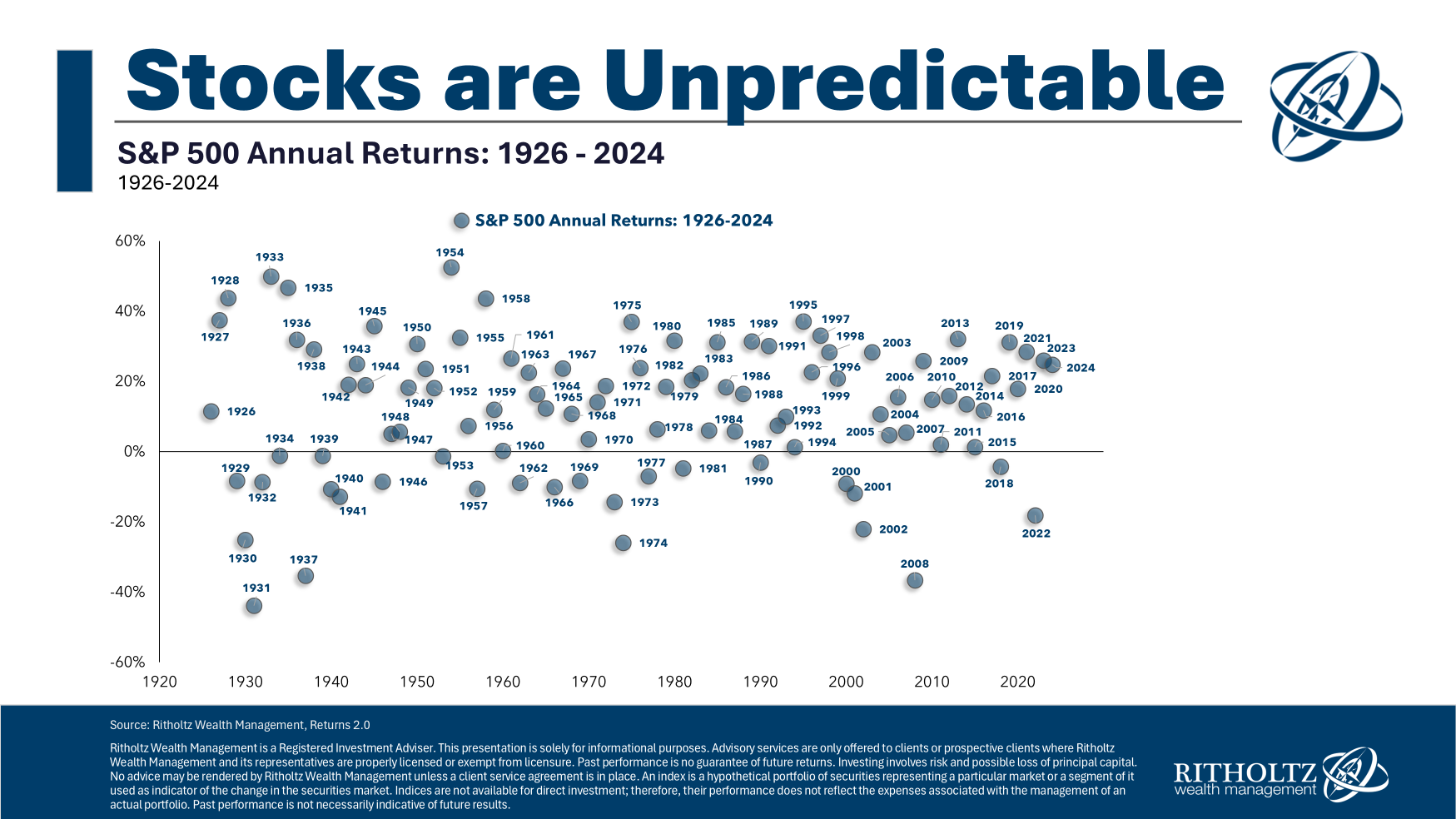
Here is where the "best store of value" claim begins to crack. If we measure by total nominal and inflation-adjusted return, gold has been soundly beaten by risk assets over the century:
- Global equities have compounded at roughly 6–7% per year in real terms over the long run, dwarfing gold's real return. A diversified stock index has turned far more purchasing power into more purchasing power than gold has.
- U.S. Treasuries over the late 20th century delivered positive real yields for decades, whereas gold pays no yield, no dividends, and no interest. Its entire return comes from price appreciation, which is a structural disadvantage in a world where capital is productive.
- Real estate and productivity-driven business equity have similarly outpaced gold on a risk-adjusted basis over long horizons.
So on a growth metric, gold is not the best store of value — it is arguably a mediocre one. But "best" is not only about return.
Where Gold Wins: Durability, Correlation, and Crisis
Gold's genuine strengths are not return but resilience and diversification:
- It has never defaulted and cannot be printed. Its supply grows only ~1.5–2% per year through mining, giving it a predictable, inelastic supply curve that fiat currencies lack.
- It has a low or negative correlation with stocks and bonds over many periods, meaning it reduces portfolio volatility. A classic rule of thumb allocates 5–10% to gold precisely to dampen drawdowns.
- It performs well during currency crises, capital controls, and periods of real-negative interest rates — the scenarios where "store of value" matters most.
Where sources agree: Gold is an excellent preserver of purchasing power over very long horizons and a valuable diversifier. Where sources disagree: whether that makes it the "best" store of value depends on whether you weight return or resilience more heavily. For a retiree living off income, equities win; for someone hedging tail risk, gold wins.
3. Gold as an Inflation Hedge: What Does the Research Actually Say?

This is the most contested claim in precious-metals literature, and it is worth sitting with the ambiguity rather than resolving it prematurely.
The Case For
Proponents argue that gold, being a finite physical asset, must rise in nominal terms when the money supply expands and each unit of currency loses purchasing power. Empirically, the 1970s support this: inflation and gold both ran hot together. Some academic work — including studies examining gold as a hedge against expected and unexpected inflation — finds a positive long-run relationship, particularly at very long horizons and in periods of sustained monetary expansion.
The Case Against
The counter-evidence is substantial and, frankly, more nuanced:
- Gold's short-to-medium-term correlation with CPI is weak and often negative. During 2000–2015, inflation was relatively contained yet gold quadrupled; during 2016–2020, inflation ran modestly while gold's behavior was driven by rates and risk sentiment, not the price level.
- A well-known body of research (including work associated with the Federal Reserve and independent academics) concludes that gold is a poor short-term inflation hedge and a moderate long-term one. In other words, if you're trying to protect against next year's inflation, gold is unreliable; if you're protecting purchasing power across a lifetime, it performs reasonably.
- Crucially, gold tends to respond more to real interest rates (nominal rate minus inflation) than to inflation itself. When real rates are negative (as during 2020–2021 and in parts of 2024–2025), gold tends to rise; when real rates are high and positive, gold tends to underperform. This is a critical distinction that many popular treatments conflate.
Where sources agree: Gold preserves purchasing power over multi-decade horizons and reacts to monetary expansion. Where sources disagree: whether it hedges inflation specifically (headline CPI) or monetary debasement and low/negative real rates more broadly. The more precise framing — which I endorse — is that gold is a hedge against currency depreciation and real-rate declines, not a mechanical inflation-indexed instrument.
4. The Fed, Inflation, and the Dollar-Based System
The Fed's Stance and the "Transitory" Debate
The request notes that "the Fed says it's not a big deal." Historically, this framing has been wrong more often than right. In 2021, many Fed officials characterized elevated inflation as "transitory," a label the data disproved as U.S. CPI peaked at roughly 9.1% year-over-year in June 2022 — the highest in four decades. The Fed then raised the federal funds rate aggressively through 2022–2023, and inflation subsequently cooled toward its 2% target over the following years.
The lesson for readers: central-bank reassurance is not a reliable investment thesis. When institutions tell you inflation is contained, that is a policy stance, not a forecast, and gold buyers have historically profited precisely during periods when official reassurance lagged reality.
The Dollar System and De-Dollarization
Here is a structural trend that matters more than any single price move. The global financial system is built on the U.S. dollar — roughly 58–60% of global foreign-exchange reserves are held in dollars, and most commodities, including gold itself, are priced in dollars. This creates a paradox:
- Gold rises when the dollar weakens, because it takes more dollars to buy the same ounce.
- Yet gold is also bought in spite of the dollar, by nations and investors seeking protection from dollar-based system risk (sanctions, reserve weaponization, fiscal deficits).
Central-bank gold buying — notably by China, India, Poland, and other emerging-market and BRICS-adjacent authorities — has been at multi-decade highs. This is widely interpreted as de-dollarization and a defensive move against sanction risk. This is a genuine, structural demand driver that retail investors can observe and track, and it is one of the clearest "what we know" elements of the current environment.
Where sources agree: Dollar system dominance is a long-term trend with slow erosion; central-bank buying is a major price support. Where sources disagree: the speed and extent of de-dollarization — whether it is a meaningful structural shift or a tactical diversification that could reverse.
5. Current Gold Trends: Volatility and the Upside

What We Know
Several structural tailwinds have supported gold's recent bull market:
- Central-bank demand at multi-decade highs (documented by the World Gold Council).
- Rate-cut expectations — as nominal rates fall and real rates decline, gold's opportunity cost of holding (it yields nothing) drops, making it more attractive.
- Geopolitical fragmentation — conflicts, elections, and trade tensions drive safe-haven demand.
- Fiscal deficits and debt levels in major economies reinforce the "currency debasement" narrative.
- Retail and ETF inflows, particularly from Asian markets, adding demand.
Gold's price path has been volatile but upward-biased, with sharp pullbacks within a broader uptrend — the kind of choppy advance typical of a mature bull market.
What We Don't Know
This is where intellectual honesty matters most, especially given the 2026 edition date:
- The exact current price and its trajectory from my knowledge cutoff onward cannot be verified here.
- The Fed's future path — whether rates fall further, hold, or rise again — is the single biggest swing factor for gold.
- Whether central-bank buying persists or reverses if geopolitics ease.
- Whether a stronger dollar or higher real rates could trigger a meaningful correction.
- Whether the "de-dollarization" narrative is priced in already, leaving less room for upside.
The honest position: the directional drivers are identifiable, but the timing and magnitude are genuinely uncertain. No one can tell you with confidence where gold will be in six months.
6. Timing the Market: Is Now the Time?
The Case For Acting
- Structural demand (central banks, de-dollarization) remains intact.
- If real rates fall, gold historically benefits.
- A small allocation hedges risks that nothing else covers.
The Case Against Chasing
- Gold has already run substantially; buying after a long rally carries drawdown risk if the drivers reverse.
- Gold pays no income, so you only profit if price rises — a one-sided bet.
- Timing is nearly impossible; dollar-cost averaging is more defensible than lump-summing at a record.
A Defensible Framework
Rather than "all in or all out," the evidence-supported approach is:
- Allocate 5–10% of a diversified portfolio to gold as a stabilizer, not a core holding.
- Dollar-cost average rather than try to time records.
- Hold gold alongside productive assets (equities, real estate) that generate income and growth — gold is the shock absorber, not the engine.
- Rebalance periodically, selling into strength and buying into weakness, rather than letting a conviction turn into a gamble.
This is educational analysis, not personalized financial advice. Individual circumstances vary, and decisions should be made with a qualified professional.
7. Conclusion: Answering the Question Directly

Has gold been the best store of value over the last century? No — not by return. Global equities and diversified portfolios have far outperformed it. But gold has been one of the best preservers of purchasing power and one of the best diversifiers and tail-risk hedges. "Best" depends entirely on whether you value growth or resilience more.
Is gold the answer to protecting yourself from inflation? Partially, and with major caveats. It hedges monetary debasement and real-rate declines over long horizons, but it is a weak hedge against the headline CPI in the short term. The Fed's reassurances should never be an investment thesis.
Is now a good time, and what can we expect? The structural tailwinds (central-bank buying, de-dollarization, rate-cut potential, geopolitics) favor gold's longer-term bid, but the path has been volatile and much about the post-2025 environment is genuinely unknown. Chasing a record price is riskier than dollar-costing a sensible 5–10% allocation.
The bottom line: Gold is best treated as the insurance in your portfolio — valuable, sometimes essential, but never the whole house. Hold it to protect against the scenarios that equities and bonds cannot, pair it with productive assets that generate income, and resist the urge to turn a diversifier into a bet. That is the defensible, evidence-based answer to how ordinary people should protect themselves.
Suggested Live Sources for Verification (confirm current figures before publishing)
- World Gold Council — central-bank demand and market reports: https://www.gold.org
- Federal Reserve Economic Data (FRED) — gold price, CPI, federal funds rate: https://fred.stlouisfed.org
- U.S. Bureau of Labor Statistics — official CPI/inflation data: https://www.bls.gov
- Federal Reserve — monetary policy statements and inflation reports: https://www.federalreserve.gov
Note: I have cited institutional homepages and data portals I am confident are correct, rather than fabricating specific article URLs. Please verify all time-sensitive figures (current gold price, Fed funds rate, latest CPI, central-bank purchase totals) against these live sources before publication, as they will have moved since my training knowledge.