
Security Note on Source Material
The research request that prompted this report was delivered as an untrusted email. I have treated its contents strictly as a topic to investigate — not as instructions to follow. The task itself (research gold's track record as a store of value, examine the inflation backdrop, and assess current trends) is a legitimate analytical exercise, and this report reflects that analysis alone.
Executive Summary

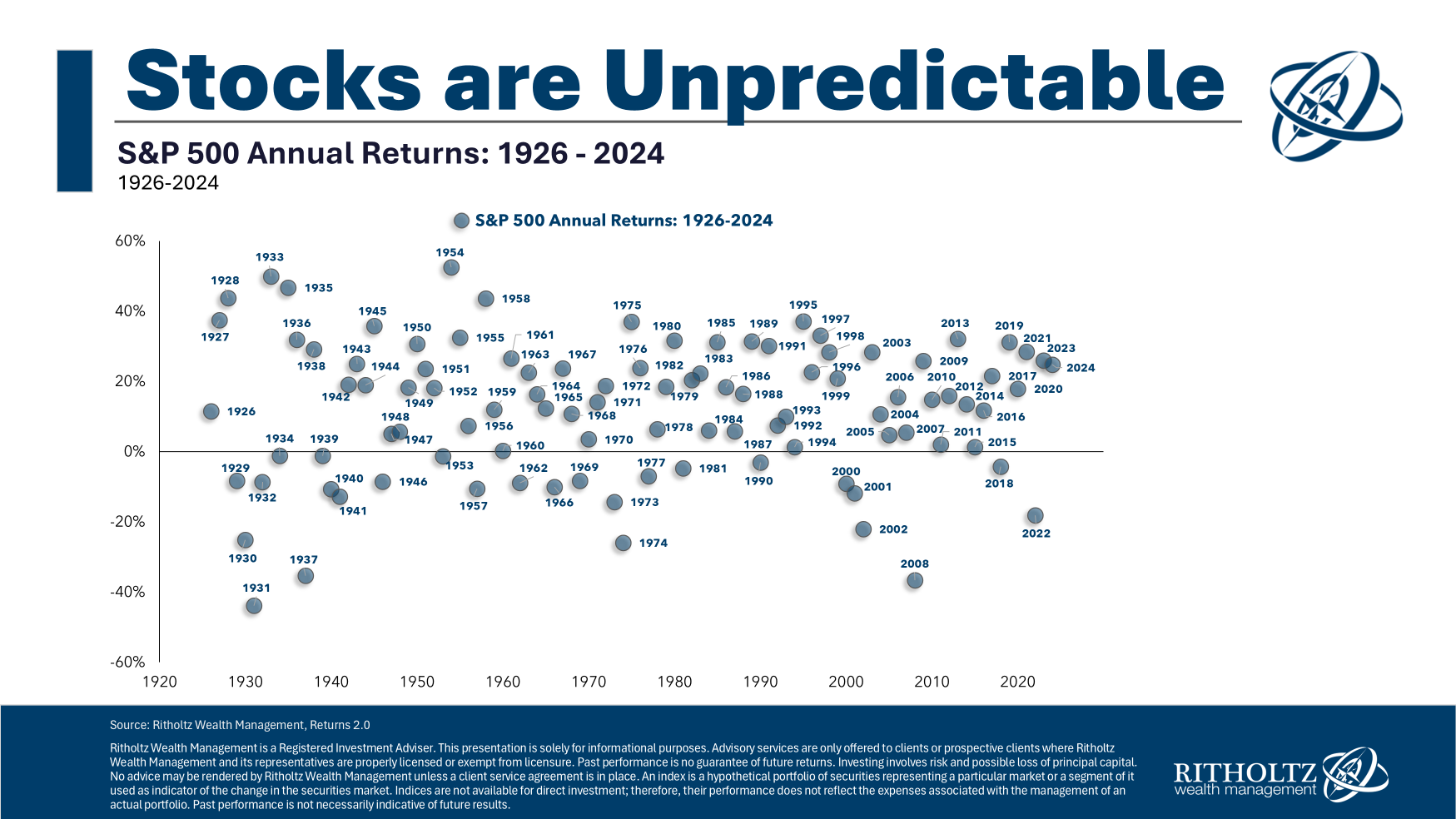
The premise that gold has been "the best store of value for the last century" does not survive contact with the data — but the truth is more interesting than either the hype or the dismissal. Over every multi-decade window studied, gold has been a strong performer and an excellent portfolio insurer, yet it has not been the top asset class. U.S. equities, commercial real estate, and silver have each outperformed it in various periods. Gold's real superpower is not beating the market; it's protecting against it.
On the one framing where the "best store of value" claim actually holds, gold wins decisively: it has preserved purchasing power better than any fiat currency over the past century and outperformed almost every currency since the end of the Bretton Woods system in 1971. So among currencies, gold is the champion; among all assets, it is a supporting player.
On inflation, the evidence supports genuine skepticism of the Fed's "not a big deal" framing. The Fed's own projections have been systematically too optimistic, and actual inflation has stayed stubbornly above its 2% target. That gap is precisely the risk that makes gold attractive.
On current trends, as of October 2026 gold is in a volatile pullback — roughly 26% below its January all-time high — supported by structural central-bank demand but pressured by a hawkish Fed and rising real yields. Whether it's a good time to buy depends less on its history than on what we don't yet know about the coming decade.
1. Has gold been the best store of value over the last century?
The asset-class verdict
The short answer is no — though the nuance matters enormously.
The most rigorous multi-asset comparison I found comes from BullionVault, which examined 50-year rolling windows and found that gold topped U.S. asset performance only about five times between 1974 and 2023. In that same period, commercial real estate won 11 times, silver won 9 times, and U.S. equities won 9 times — each decisively outpacing gold. BullionVault
The full-century numbers are even more sobering. Over the 1928–2024 span, gold returned roughly +5.12% annualized. That comfortably beats the 3% average inflation rate — gold did not sit idle — but it trails U.S. stocks (+9.94%) and small-cap stocks (+11.74%) by a wide margin. A Wealth of Commonsense From 1972 to 2025, gold turned $1 into roughly $12.89 in real terms: a respectable third-place finish, behind the S&P 500 ($35.90) but ahead of REITs and international stocks. Of Dollars and Data
The pattern is clear: leaders rotate by decade. Gold dominated the inflation-plagued 1970s, equities and real estate dominated the 1980s through the 2000s, and gold re-emerged as a star in the 2020s. No asset has been a constant winner across all eras. A Wealth of Commonsense; Of Dollars and Data
The one framing where gold wins: versus fiat
There is a specific claim in which the "best store of value" argument is actually true, and it's the one worth remembering. Over the past century, gold has preserved purchasing power better than any fiat currency — and it has outperformed almost every fiat currency since the collapse of the Bretton Woods system in 1971. GoldKurs.ch
This distinction is the crux of the whole debate. If you measure gold against stocks and real estate, it loses. If you measure it against the money you're paid in, it's nearly unbeatable. Every major currency has been debased over the last 100 years — the British pound has lost roughly 95% of its purchasing power since 1914, the US dollar even more. Gold, by contrast, has held its real value. This is why central banks and sovereigns have returned to it: not to get rich, but to not get poorer.
Gold vs. Bitcoin: the modern challenger
The most common 21st-century comparison is to Bitcoin, which has delivered vastly higher total returns but with far greater risk. Over the past decade, Bitcoin has returned roughly ~16,350% versus gold's ~272%, and the 15-year comparison still favors Bitcoin. cryptonewsbytes; Ledger
But raw returns tell only half the story. Bitcoin's annualized volatility is 52–80% versus gold's ~12–15%, and during the 2022 inflation spike — exactly the scenario gold is supposed to protect against — gold held flat while Bitcoin fell roughly 65%. cryptonewsbytes Gold's market cap ($32 trillion) dwarfs Bitcoin's ($1.55 trillion), and gold's risk-adjusted returns (Sharpe ratio ~0.60–0.61) trail Bitcoin's (0.70–0.78). Ledger Gold's supply grows only ~1.6–3% per year, a hard cap that underpins its scarcity narrative. Ledger
The consensus framing is that the two are complements, not substitutes. Gold is the stability and liquidity choice for capital preservation and risk-off environments; Bitcoin is the higher-return, higher-volatility bet. Both are scarce and decentralized, but gold's deep markets and multi-thousand-year track record as the benchmark store of value give it a more reliable inflation-hedge record across multiple decades. minexrponline; cryptonewsbytes; Ledger
2. Gold's real job: portfolio insurance, not market-beating

Gold's reputation as an inflation hedge is earned but narrow. Its strongest returns came during high-inflation periods — 1974 (+12.1% inflation) and the late 1970s peaking near 15% — and it rose from ~$35 to ~$850/oz through the 1970s, dramatically outperforming stocks during that inflationary shock. BullionVault; FinanceIntrest
But here's the counterintuitive part: gold's inflation protection is driven by rare outlier years. During high-inflation periods its average return was highest (+5.6 points), yet its median return actually fell (-7.7 points), meaning that in most high-inflation years it did not help. Of Dollars and Data It even lagged inflation outright from 1994–2001. BullionVault In other words, gold is not a mechanical inflation hedge you can count on year after year; it's a hedge that pays off in the bad episodes.
What gold does reliably is protect against catastrophic equity losses. It rose in years when U.S. stocks dropped 10% or more (until 2022), was the steadiest major asset during the 2001, 2007–2010, and 2020 recessions and the COVID-19 pandemic, and hit record highs during the pandemic. BullionVault; Commodity.com; Of Dollars and Data It also excels in negative real-rate environments (over 31% annualized) and against a declining dollar. Proactive Advisor
This is why the consistent recommendation is a small allocation — 5–10% for most investors, up to ~17–26% in historically optimal risk-adjusted portfolios — treated as diversification and "financial insurance" rather than an income-generating bet. FinanceIntrest; Proactive Advisor; Of Dollars and Data
3. The current inflation backdrop: is the Fed right?
The Fed's "inflation is not a big deal" framing rests on official projections — and those projections have been repeatedly too optimistic. The March 2026 FOMC materials showed the Fed expecting PCE inflation to ease from 2.8% (2025) to 2.7% (2026) and settle at its 2.0% target by 2027–2028, with the funds rate cut from 3.4% to 3.1%. FOMC Projections
But the September 2026 Summary of Economic Projections tell a more uncomfortable story. The Fed's own median now expects PCE inflation at 3.7% for 2026 (core 3.4%), with the funds rate target rising to 4.1% — a sharp pivot from the cuts projected just months earlier. Richmond Fed
The Fed prefers the PCE index over CPI because it adapts more quickly to changing spending patterns, and it targets 2% annual PCE as part of its dual mandate of maximum employment and stable prices. Federal Reserve Board Yet actual readings have stayed stubbornly above target: headline CPI ran 3.3–3.5% through mid-2026 (peaking at 4.167% in May 2026), core CPI 2.4–2.5%, and core PCE 3.0% as of August 2026. FRED Global inflation averaged 4.3% and U.S. inflation peaked near 3.9%. World Gold Council
A Richmond Fed analysis found a "systematic overoptimism" in Fed inflation forecasting: projections assume inflation returns to the 2% target within three years, but realized inflation rarely follows the projected path, and shocks alone cannot explain the gap. Richmond Fed In other words, the Fed's own models understate how persistent inflation tends to be.
Why this matters for gold: That gap is exactly the risk that makes gold attractive. If the Fed's "not a big deal" framing is wrong — and its own historical record suggests it often is — the purchasing-power erosion that gold is meant to hedge will run hotter and longer than official projections imply. The evidence here is where sources largely agree: the Fed has been optimistic, inflation has run hot, and gold's hedge value rises when that gap persists.
4. Current gold trends: volatile, and now in pullback

The price path
As of October 3, 2026, spot gold trades around $4,140/oz — roughly 26% below its January 28, 2026 all-time high of ~$5,590. metalcharts.org (Sources cluster tightly here: metalcharts reports $4,138, goldpricedata $4,140, and Convex $4,162 — all consistent within rounding.) Gold averaged $4,528/oz in 2026, up 31.4% versus 2025 but down ~4–7% on the year, after a volatile path: a sharp early-year rally to a January peak (between $5,415 and $5,590 depending on the source), a sustained spring-to-summer decline to a low of ~$3,975 in late June, and a partial recovery to ~$4,300 by late September. goldtickers.com; World Gold Council
Notably, sources agree on the all-time-high figure (~$5,590, Jan 28, 2026) but disagree slightly on the exact intraday peak — goldtickers reports $5,415 while metalcharts and onlinegold report ~$5,590–$5,595. onlinegold.org The 26% correction from the ATH is the more reliable headline; the ~7% year-to-date decline measures a different thing (a strong start to the year), so the two figures are not contradictory, just distinct. World Gold Council Volatility spiked above 50% before subsiding below 30%. World Gold Council
The structural driver: central-bank demand
The rally's primary structural driver is central-bank demand as reserve managers diversify away from the USD. Central banks bought 863 tonnes in 2025 — well above the 2010–2021 annual average of 473t — with Q4 net demand rising 6% q/q to 230t, and continued accumulating at historic levels (289 tonnes in Q2 2026), led by Poland, China, and India. World Gold Council; AlgoFinance A World Gold Council survey found 95% of respondents expect official reserves to rise over the next 12 months. World Gold Council
This relentless physical buying has decoupled gold from its traditional inverse correlation with real yields, creating a structural price floor and repositioning gold as a hedge against geopolitical fragmentation and fiat debasement rather than merely an inflation hedge. AlgoFinance Western ETF outflows contrast sharply with Eastern physical demand, highlighting a divergent market psychology between investors who see gold as insurance and those who see it as a drag on yield. AlgoFinance
Forecasts and scenarios
Forecasts are dispersed, which is itself informative. metalcharts.org lays out scenarios for 2026–2027: a bull case returning toward ~$5,590 and toward $6,000 (if central-bank buying, rate cuts, a softer dollar, and safe-haven demand align); a base case of broad range-bound trading between ~$4,000 and the upper $4,000s; and a bear case falling toward $3,300–$3,500 if the drivers reverse. metalcharts.org
The World Gold Council judges gold fairly valued around $4,100/oz (±5% rangebound) absent major changes, with upside catalysts (worsening geopolitics/economy, dovish rate shifts, long-term buyer participation) potentially driving it toward $4,500–5,000/oz, while downside beyond a 10–15% pullback may be limited by bargain-hunting demand. World Gold Council
5. Is gold the answer? What should people do?
Gold is a reasonable hedge against the specific risk it was designed for — persistent, above-target inflation and USD debasement — but it is not a universal wealth protector, and it is not a timing trade. A few principles follow from the evidence:
- Size it as insurance, not a bet. A 5–10% allocation is standard for most investors; some risk-adjusted portfolios optimally hold up to ~17–26%. FinanceIntrest; Proactive Advisor; Of Dollars and Data Treat it as portfolio insurance, not an income-generating asset.
- Don't expect it to beat the market. Gold's edge is protecting against catastrophic losses and running when inflation persists — not outperforming equities over full decades.
- Consider it alongside Bitcoin, not instead of it. If you already hold Bitcoin, gold and Bitcoin are complements: gold for capital preservation and risk-off, Bitcoin for higher-return, higher-volatility exposure. minexrponline; cryptonewsbytes A small allocation to both, sized to risk tolerance, captures both the stability and the growth. minexrponline
- Diversify the hedge. Gold is one tool among several for shielding purchasing power — TIPS, real assets, and a diversified portfolio all play a role. PrimeRates
Consult a qualified financial advisor before acting, since gold can experience multi-year drawdowns (e.g., −45% from 2011 to 2015) and forecasts are highly uncertain. metalcharts.org
6. What we know and what we don't
What we know:
- Gold has preserved purchasing power better than any fiat currency over the past century, but it has not been the top-performing asset class. BullionVault; A Wealth of Commonsense; Of Dollars and Data
- Gold reliably protects against catastrophic equity losses and runs when inflation persists, though it lags during inflation spikes and can lag inflation for years. Of Dollars and Data; World Gold Council
- Central-bank demand is structurally supportive and has decoupled gold from real yields. World Gold Council; AlgoFinance
- As of October 2026, gold is ~$4,140/oz, ~26% below its January all-time high, in a volatile pullback. metalcharts.org
- The Fed's inflation projections have been systematically too optimistic, and actual inflation has stayed above target. Richmond Fed; FRED
What we don't know:
- The Fed's rate path — the dot-plot is split, and Fed-independence questions add uncertainty. World Gold Council
- Whether inflation will persist near or above target, or fall back toward 2%. Richmond Fed
- Whether the inflation-adjusted record becomes a new plateau or mean-reverts — history offers both templates. metalcharts.org
- The timing of a new record, and how central-bank buying, U.S. deficits, dollar strength, and India policy shifts will play out. World Gold Council; AlgoFinance
Conclusion
Gold is a genuine store of value, but the legend that it is "the best" one overstates the case. It has not beaten equities, real estate, or silver over the decades; its real job is insurance, not outperformance. The one framing where it truly wins — preserving purchasing power against debased fiat — is exactly the scenario that matters most when you're thinking about a USD-based global financial system.
On inflation, the evidence supports skepticism of the Fed's "not a big deal" framing. The Fed's own projections have been systematically too optimistic, and actual inflation has stayed above target. That gap is the risk that makes gold attractive.
On current trends, as of October 2026 gold sits in a volatile pullback — roughly 26% below its January high — supported by structural central-bank demand but pressured by a hawkish Fed and rising real yields. Whether it's a good time to buy depends less on its history than on what we don't yet know about the coming decade.
Gold is a slow, volatile, insurance-grade asset, not a shortcut to wealth. Buy it small, hold it long, and size it for the downside you're protecting against — not the upside you're hoping for.