
Executive Summary
Gold has been one of humanity's most enduring stores of value, and in 2025 it posted its best calendar year since 1979 (+65%), remaining up roughly 23% year-over-year by late 2026. Yet the evidence tells a nuanced story: gold is a superb preserver of purchasing power over centuries, a modest long-run growth engine that has massively underperformed equities on total return, and an inconsistent inflation hedge that shines only under specific conditions (high inflation plus low or negative real rates). Structurally, gold is benefiting from a powerful, multi-decade shift: central banks have been buying record quantities while the US dollar's share of global reserves falls from roughly 66% to 57%, and US national debt has surpassed $36 trillion.
As of late September 2026, gold trades around $4,226/oz after setting records above $5,500 earlier in the year and correcting ~25% to the low $4,100s by mid-summer. Analyst forecasts are wildly dispersed—ranging from a $3,100 base case (Macquarie) to an $8,000 extreme (Bank of America)—reflecting genuine uncertainty about whether we are in a fundamental repricing or a bubble. For individuals seeking protection, the "best" vehicle depends entirely on priorities: physical bullion for outright ownership, low-cost ETFs for liquidity and cheapness, miners for leverage, and tokenized gold for programmable exposure.
Part I: The Research — Answering the Core Questions
Has gold really been the best store of value?
The honest answer is **no—not if "best" means highest total return—but yes if "best" means most reliable preservation of purchasing power against currency debasement.
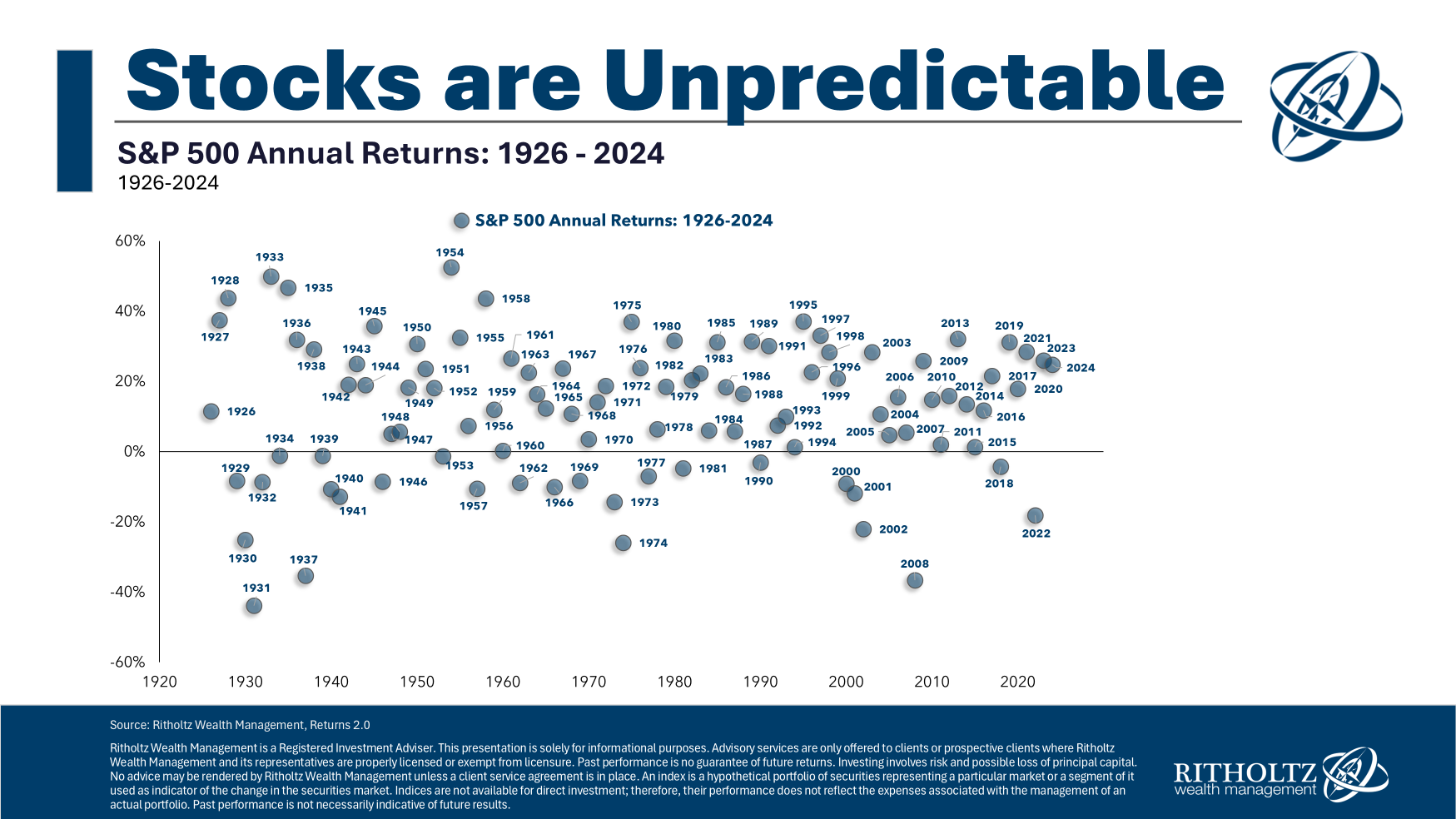
Consider what $100 invested 100 years ago became (per long-run historical reconstructions):
| Asset | $100 in 1926 → today |
|---|---|
| Small-cap stocks | ~$6,460,000 |
| S&P 500 | ~$1,160,000 |
| Corporate bonds | ~$77,530 |
| Real estate | ~$56,260 |
| Treasury bills | ~$25,780 |
| Gold | ~$21,025 |
Equities crushed gold on total return—small-cap stocks annualized roughly 11.97% versus the S&P's 10.02%, both dwarfing gold's long-run nominal return. But here is the key distinction: gold beat cash and roughly matched inflation over the same century, while T-bills (3.37% nominal) barely outpaced the ~3% long-run inflation rate. Gold's real (inflation-adjusted) annualized return over the very long run has hovered near 0–1%—it doesn't compound your wealth, but it reliably stops your wealth from quietly evaporating.
The most compelling modern chapter: gold's 1980 nominal peak of ~$850, adjusted for inflation, equals roughly $3,200–$3,500 in today's dollars—a level gold never returned to for the next ~45 years. By 2026, at ~$4,226 (and having touched >$5,500), gold has finally caught up to and exceeded its real 1980 peak after decades of underperformance. That is the story behind the "best store of value" claim: not explosive growth, but the slow, grinding victory of a hard asset over a debasing fiat system.
Is gold an inflation hedge?
Partially, and conditionally. Gold is not a reliable year-by-year inflation hedge—it has had multi-year stretches (the 1980s–2000s) where inflation was elevated yet gold was flat or down. What actually drives gold is real yields (nominal interest rates minus inflation), not inflation alone. When real yields are low or negative, gold (which pays no coupon) becomes attractive; when real yields rise sharply, gold typically suffers.
The current environment is a textbook setup for gold support: the 10-year real yield sits around 4.56%, and a reportedly hawkish Federal Reserve posture (under a Warsh-led Fed per some analyses) is a genuine overhang. However, several 2026 stressors could push inflation above the 2% target and simultaneously drive safe-haven demand—most notably a potential Iran conflict and closure of the Strait of Hormuz, which would spike energy prices (per bullionstar's analysis). In that scenario, gold would be caught between a hawkish Fed (bearish) and energy-driven inflation + fear (bullish)—which is precisely why analysts describe current prices as a "no-man's land."
Where sources agree: gold's strongest eras (1970s, 2020–2025) coincided with falling real yields and crisis fear. Where sources disagree: whether today's surge is a rational repricing toward a new equilibrium or an overextended bubble that could correct 27%+ (as it did in March 2026).
The USD system, debasement, and de-dollarization
This is arguably the single most important structural driver, and the evidence is striking. The global financial system is still built on the USD, but trust in it is eroding:
- 74% of central banks anticipate lower USD reserve holdings over the next few years (World Gold Council survey).
- The dollar's share of global reserves has declined from ~66% to 57%, with gold and other assets filling the gap.
- Central-bank buying hit a record 1,136 tonnes in 2023 and remained heavy at ~863 tonnes in 2025.
- US national debt has surpassed $36 trillion, raising structural concerns about fiscal sustainability and eventual currency debasement.
This "debasement hedge" thesis—championed by J.P. Morgan, which frames gold as a hedge against fiscal dominance and currency competition (notably China's accumulation)—suggests the structural bid for gold is intact regardless of short-term price action. Gold's official reserve share sits at just 2.8%, far below its historical norms of 15–18%, implying substantial room for continued central-bank accumulation.
Current trends: what we know and what we don't
What we know:
- Gold posted its best year since 1979 and remains up ~23% YoY, with 2025 setting record ETF inflows.
- Prices are highly volatile: records above $5,500, a ~25% correction to the low $4,100s by July, now ~$4,226.
- Central-bank buying and de-dollarization provide a structural floor.
- Historical drawdowns are real and severe—gold fell ~45% from its 2011 peak to its 2015 trough.
What we don't know:
- Whether current prices reflect a bubble or a fundamental repricing.
- The Fed's actual path (a hawkish Warsh Fed would be a headwind).
- Whether central-bank buying sustains.
- Whether geopolitical catalysts (Iran/Hormuz) materialize.
Analyst forecasts (a striking dispersion):
| Institution | Target | Horizon |
|---|---|---|
| J.P. Morgan | $6,000 → $6,300 | End-2026 → End-2027 |
| UBS / Goldman | ~$5,400–5,600 | 2027 |
| Westpac | $5,000 | 2027 |
| Morgan Stanley | $4,800 | 2027 |
| Goldman (alt.) | $4,900 / $4,500 | 2026 / base |
| Macquarie | $3,100 (base) | — |
| Bank of America | $8,000 (extreme) | — |
Three scenarios (metalcharts): Bull — new records above $6,000 if drivers align; Base — consolidation at a high, volatile plateau; Bear — pullback to $4,000–4,500 if the Fed turns hawkish, the dollar rallies, or central-bank buying pauses.
Part II: The Best Ways to Own Gold (Ranked)
Below are the most practical vehicles for gaining gold exposure, ranked from most foundational to most speculative. Prices are approximate and illustrative given the ~$4,226/oz environment.
| Rank | Product | Approx. Price/Cost | Best For | Rating |
|---|---|---|---|---|
| 1 | Physical gold bullion (bars & coins) | Spot + 1–8% premium | Ownership & tail-risk protection | ★★★★★ |
| 2 | Low-cost physical-gold ETFs (IAU/SGOL/GLD) | 0.17–0.40% expense ratio | Liquidity & cheapness | ★★★★☆ |
| 3 | Tokenized gold (PAXG) | ~$4,226/token (1 oz) | Programmable/transferable exposure | ★★★★☆ |
| 4 | Gold-miners funds (GDX) | ~$30–40/share | Leverage & upside | ★★★☆☆ |
| 5 | Gold IRA | Setup + annual custody fees | Tax-advantaged retirement | ★★★☆☆ |
| 6 | Gold accumulation/savings plans | No upfront cost (DCA) | Dollar-cost averaging | ★★☆☆☆ |
1. Physical gold bullion (bars & government-minted coins)
Physical gold—bars, rounds, and minted coins like the American Eagle or Canadian Maple Leaf—is the original and most direct form of ownership. You hold a tangible asset with no counterparty risk, delivered to your hand. In a scenario involving systemic financial stress or capital controls, physical possession is the ultimate tail-risk hedge.
Pros: No counterparty or default risk; outright ownership; privacy; protection against custodial/banking failures. Cons: Highest costs (dealer premiums of 1–8% over spot for coins, plus insurance and secure storage); less liquid than paper; spread between buy and sell prices. Where to buy: APMEX, JM Bullion, BullionDirect
2. Low-cost physical-gold ETFs (IAU / SGOL / GLD)
ETFs backed by physical bullion—such as iShares Gold Trust (IAU), Aberdeen Physical Gold (SGOL), and SPDR Gold Shares (GLD)—let you own gold exposure in a brokerage account at very low cost. Each share represents a fractional claim on stored gold, and the price tracks the spot market closely.
Pros: Extremely liquid (buy/sell in seconds); cheap (SGOL at 0.17%, IAU at 0.25%, GLD at 0.40%); no storage or security concerns; highly taxable-friendly within accounts. Cons: No physical possession; small custodial/management fee erodes returns over decades; counterparty exposure to the trust structure. Where to buy: iShares IAU, SPDR GLD, via any major brokerage.
3. Tokenized gold (PAXG)
Pax Gold (PAXG) is a blockchain-based token where each token is backed by one fine ounce of a London Good Delivery gold bar, held in professional vaults. It merges the price exposure of physical gold with the transferability of digital assets—settle globally in minutes, use as collateral, or self-custody.
Pros: Fully redeemable for physical gold; transparent, audited reserves; fast and borderless transfers; self-custody option. Cons: Crypto-regulatory and custody risk; requires a crypto wallet/exchange; newer and less battle-tested than traditional vehicles. Where to buy: PAX Gold (PAXG), BullionStar